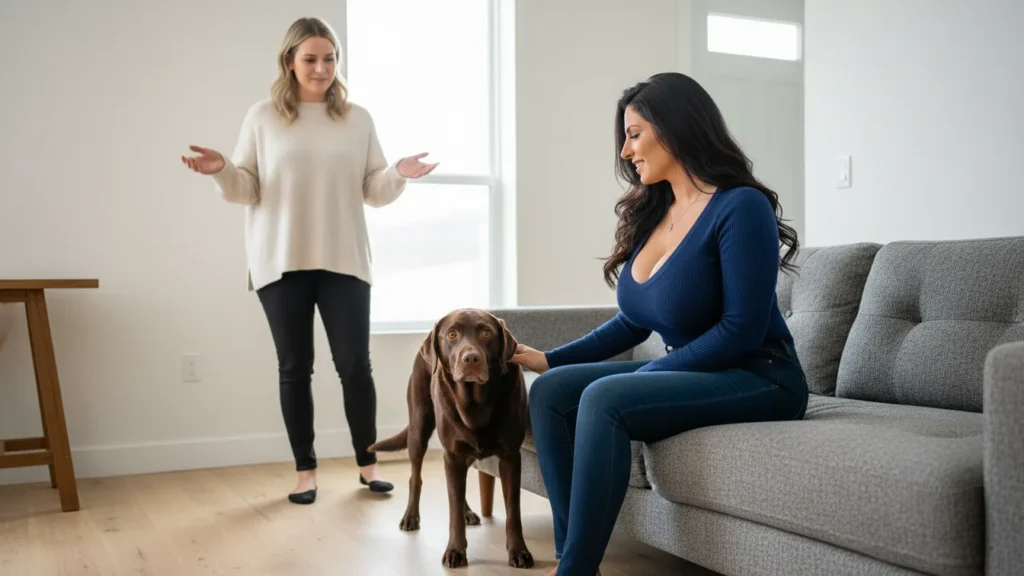
“The Mistake Most Loving Owners Make”
Your dog hides behind your legs when guests arrive.
Freezes on walks.
Growls, shakes, or shuts down around other dogs.
And you’re told the same thing over and over:
“They just need more socialization.”
So you try harder.
More walks. More dogs. More people.
But instead of improving, your dog gets worse.
Here’s the uncomfortable truth many owners don’t hear early enough:
You cannot socialize fear out of a dog by pushing them into scary situations.
Fearful dogs don’t need more exposure.
They need safe, controlled confidence-building.
This guide explains how to socialize a fearful dog without breaking trust, why traditional advice often backfires, and what actually helps dogs feel safe again.
Why Fear Changes How Socialization Works
Socialization is not about being around everything.
It’s about learning that the world is safe.
When a dog is fearful, their nervous system is already on high alert. Exposure without emotional safety teaches one thing only:
“I survived something terrifying.”
Not:
“This is okay.”
Fearful dogs often show:
- Freezing or refusing to move
- Avoidance, hiding, or trembling
- Growling or snapping when cornered
- Excessive panting, yawning, or licking lips
These are not “bad behaviors.”
They are survival responses.
Why this matters today:
More dogs than ever are being adopted late, rescued, or raised with limited early exposure. Fearful dogs are becoming common—and outdated advice harms them.
Step 1: Redefine What “Socialization” Means
For fearful dogs, socialization does not mean:
- Dog parks
- Crowded streets
- Letting strangers pet them
- “Letting them work it out”
Instead, it means:
- Learning to observe without reacting
- Building emotional safety at a distance
- Creating positive associations at the dog’s pace
Think of it as emotional rehabilitation, not exposure therapy.
A dog that calmly watches the world from afar is already socializing.
Step 2: Identify Your Dog’s Fear Threshold
Every fearful dog has a threshold—the point where fear turns into panic.
Below threshold:
- Dog can eat treats
- Responds to name
- Body stays loose
Above threshold:
- Refuses food
- Stiffens or freezes
- Lunges, barks, or shuts down
Socialization only works below threshold.
If your dog can’t take treats, you’re already too close.
Hidden Tip Most Owners Miss
Progress happens before visible reactions. If your dog stays calm, you’re doing it right—even if nothing “exciting” happens.
Step 3: Start With Neutral Exposure (Not Interaction)
Fearful dogs don’t need interaction first.
They need predictable observation.
Examples:
- Sitting in your car watching people walk by
- Standing far from a park entrance
- Watching dogs from across the street
Reward calm observation with:
- High-value treats
- Gentle praise
- Calm presence (not excitement)
This teaches:
“I can see scary things and still feel safe.”
That’s real socialization.
Step 4: Use Controlled, Positive Associations
Every fear-based trigger should predict something good.
This is called counterconditioning.
Example:
Your dog fears strangers.
Instead of:
- Letting people approach
- Forcing greetings
Do this:
- Stranger appears at a distance
- Treats rain from you
- Stranger leaves
- Treats stop
Over time, the dog learns:
“Strangers make good things happen.”
Not:
“Strangers touch me.”
Step 5: Build Confidence Outside Social Situations
Fearful dogs need confidence before social challenges.
Daily confidence builders:
- Sniffing walks (no pressure to meet anyone)
- Puzzle feeders
- Basic training games (sit, touch, find it)
- Nose work
Confidence is transferable.
A dog who feels capable at home handles the world better outside.
Common Socialization Mistakes That Make Fear Worse
Avoid these at all costs:
- ❌ Flooding (too much exposure too fast)
- ❌ Letting people pet without consent
- ❌ Dog parks for fearful dogs
- ❌ Punishing growling or barking
- ❌ “He’ll get used to it” thinking
Growling is communication.
Removing warnings creates bites—not confidence.
Comparison Table: Traditional vs Fear-Safe Socialization
| Traditional Advice | Fear-Safe Approach |
|---|---|
| Increase exposure | Control exposure |
| Face fears directly | Observe at a distance |
| Social interaction | Emotional safety |
| Ignore fear signals | Respect thresholds |
| Faster results | Slower but lasting progress |
How Long Does It Take to Socialize a Fearful Dog?
There is no fixed timeline.
Factors include:
- Genetics
- Early life experiences
- Trauma history
- Consistency of training
Some dogs improve in weeks.
Others take months.
Progress looks like:
- Faster recovery from stress
- Shorter reactions
- Increased curiosity
- Willingness to explore
Success is reduced fear, not forced friendliness.
When to Seek Professional Help
Consider a qualified behavior professional if:
- Fear escalates to aggression
- Dog cannot recover after exposure
- Progress stalls despite consistency
Look for:
- Force-free trainers
- Certified behaviorists
- Experience with fearful or reactive dogs
Medication may help some dogs—but it should support training, not replace it.
Why Gentle Socialization Works Better Long-Term
Fear-based exposure creates compliance.
Fear-safe socialization creates trust.
Dogs trained with patience:
- Develop real confidence
- Maintain emotional stability
- Bond more deeply with owners
- Are safer in unpredictable situations
This approach doesn’t just change behavior—it changes how dogs experience the world.
Frequently Asked Questions
1. Can an adult dog still be socialized if they’re fearful?
Yes. Adult dogs can learn new emotional responses, but progress is slower and requires patience and consistency.
2. Should I let my fearful dog “face their fears”?
No. Forced exposure often increases fear. Safe, gradual exposure below threshold is more effective.
3. Is medication necessary for fearful dogs?
Not always. Some dogs benefit, especially if anxiety is severe, but many improve with behavior-focused training alone.
4. Can fearful dogs ever enjoy social situations?
Some do, some don’t—and that’s okay. The goal is comfort and safety, not sociability.
5. Will my dog ever be “normal”?
Your dog doesn’t need to be normal. They need to feel safe, understood, and supported.
Key Takeaways
- Fearful dogs require gentle, controlled socialization
- Exposure without safety worsens fear
- Progress happens below fear threshold
- Confidence-building matters more than interaction
- Trust is the foundation of lasting behavior change
Conclusion: You’re Not Failing Your Dog
If your dog is fearful, it’s not because you didn’t try hard enough.
It’s because fear requires a different approach.
Socializing a fearful dog isn’t about fixing them.
It’s about showing them the world doesn’t have to hurt.
Slow progress is still progress.
And trust, once built, changes everything.
Disclaimer: This article is for educational purposes and does not replace personalized advice from a qualified veterinary or behavior professional.

Dr. Sofia Romano, DVM, is an experienced veterinarian specializing in small-animal medicine and preventive care. She has treated thousands of cases using evidence-based diagnostics and modern clinical practices. Dr. Romano is dedicated to providing science-backed pet-health guidance that helps owners make informed decisions and improve their pets’ quality of life.




Pingback: The Real Reason Your Dog Won’t Listen To You — It’s Not Stubbornness
Pingback: Why Dogs Destroy The House When You Leave — The Real Reasons Vets And Trainers See
Pingback: Why Dogs Start Fighting With Other Pets — The Hidden Triggers Most Owners Miss
Pingback: What Your Dog’s Eyes Reveal About Their Emotional State — The Silent Language Most Owners Miss
Pingback: Why Dogs Mirror Their Owner’s Anxiety — The Science Behind Emotional Transfer
Pingback: Why Dogs Choose One Person As “Their Human” — The Deep Bond Science Can Finally Explain
Pingback: Why Puppies Become Fearful Overnight — The Sudden Behavior Shift That Alarms Loving Owners (And What It Really Means)