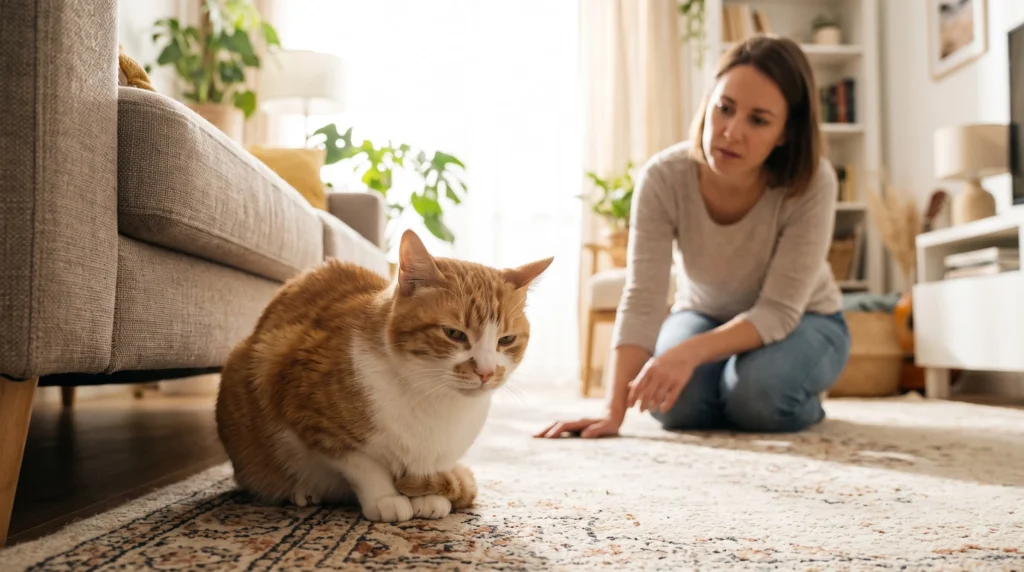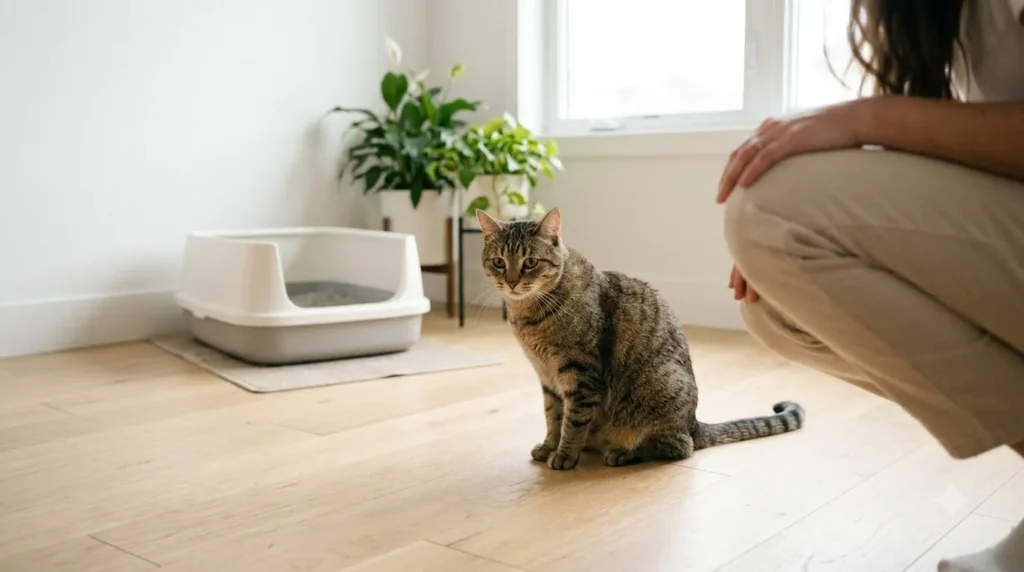
Finding a puddle of urine on the bed, a damp patch on the carpet, or a strong smell beside the litter box can leave any cat owner wondering what has changed. Is the cat unhappy with its litter? Is stress to blame? Or could something be wrong with its health?
The frustrating part is that medical problems and behavioral changes can look remarkably similar in cats—and sometimes both are involved.
A cat with bladder discomfort may begin avoiding the litter box because it associates the box with pain. Another cat may avoid the same box because a housemate blocks the entrance, the litter smells unpleasant, or a recent household change has made its usual routine feel less secure. Kidney disease, diabetes, arthritis, and other medical conditions can also change where and how often a cat urinates.
The safest approach is not to guess which explanation fits best. Start by checking whether your cat is having difficulty urinating, then arrange a veterinary assessment to investigate medical causes before treating the problem as behavioral. Cornell University College of Veterinary Medicine and the Merck Veterinary Manual both emphasize the importance of distinguishing medical disease from litter-box and environmental problems. (Cornell University, Merck Veterinary Manual)
First, Make Sure Your Cat Can Urinate Normally
Before inspecting the litter box or changing the litter, pay attention to what happens when your cat attempts to urinate.
Repeated straining with little or no urine is a veterinary emergency. A blockage of the urethra, the tube that carries urine out of the body, can prevent a cat from emptying its bladder and rapidly cause dangerous changes in kidney function and blood electrolytes. Male cats, including neutered males, are at greater risk because their urethra is longer and narrower.
Watch for:
- Repeated trips to the litter box with little or no urine produced.
- Straining, crying, or appearing painful while attempting to urinate.
- Frequent genital licking accompanied by difficulty urinating.
- Increasing distress, vomiting, weakness, or unusual lethargy.
These signs can be mistaken for constipation, particularly when a cat repeatedly squats in the litter box.
If your cat is producing little or no urine, seek emergency veterinary care immediately. Do not wait until the following morning or attempt to treat the problem by changing the diet or encouraging more water intake. (Cornell Feline Health Center)
Even when your cat is passing urine, blood in the urine, painful urination, or a sudden increase in urinary frequency warrants prompt veterinary advice.
When Peeing Outside the Box Is a Medical Problem
Cats often conceal signs of illness. A cat can continue eating, grooming, interacting with its owner, and appearing relatively normal while experiencing urinary discomfort.
That is one reason a change in litter-box habits deserves more attention than the puddle itself.
Bladder inflammation can make the litter box feel unpleasant
One possible cause is feline idiopathic cystitis, commonly abbreviated as FIC. This condition involves inflammation of the bladder for which no single underlying cause can be identified after appropriate testing.
Affected cats may urinate frequently, strain, pass small amounts of urine, or produce urine outside the litter box. Some have blood in their urine.
Stress is associated with FIC, but that does not mean the condition is simply a behavioral problem. It is a painful medical condition involving multiple interacting factors, and the diagnosis requires veterinarians to consider and exclude other possible causes.
If a cat repeatedly experiences discomfort while urinating in its litter box, it may begin associating the location with pain. The cat can then continue avoiding the box even after the initial episode improves.
According to the Merck Veterinary Manual’s guidance on feline lower urinary tract disease, treatment and prevention depend on identifying the likely cause and addressing relevant environmental factors as well as the medical problem.
Kidney disease and diabetes can increase urination
A cat that suddenly leaves larger urine patches or appears to urinate much more frequently may be producing more urine than it previously did.
Chronic kidney disease and diabetes mellitus are among the conditions that can increase thirst and urine production. Hyperthyroidism can also contribute to changes in drinking and urination, particularly in older cats.
In these cases, the cat may not be rejecting the litter box at all. It may simply need to urinate more often, produce larger volumes of urine, or struggle to reach the box in time.
Look for accompanying changes, such as drinking more water, weight loss, changes in appetite, or altered energy levels. These observations are useful information for your veterinarian, although none of them can independently establish a diagnosis.
Cornell University discusses these medical causes in its guide to feline house-soiling.
Age and mobility can make the box difficult to reach
A senior cat that has used the same litter box for years may begin urinating nearby rather than inside it.
The explanation may be arthritis or another problem affecting movement. Climbing over a high box entrance, navigating stairs, or reaching a litter box at the other end of the house may have become uncomfortable.
Changes in vision, weakness, or age-related cognitive problems can also affect a cat’s ability to locate and use the box consistently.
A lower-entry box in an accessible location may help, but a new litter-box problem in an older cat still deserves veterinary evaluation. Improving access should complement the investigation of possible illness or pain, not replace it.
When the Problem Is Behavioral or Environmental
Once medical causes have been investigated, the litter box itself and the cat’s surroundings become important parts of the explanation.
Cats have preferences about where they eliminate, the material under their paws, how clean the box is, and whether they feel safe while using it. A change that appears minor to a person can make a particular location less appealing to a cat.
The litter box may not meet the cat’s preferences
Consider what has changed recently.
Have you switched to a strongly scented litter? Moved the box beside a noisy washing machine? Bought a smaller covered box? Started cleaning it less frequently because of a change in your schedule?
Any of these changes may contribute to avoidance.
A cat may also develop a preference for a particular surface. If it repeatedly urinates on a soft blanket or carpet while continuing to use the litter box occasionally, its preferred texture or location may be part of the explanation.
The following practical adjustments can help:
- Scoop the box at least daily, and more often when needed.
- Offer an unscented, fine-textured litter if the cat appears to dislike the current substrate.
- Choose a box large enough for the cat to turn around, dig, and adopt a comfortable posture.
- Provide an easy-entry box for kittens, older cats, and cats with mobility difficulties.
- Place litter boxes in quiet, accessible locations away from feeding areas and noisy appliances.
The AAFP and ISFM house-soiling guidelines emphasize that box size, location, litter preference, cleanliness, and access can all influence elimination behavior.
Household stress may change how a cat uses the box
Cats can be sensitive to changes in their environment. Moving house, introducing a new pet, a change in household routine, unfamiliar visitors, or conflict between resident cats may contribute to elimination problems.
Multi-cat households deserve particular attention. A timid cat may avoid a litter box if another cat repeatedly blocks the entrance, chases it away, or waits nearby. The problem can persist even when several boxes are available if they are clustered in one location and the cat cannot reach them without encountering the other animal.
Providing separate resources in different parts of the home can help reduce competition. That includes litter boxes, food and water stations, resting areas, hiding places, and elevated spaces where appropriate.
Stress may also contribute to feline idiopathic cystitis, so medical and environmental explanations are not always mutually exclusive. (Merck Veterinary Manual)
Is Your Cat Urinating or Spraying?
One of the most useful observations you can make is whether your cat is emptying its bladder in an inappropriate location or depositing small amounts of urine as a form of scent marking.
These behaviors may require different approaches.
Urination outside the litter box
Cats generally squat and leave a puddle on a horizontal surface, such as a bed, rug, laundry pile, or floor. The underlying cause may be medical discomfort, increased urine production, litter-box aversion, a preferred location or surface, or difficulty reaching the box.
Urine spraying or marking
The cat usually stands with its tail raised, sometimes quivering, and releases a relatively small amount of urine onto a vertical surface such as a wall, curtain, or door. This behavior is commonly associated with territorial communication, mating-related behavior, or social stress.
These patterns are useful clues, not definitive diagnostic tests. Some cats mark horizontal surfaces, and medical disease can coexist with spraying. A veterinarian should assess a new or changing urinary behavior rather than assuming that the posture alone explains it. (Cornell Feline Health Center)
If spraying is confirmed, the treatment plan may include addressing social stressors, reducing exposure to unfamiliar cats outside, reviewing reproductive status with a veterinarian, and considering behavioral treatment where appropriate.
How a Veterinarian Distinguishes Medical From Behavioral Causes
There is no single home observation that reliably separates a urinary illness from a behavioral problem.
A veterinary appointment usually begins with questions about when the behavior started, how often it occurs, the size and location of urine patches, and whether the cat shows changes in drinking, appetite, weight, or general behavior.
The veterinarian may examine the cat’s abdomen, mobility, and overall health and recommend a urinalysis. Depending on the findings and the cat’s age and history, further testing may include blood tests, urine culture, X-rays, or ultrasound.
These tests serve different purposes. A urinalysis can help identify blood, crystals, and other abnormalities, while a urine culture may be appropriate when bacterial infection is suspected. Blood tests can help investigate conditions such as kidney disease and diabetes. Imaging may be useful when urinary stones or other structural problems are a concern.
Not every cat requires every test. The appropriate investigation depends on the individual animal, examination findings, and initial results. The AAFP and ISFM guidelines for house-soiling cats recommend a structured medical and behavioral assessment instead of treating all cases as one problem.
What You Can Do at Home While Investigating the Cause
You do not need to wait until a veterinary appointment to make the environment more comfortable, provided your cat can urinate normally and is not showing emergency signs.
Start by cleaning soiled areas with a suitable pet-urine cleaner that neutralizes residual odor. Avoid ammonia-based cleaning products, which can smell similar to urine. Residual scent may encourage a cat to revisit the same location.
Next, review the litter-box arrangement.
A widely used starting point is to provide one litter box per cat, plus one additional box, with boxes distributed across separate, accessible locations. This is a guideline rather than a rigid rule; household layout, relationships between cats, and individual preferences all matter.
For a household with one cat, two boxes in different locations can provide useful choice. In a multi-level home, ensure a cat does not have to travel up or down stairs every time it needs to eliminate, particularly if it is older or has mobility problems.
Keep a brief record of the accidents. Note the time, location, approximate amount of urine, posture, and anything that happened beforehand. Record changes in drinking, appetite, medication, household routine, and litter type as well.
This information can help your veterinarian identify patterns that might otherwise be difficult to reconstruct from memory.
Do not punish your cat for urinating outside the box. Shouting, frightening, or physically reprimanding a cat does not address an underlying medical problem and may increase stress, potentially making the behavior worse.
Why the Problem Can Continue Even After the Original Cause Improves
Suppose a cat develops bladder inflammation and begins urinating on a bedroom rug because using the litter box hurts. After the medical problem improves, the cat may still return to that rug.
This can happen because the original episode has changed the cat’s associations with the litter box, or because the alternative location has become familiar. A concurrent preference or environmental problem may also remain.
For this reason, successfully treating a medical condition does not always resolve every aspect of house-soiling. Litter-box access, preferences, environmental stress, and previously established behavior may need attention at the same time.
If the problem persists after the veterinary workup and environmental adjustments, ask about referral to a veterinarian with advanced behavioral expertise or an appropriately qualified feline behavior professional.
The Best First Step Is to Find Out Why
When a cat urinates outside its litter box, the mess is visible, but the underlying cause is not. A painful bladder condition, increased urine production, arthritis, anxiety, social conflict, and litter-box preferences can produce overlapping signs.
Start by checking whether your cat is able to pass urine normally. Seek emergency care for straining with little or no urine, and arrange prompt veterinary assessment for new, persistent, or painful urinary changes.
Once medical causes have been investigated, improving litter-box access, cleanliness, location, and household security can help address environmental and behavioral contributors. The most effective solution is the one that fits the reason your particular cat has stopped using the box—not simply one that conceals the evidence.
Sources
1. Cornell University College of Veterinary Medicine — “Feline Behavior Problems: House Soiling.” Covers medical causes, litter-box aversion, site preferences, urine spraying, cleaning, and environmental adjustments. The page lists an update in January 2015. https://www.vet.cornell.edu/departments-centers-and-institutes/cornell-feline-health-center/health-information/feline-health-topics/feline-behavior-problems-house-soiling
2. Cornell University College of Veterinary Medicine — “Feline Lower Urinary Tract Disease.” Explains urinary symptoms, diagnostic testing, feline idiopathic cystitis, and urethral obstruction as a medical emergency. https://www.vet.cornell.edu/departments-centers-and-institutes/cornell-feline-health-center/health-information/feline-health-topics/feline-lower-urinary-tract-disease
3. Merck Veterinary Manual — “Lower Urinary Tract Disease in Cats.” A veterinary reference reviewed by a specialist in veterinary internal medicine and updated in March 2025. Covers urinary disorders, diagnosis, and management. https://www.merckvetmanual.com/urinary-system/noninfectious-diseases-of-the-urinary-system-in-small-animals/lower-urinary-tract-disease-in-cats
4. Merck Veterinary Manual — “Noninfectious Diseases of the Urinary System of Cats.” Discusses feline idiopathic cystitis, urinary obstruction, signs of urinary distress, and management considerations for cat owners. https://www.merckvetmanual.com/cat-owners/kidney-and-urinary-tract-disorders-of-cats/noninfectious-diseases-of-the-urinary-system-of-cats
5. American Association of Feline Practitioners (AAFP) and International Society of Feline Medicine (ISFM) — “Guidelines for Diagnosing and Solving House-Soiling Behavior in Cats.” Published in the Journal of Feline Medicine and Surgery in July 2014. Provides a structured framework for medical investigation, litter-box management, environmental needs, and behavioral assessment. https://pmc.ncbi.nlm.nih.gov/articles/PMC11148882/

Dr. Sofia Romano, DVM, is an experienced veterinarian specializing in small-animal medicine and preventive care. She has treated thousands of cases using evidence-based diagnostics and modern clinical practices. Dr. Romano is dedicated to providing science-backed pet-health guidance that helps owners make informed decisions and improve their pets’ quality of life.