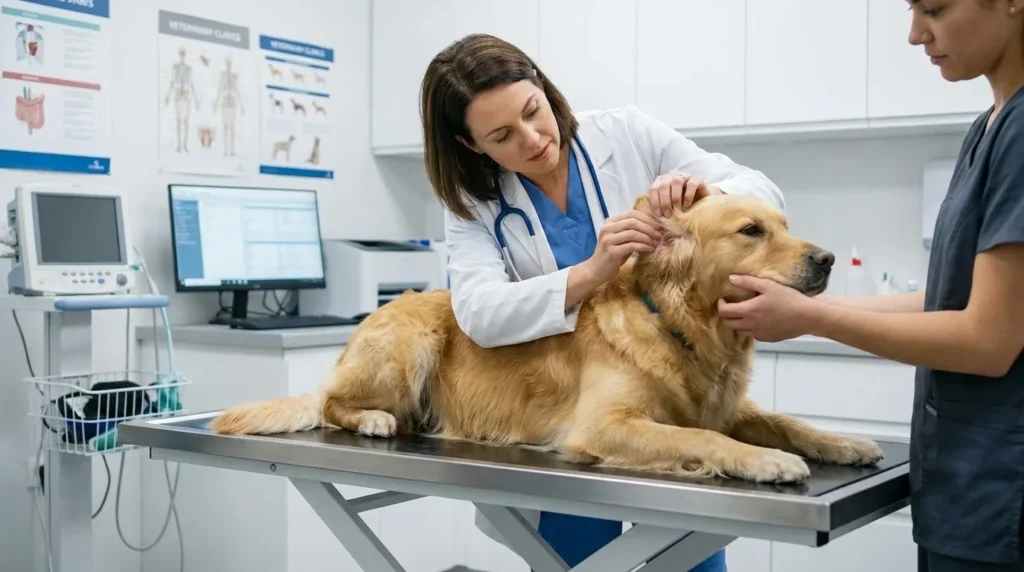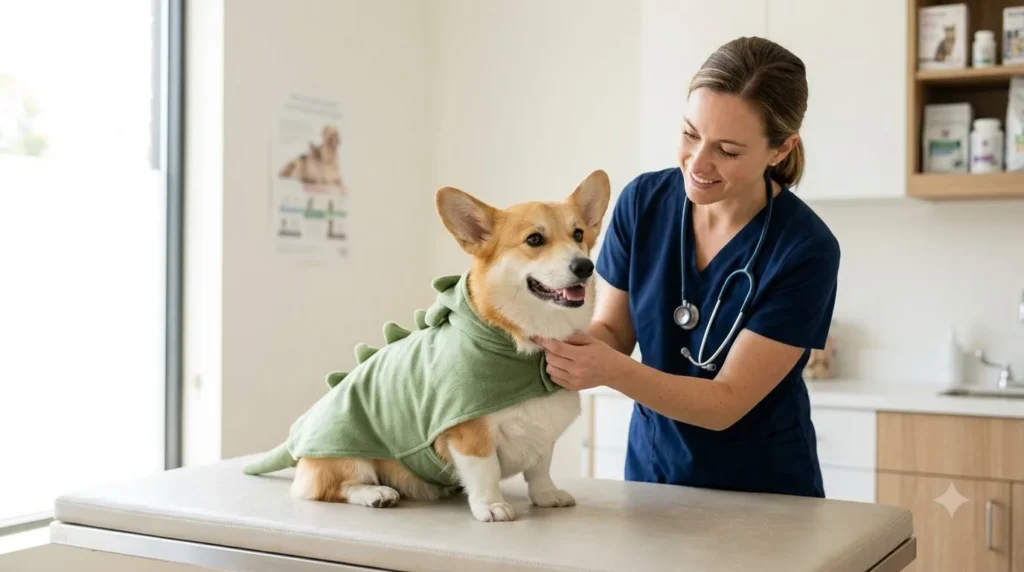
A dog dressed as a tiny pumpkin or a cat wearing a miniature lion’s mane can make for an adorable Halloween photograph. But a costume that looks harmless in a picture can be uncomfortable, frightening, or even hazardous for the animal wearing it.
The question is not simply whether a costume is made for pets. It is whether your individual pet can wear it comfortably, breathe normally, move freely, see and hear clearly, and escape the outfit safely if something goes wrong.
The safest pet costume is one your animal tolerates comfortably—and skipping the costume altogether is a perfectly good choice. The American Animal Hospital Association (AAHA), in guidance updated in August 2026, emphasizes that costume safety depends on the individual animal, the design, its fit, and the risk of stress or injury. (AAHA)
For some dogs, a lightweight festive shirt is no problem. Others dislike having anything placed over their heads. Cats may find a costume restrictive or alarming, particularly when they have not been gradually accustomed to wearing clothing.
Here is what matters when deciding whether dressing up your pet is genuinely a good idea.
The First Rule: Your Pet’s Comfort Matters More Than the Photo
Pet costumes are optional entertainment, not a necessity. There is no welfare benefit that requires an otherwise comfortable animal to tolerate an outfit for a holiday photograph.
Some pets are already accustomed to wearing a jacket or sweater and may comfortably tolerate a simple costume. Others dislike the sensation of clothing or become distressed when their movement is restricted.
A costume that your dog accepts for 30 seconds may not remain comfortable during a long walk or an evening of visitors. Likewise, a cat that stands still for a photograph may be frightened rather than relaxed.
The American Society for the Prevention of Cruelty to Animals (ASPCA) advises owners to dress pets only when the animal is comfortable with it, and to remove the costume if the pet appears distressed or behaves unusually.
A useful starting principle is to ask three questions before choosing an outfit:
- Can my pet move naturally without struggling or stumbling?
- Can it breathe, see, hear, and behave normally?
- Does it appear comfortable wearing the outfit rather than merely tolerating restraint?
If any answer is no, choose something simpler—or leave the costume off.
What Makes a Pet Costume Safer?
The safest designs tend to be lightweight, uncomplicated, properly fitted, and free from unnecessary accessories. A complicated costume has more opportunities to snag, slip, restrict movement, or tempt a pet to chew something off.
1. Breathing must remain completely unrestricted
Avoid anything tight around the neck or chest, and never use a costume that compresses the throat, covers the nose or mouth, or restricts normal chest movement.
Be particularly cautious with masks, hoods, and headpieces. Even when an animal can technically breathe through an opening, a covering may obstruct airflow, interfere with normal sensory information, or cause distress.
Dogs with existing breathing difficulties deserve additional caution. An outfit that adds heat or restricts movement is especially inappropriate for an animal that already struggles to breathe comfortably.
If you notice breathing difficulty, remove the costume immediately and seek urgent veterinary care if the problem persists or appears severe.
2. Your pet should be able to walk, sit, lie down, and turn normally
A costume may fit while your pet is standing but become restrictive when it sits or bends.
Look for fabric that bunches around the legs, tight straps, sleeves that catch on the paws, long capes that trail on the floor, and loose sections that could become tangled.
Try the outfit while your pet is calm. Watch it walk a few steps, turn around, sit, and lie down if comfortable. The animal should not need to change its normal movement to accommodate the garment.
A costume that causes stumbling, freezes the animal in place, or prevents normal movement is not a safe fit. AAHA notes that costumes that are too loose can cause tripping or entanglement, while tight designs can restrict movement. (AAHA)
3. Eyes, ears, nose, and mouth should stay unobstructed
Avoid masks, face coverings, artificial eyes placed over the animal’s eyes, and accessories that interfere with its ability to see approaching objects.
Hearing matters, too. Dogs and cats rely on auditory information to interpret their surroundings. An accessory that presses on the ears or significantly interferes with hearing may make an already busy environment more unsettling.
Headpieces deserve particular caution because they can shift unexpectedly, obstruct vision, or irritate the face. The ASPCA specifically recommends avoiding costume headpieces when dressing pets for Halloween. (ASPCA Halloween safety guidance)
A festive bandana or simple body garment is usually a more sensible starting point than an elaborate outfit involving several accessories.
4. Small decorations can become choking hazards
Buttons, bells, plastic eyes, sequins, beads, ribbons, and decorative pieces may look securely attached, but a determined pet can chew them loose.
Swallowing these pieces can cause choking or gastrointestinal problems. Dangling strings, elastic loops, and long ties also create entanglement risks.
Inspect the costume before every use, particularly around seams and closures. Avoid designs with detachable decorations or parts your pet can reach with its mouth.
A costume should not be left on an unattended animal. Even a well-fitting outfit can shift, become caught on furniture, or be damaged by chewing.
5. The fabric must suit the temperature and the animal
Costumes can trap body heat, particularly when they cover a large area of the body or are made from thick, poorly ventilated material.
Choose light, breathable fabric in warm weather and avoid unnecessary layers. Thick-coated animals, active dogs, and pets with breathing difficulties may need extra caution because additional insulation can make it harder to stay comfortable.
Check for rough seams, irritating fasteners, and materials that cause redness or itching. Remove the outfit if your pet becomes unusually warm, starts panting excessively, or appears uncomfortable.
AAHA highlights heat retention, fabric quality, irritation, and ornamentation among the factors that influence costume safety. (AAHA)
How to Tell When Your Pet Wants the Costume Off
Animals cannot tell us verbally that an outfit feels uncomfortable, so owners need to pay attention to their behaviour.
The signs are not always dramatic. A pet does not have to struggle, growl, or attempt to bite before you take its discomfort seriously.
Watch for changes such as:
- Freezing in place or refusing to move.
- Scratching, biting, or repeatedly pawing at the costume.
- Flattened ears, a tucked tail, a crouched posture, or attempts to hide.
- Repeated lip-licking, yawning, or other signs that may indicate stress.
- Persistent attempts to escape or remove the outfit.
- Unusual panting, agitation, or a change from the animal’s normal behaviour.
These signals need to be interpreted in context. One yawn, for example, does not automatically mean a dog is distressed. However, several signs appearing together, or a clear change immediately after dressing, is a good reason to stop.
Cats may become very still when uncomfortable. This is not proof that they are enjoying the costume or have accepted it. If a cat crouches, tries to escape, flattens its ears, or repeatedly struggles to remove clothing, take the outfit off.
The American Kennel Club’s guide to choosing a Halloween costume for your dog recommends removing a costume if a dog appears stressed, struggles to move, or repeatedly tries to remove it.
Do not force a pet to remain dressed for a photograph. Remove the outfit calmly, give the animal space, and let it return to a familiar, comfortable activity.
How to Introduce a Costume Without Making It a Scary Experience
If your pet is comfortable wearing clothes, a gradual introduction may help make a simple costume more acceptable. This is best done well before Halloween, rather than for the first time when guests are arriving and everyone wants a photograph.
Start by placing the costume on the floor and allowing your pet to investigate it voluntarily. Reward calm curiosity with a favourite treat or a little play.
Next, try placing a small section of the garment against the animal without fastening it. If the pet remains relaxed, progress to wearing the costume briefly.
Keep the first attempts short. Reward comfortable behaviour and remove the costume before the pet becomes uncomfortable. Increase the duration gradually only while the animal remains relaxed.
For a dog, this may mean wearing a lightweight shirt briefly at home before trying it during a quiet walk. For a cat, even a brief introduction may be enough to reveal that clothing is not a good fit for its temperament.
There is no need to push through resistance. If the pet repeatedly tries to escape, freezes, or becomes distressed, stop the exercise and use a simpler alternative.
Positive introductions may help some pets, but they do not guarantee that an animal will enjoy wearing a costume. The outcome should be guided by the pet’s response, not the owner’s deadline for a Halloween photograph.
Are Some Costumes Better Than Others?
Yes. Designs that rely on a small accessory rather than covering much of the body often involve fewer restrictions.
| Costume option | Practical safety assessment |
|---|---|
| Lightweight bandana | Often a lower-restriction option if properly fitted and supervised |
| Simple, well-fitted shirt | May be suitable for a pet already comfortable with clothing |
| Lightweight cape | Can be suitable if it cannot drag, snag, or restrict movement |
| Full-body costume | Requires extra attention to fit, heat, leg movement, and entanglement |
| Masks and face coverings | Best avoided because they can interfere with breathing, vision, hearing, or comfort |
| Costumes with dangling decorations | Avoid designs with accessible pieces that can be chewed off or swallowed |
| Tight outfits or restrictive straps | Avoid because they can interfere with movement or breathing |
These are general comparisons, not guarantees of safety. A bandana can still be uncomfortable or become caught on something, and a simple shirt can be unsafe if it fits poorly. The animal’s comfort and the specific design matter more than the costume’s category.
For many households, a festive collar accessory or a bandana worn briefly under supervision provides the seasonal look without the bulk of a full outfit.
Special Considerations for Cats, Puppies, and Older Pets
Cats
Cats often value freedom of movement and the ability to hide or retreat. An unfamiliar garment may interfere with their normal movements or make them feel insecure.
If your cat dislikes clothing, there is little reason to persist. A festive collar accessory that your cat already tolerates may be an option, but it must fit appropriately and should not introduce a snagging or entanglement hazard.
Keep cats away from open exterior doors and busy trick-or-treating activity if visitors are likely to frighten them. A comfortable room with familiar bedding, water, litter access, and hiding places may be a better way to include them in the holiday.
Puppies and kittens
Young animals may chew unfamiliar objects, struggle with new sensations, or become tired quickly. Avoid costumes with small accessories, complicated fasteners, or restrictive parts.
If introducing clothing, keep it brief and positive. Do not mistake a puppy’s excitement or a kitten’s stillness for proof that the costume is comfortable.
Older pets and animals with health problems
An older pet with arthritis may find a costume uncomfortable even if it appears to fit. Animals with skin conditions, mobility limitations, anxiety, or respiratory disease may also need a simpler approach.
If clothing affects the way your pet walks, settles, breathes, or behaves, do not use it. When a medical condition could affect costume tolerance, ask your veterinarian whether there are relevant precautions for your individual pet.
Don’t Forget Safety Outside the House
A comfortable costume does not automatically make a pet ready for a crowded Halloween event.
Unfamiliar people, loud noises, decorations, traffic, and repeated doorbell ringing can cause distress even in animals that normally enjoy walks or visitors.
If you take your dog outdoors after dark, use a secure leash and ensure its identification is current. Reflective equipment can improve visibility, particularly when the costume itself is dark or obscures existing reflective markings.
For cats and dogs that become frightened by visitors, keeping them indoors in a secure, comfortable space during peak activity may be safer than including them in the celebrations. The ASPCA recommends protecting pets from Halloween crowds and keeping identification in place in case an animal escapes. (ASPCA Halloween safety tips)
Remember that the costume is only one part of the decision. The wider environment needs to be appropriate for the animal, too.
What to Do If a Costume Causes a Problem
Remove the outfit if your pet becomes distressed, overheated, tangled, or unable to move normally. Do not pull forcefully on a garment caught around a limb or neck; release it carefully without worsening the entanglement.
If your pet develops breathing difficulty, collapses, appears severely overheated, or sustains an injury, seek emergency veterinary care. If the animal swallows a costume component, contact your veterinarian promptly for advice, particularly if the item is sharp, string-like, or large enough to cause an obstruction.
Do not wait for symptoms to become severe if you know the animal has swallowed a potentially hazardous item.
The Honest Verdict: Cute Is Not a Safety Standard
Pet costumes can be reasonable for animals that are comfortable wearing them, provided the design fits well, allows natural movement and breathing, and does not introduce avoidable hazards.
But no costume is essential, and no photograph is worth making an animal frightened or uncomfortable.
Choose something simple, introduce it gradually, supervise your pet throughout, and take it off at the first meaningful sign of discomfort. A bandana, a favourite toy, or a festive photograph without an outfit can be just as memorable.
The best Halloween costume is the one your pet can comfortably do without—and the best alternative is often no costume at all.
Sources
1. American Animal Hospital Association (AAHA) — “Are Pet Halloween Costumes Safe? How to Choose the Right One.” Updated August 21, 2026. Covers costume fit, fabric quality, movement restrictions, heat retention, small accessories, and signs that a pet is uncomfortable. https://www.aaha.org/resources/choosing-a-safe-pet-halloween-costume/
2. American Society for the Prevention of Cruelty to Animals (ASPCA) — “Don’t Get Tricked by These Pet Hazards This Halloween.” Published October 21, 2025. Provides guidance on costume restrictions, headpieces, choking hazards, distress, supervision, and keeping pets safe during Halloween. https://www.aspca.org/news/dont-get-tricked-these-pet-hazards-halloween
3. American Society for the Prevention of Cruelty to Animals (ASPCA) — “Halloween Safety Tips.” Covers costume-related distress, fit, choking hazards, household safety, and escape prevention. https://www.aspca.org/pet-care/general-pet-care/halloween-safety-tips
4. American Kennel Club (AKC) — “How to Choose a Halloween Costume for Your Dog.” Covers fitting, supervision, costume hazards, signs of discomfort, and the importance of removing an outfit when a dog becomes distressed. https://www.akc.org/expert-advice/advice/costumes-for-dogs-dressed-up/
5. VCA Animal Hospitals — “Halloween Safety Tips for Pets.” Veterinary guidance on Halloween-related stress, secure indoor spaces, and seasonal pet hazards. https://vcahospitals.com/resources/lifestyle-cat/hazards-safety/halloween-safety-tips

Dr. Sofia Romano, DVM, is an experienced veterinarian specializing in small-animal medicine and preventive care. She has treated thousands of cases using evidence-based diagnostics and modern clinical practices. Dr. Romano is dedicated to providing science-backed pet-health guidance that helps owners make informed decisions and improve their pets’ quality of life.