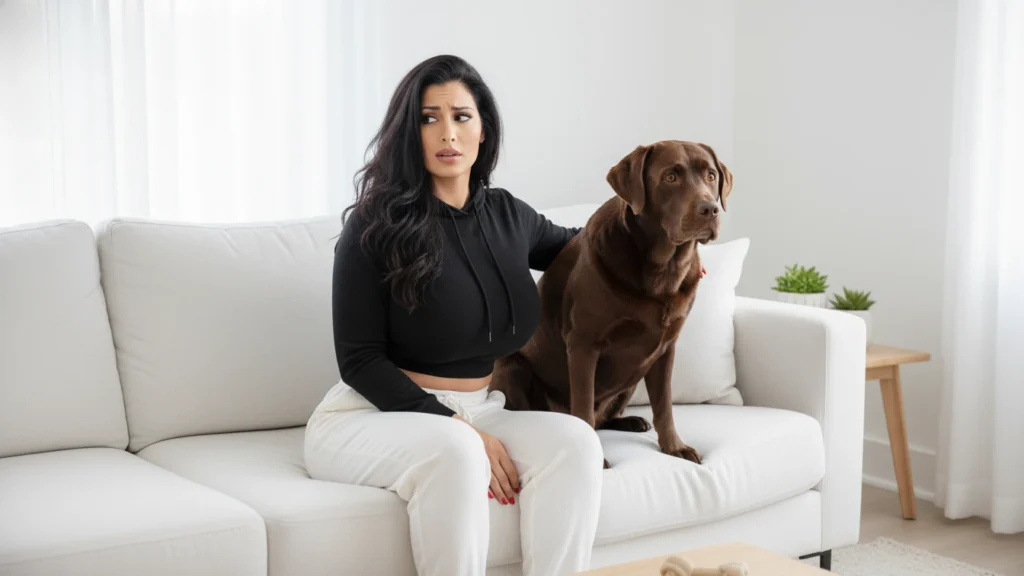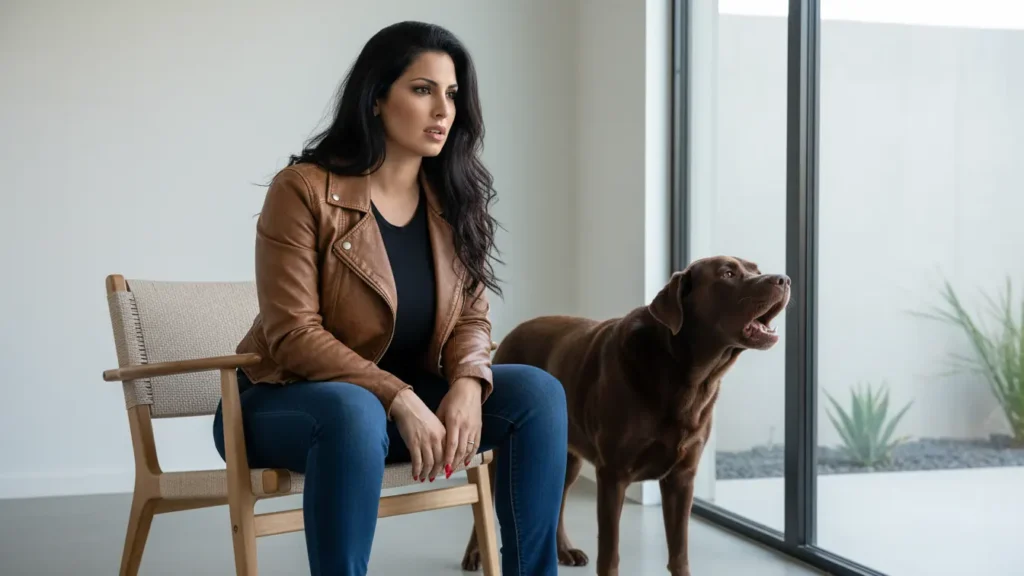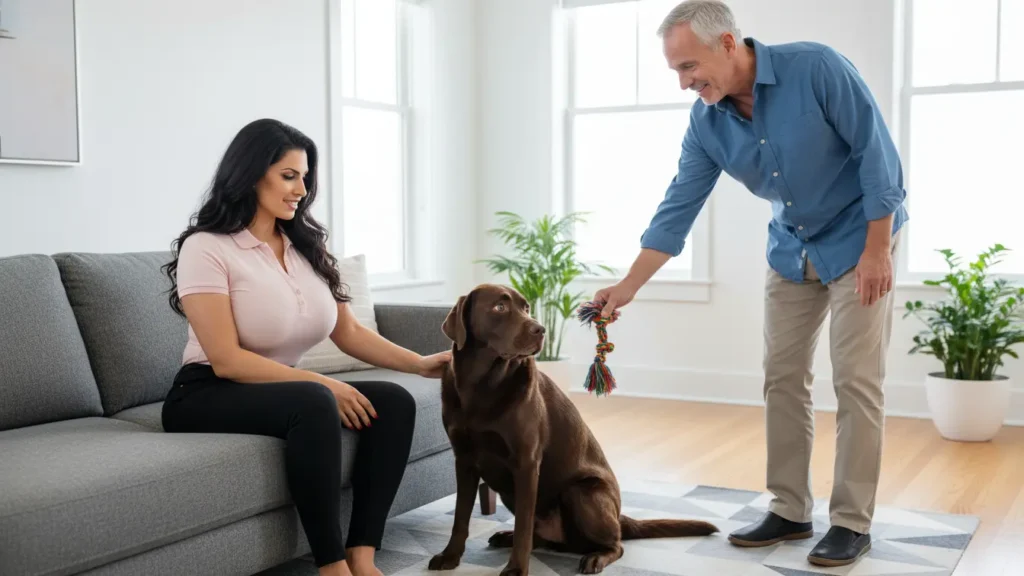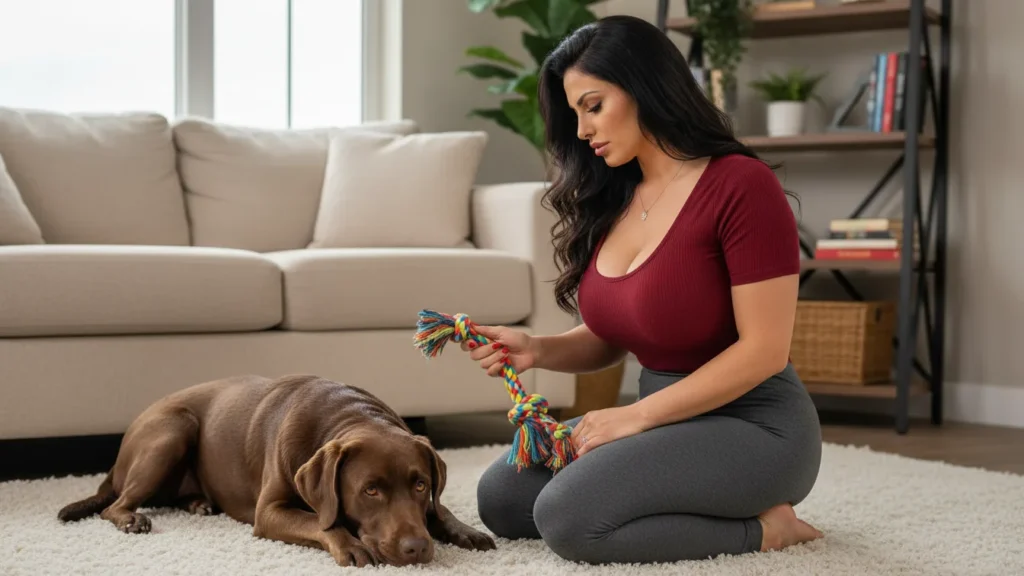
One day your dog is a blur of fur, tearing across the yard after a tennis ball like it owes him money. A week later, he barely lifts his head when you shake the toy box. No limping. No whimpering. He’s still eating, still wagging his tail when you walk in the door. He just… stopped playing.
If you’ve ever stood there holding a rope toy while your dog looks at you like you’re asking him to do taxes, you already know how unsettling this is. Play isn’t just a fun extra for dogs — it’s one of the clearest windows we have into how they’re actually feeling. So when that window suddenly goes dark, it’s worth paying attention.
Here’s what’s really going on when a playful dog goes quiet, and how to tell the difference between “having an off day” and “something is wrong.”
Play Is a Health Report, Not Just a Hobby
It’s tempting to file a sudden drop in playfulness under “maybe he’s just tired” or “dogs get lazy sometimes.” Sometimes that’s true. But veterinary behaviorists treat decreased play drive as an early clinical clue — often showing up before limping, vomiting, or any obvious symptom does.
That’s because play is expensive, biologically speaking. It requires a dog to feel physically comfortable, mentally secure, and free of anything more urgent competing for its attention. The moment any of those things is compromised — even mildly — play is usually the first thing to go. Not eating, not walking, not even tail-wagging. Play.
So a dog that suddenly won’t play isn’t being stubborn or moody. He’s telling you, in the only language available to him, that something has shifted.
The Usual Suspects Behind Sudden Play Avoidance
1. Pain, especially joint pain, is the most common hidden cause
Dogs are notoriously good at hiding pain — it’s an instinct left over from their wild ancestors, who couldn’t afford to look weak in front of predators or rivals. So instead of yelping or limping right away, a dog in early discomfort often just… opts out. Chasing a ball, wrestling with another dog, or jumping for a frisbee all put sudden stress on joints, and if something aches, the easiest fix is to simply not do it.
Osteoarthritis is a huge factor here, and it’s far more common — and far earlier-onset — than most owners assume. Veterinary research shows <cite index=”18-1″>osteoarthritis affects at least 20% of dogs over one year old and 80% of dogs over eight</cite>, and even young, athletic dogs are not immune. Early signs are subtle: a slight hesitation before jumping onto the couch, taking a beat longer to stand up after a nap, or simply losing enthusiasm for the games they used to love.
Dental pain, ear infections, and even minor soft-tissue injuries (a strained muscle, a sore paw pad) can produce the exact same effect — a dog who looks perfectly normal at rest but quietly refuses to engage in anything high-energy.
2. Stress and anxiety can shut down the “urge to play” almost overnight
Play only happens when a dog’s nervous system feels safe enough to be silly. Introduce a new pet, a new baby, a house move, construction noise, or even a change in your work schedule, and that sense of safety can wobble. A stressed dog often becomes watchful and withdrawn instead of playful — pacing, panting, sticking closer to you, or retreating to a quiet corner rather than initiating a game.
This is one of the most overlooked causes because nothing about the dog’s environment looks obviously “wrong” to us. But dogs pick up on subtleties we don’t register — a shift in routine, tension in the house, even a change in a housemate’s schedule can be enough.
3. Illness that hasn’t fully “shown up” yet
Infections, GI upset, early organ disease, and metabolic issues can sap a dog’s energy well before other symptoms appear. A dog fighting something under the hood — even something as unremarkable as a mild infection — will often conserve energy by dropping optional activities first. Play is optional. Eating and moving around the house are not (yet).
This is exactly why sudden, unexplained changes in play deserve real attention rather than a shrug. It’s frequently the canary in the coal mine.
4. Grief, depression, and emotional withdrawal
Dogs form real attachments, and they can genuinely grieve — the loss of a companion animal, a family member moving out, or even a beloved routine ending. A dog going through this often becomes flatter emotionally: less interested in toys, slower to greet you, more content to just lie around. It looks a lot like sadness because, in a functional sense, it often is.
5. Simple fatigue or boredom (the less worrying options)
Not every dropped tennis ball is a red flag. After an unusually active day, or during hot weather, dogs can legitimately just be tired. Boredom is different from disinterest — a bored dog often still wants to do something, just not the same old game with the same old toy. If interest bounces back within a day or two and nothing else seems off, this is probably all it is.
Gradual vs. Sudden: The Distinction That Actually Matters
This is the single most useful filter for deciding how worried to be.
Gradual decline — a slow dimming of playfulness over months — is often just age. Older dogs naturally play less as their energy and joint comfort change over time. It’s worth a vet visit eventually, but it’s rarely an emergency.
Sudden decline — a dog who was playful last week and isn’t this week — is a different story. It’s far more likely to point to pain, illness, or acute stress, and it deserves closer attention sooner rather than later.
Signs That Turn “Watch and Wait” Into “Call the Vet”
A single quiet day isn’t cause for panic. But combine reduced play with any of the following, and it’s time to get your dog examined:
- Limping, stiffness, or reluctance to climb stairs or jump onto furniture
- Appetite changes — eating less, or suddenly ravenous
- Increased sleeping or general lethargy outside of play
- Licking, chewing, or biting at a specific joint or area
- Hiding, clinginess, or new irritability when touched
- Vomiting, diarrhea, or changes in thirst and urination
- The change lasting more than two or three days with no improvement
None of these need to be dramatic to matter. Veterinary sources consistently note that the earliest signs of pain or illness in dogs are subtle — a dog quietly declining a game of fetch, not a dog collapsing in distress.
What to Do While You’re Figuring It Out
You don’t have to choose between “panic and rush to the ER” and “ignore it completely.” A sensible middle path:
- Don’t force play. Pushing a reluctant dog to engage can worsen pain or stress and erode trust.
- Watch the pattern, not just the moment. Is it every day, or just today? Is it paired with anything else unusual?
- Do a gentle at-home check. Watch how your dog gets up, walks, and climbs stairs. Look for favoring one leg or hesitating on jumps.
- Keep a short log or video. A few days of notes (or a 10-second video of your dog walking) gives your vet real information to work with, rather than a vague “he seems off.”
- Book a vet visit if the change persists past 2–3 days, or immediately if you notice limping, appetite loss, or clear signs of pain.
The Bottom Line
A dog that suddenly stops playing isn’t being lazy, difficult, or “just getting old” — even when that’s the easiest explanation to reach for. Play is one of the most sensitive indicators of a dog’s overall wellbeing, and its disappearance is often the first honest signal that something — physical or emotional — needs attention.
The good news: most of the causes behind this, from arthritis to anxiety to a passing infection, are very manageable once identified. Trust the change you’re seeing, watch for the accompanying clues, and when in doubt, let a vet take a look. Your dog can’t tell you in words that something’s wrong — but he’s already telling you in the way he plays.
Sources & Further Reading
- Arthritis in Dogs — VCA Animal Hospitals
- 13 Signs Your Dog’s Arthritis Is Acting Up — VCA Animal Hospitals
- Degenerative Joint Disease in Dogs — VCA Animal Hospitals
- Arthritis and Nutrition for Dogs — VCA Animal Hospitals

Dr. Sofia Romano, DVM, is an experienced veterinarian specializing in small-animal medicine and preventive care. She has treated thousands of cases using evidence-based diagnostics and modern clinical practices. Dr. Romano is dedicated to providing science-backed pet-health guidance that helps owners make informed decisions and improve their pets’ quality of life.