The bleeding stopped weeks ago. As far as you can tell, your dog’s heat cycle is long over. And yet she’s suddenly clingier than usual, dragging a stuffed toy around like it needs tucking in, or oddly protective of a corner of the living room. Maybe her appetite dipped, or she seems a little “off” in a way you can’t quite pin down. If you weren’t expecting it, this stretch of weeks after a heat cycle can be genuinely confusing — she’s not in heat anymore, so why is she still acting different?
The answer is almost entirely hormonal, and it’s far more common than most owners realize. Unspayed female dogs go through a real, physiologically active period in the weeks following estrus, whether or not they were bred — and it can produce behavior changes that look, to an untrained eye, a lot like something’s wrong.
The Hormonal Timeline Behind the Behavior
To understand why these changes happen, it helps to know what’s going on internally after heat ends. Once a female dog’s fertile window (estrus) closes, she enters a phase called diestrus — and critically, her body proceeds through this phase in essentially the same hormonal way whether or not she’s actually pregnant. Progesterone rises and stays elevated for weeks, preparing the body to support puppies. If she’s not pregnant, those hormone levels eventually decline on their own, typically over four to six weeks.
It’s specifically that decline — the body’s hormones dropping after weeks of elevation, the same way they would after a real pregnancy ends — that triggers many of the changes owners notice. The body, in a sense, doesn’t fully know the difference between a hormonal cycle that resulted in pregnancy and one that didn’t, at least for a while.
False Pregnancy: The Most Common Cause of Post-Heat Behavior Changes
This is the single biggest driver of noticeable behavioral shifts after a heat cycle, and it’s remarkably common — most intact female dogs show at least some signs of it after estrus, whether or not they were mated. It goes by several names: false pregnancy, phantom pregnancy, pseudopregnancy, or pseudocyesis, and it refers to a display of genuine maternal behavior combined with physical signs of pregnancy in a dog that isn’t actually pregnant.
Signs typically begin four to nine weeks after the previous heat and can include:
- Nesting behavior — digging at bedding, rearranging blankets, seeking out a quiet “den” area
- Mothering objects — carrying, guarding, or “caring for” a stuffed toy, a shoe, or occasionally another pet, as if it were a puppy
- Mammary gland enlargement, sometimes with actual milk production
- Decreased appetite, though weight loss is uncommon due to fluid retention offsetting it
- Lethargy
- Periodic vomiting
- Increased clinginess or protectiveness around whatever she’s chosen to “mother”
Severity varies enormously between individual dogs, and even within the same dog, one cycle’s false pregnancy can look completely different from the next. Some dogs show almost nothing; others go through the full range of symptoms as though they’d genuinely just had puppies. The condition isn’t dangerous on its own and usually resolves without treatment, but if signs are severe, prolonged, or your dog seems genuinely distressed, a vet visit is worthwhile — particularly to rule out mastitis if milk production is heavy, or other complications.
Emotional and Behavioral Shifts Beyond False Pregnancy
Even in dogs who don’t develop the classic false pregnancy signs, the hormonal aftermath of heat can shape mood and behavior in subtler ways during the weeks that follow:
Increased clinginess or neediness. Many dogs become noticeably more attached to their owner during this window, following more closely from room to room, seeking more physical contact, or seeming unusually sensitive to being left alone even briefly.
Irritability or unpredictability. Some dogs go the opposite direction — becoming touchier, less tolerant of handling, or reacting more strongly than usual to noise, other pets, or being approached. This isn’t a personality change; it’s a temporary hormonal one.
Appetite changes. A dip or shift in interest in food is common during this stretch, generally without significant weight loss.
Reduced responsiveness to training. It’s not unusual for a normally well-trained dog to seem briefly “forgetful” of commands she reliably knows, simply because hormonal shifts affect focus and mood the same way they can in people.
Territorial or protective behavior, especially around whatever space or object has become the focus of nesting behavior, if false pregnancy is present.
Most of this settles down within a few weeks as hormone levels stabilize, and dogs generally return to their normal selves without any intervention needed.
Why This Cycle Repeats
Because intact female dogs go into heat roughly twice a year on average, this pattern of post-heat hormonal behavior isn’t a one-time event — it can recur after every cycle for the dog’s entire reproductive life, and it tends to become more pronounced with repeated cycles in some dogs rather than less. This is one of the main behavioral reasons vets often discuss spaying with owners of intact females: beyond the medical benefits, spaying removes the hormonal rollercoaster driving these repeated behavior shifts entirely.
When It’s More Than Just Hormones
Most post-heat behavior changes are harmless and self-resolving, but a few signs point toward something that needs veterinary attention rather than just patience:
- Signs of pyometra — a serious uterine infection that can develop four to eight weeks after heat, presenting as lethargy, increased thirst, vomiting, or abnormal vaginal discharge. This is a genuine emergency in unspayed females and shouldn’t be mistaken for routine post-heat symptoms.
- Severe or worsening milk production, which can lead to mastitis (a painful mammary infection) if left unmanaged
- Behavior changes that don’t improve after several weeks, or that seem to be getting worse rather than better
- Signs of real distress — persistent restlessness, inability to settle, or a dog who seems genuinely unwell rather than simply “different”
If something feels off in a way that goes beyond mild clinginess or a few weeks of mothering a stuffed animal, it’s worth a vet visit to rule out infection or another complication rather than assuming it’s routine hormonal behavior.
Supporting Her Through It
- Keep routines steady. Predictability helps a dog whose mood is being pulled around by hormones she can’t control.
- Let mild nesting behavior happen. If she wants to fuss over a toy for a couple of weeks, this is generally harmless and tends to resolve on its own.
- Watch mammary glands if false pregnancy signs appear, and avoid stimulating them further (no expressing milk, which can prolong production).
- Give extra patience with training lapses. A dog who suddenly seems less responsive to commands during this window isn’t being defiant — treat it as temporary rather than correcting harshly.
- Talk to your vet about spaying if repeated post-heat behavior changes are disruptive or distressing for your dog, since it eliminates the hormonal cycle driving them.
The Bottom Line
A female dog acting differently in the weeks after a heat cycle isn’t being moody or unpredictable for no reason — she’s working through a genuine hormonal aftermath that her body goes through regardless of whether she was pregnant. Whether it shows up as full false-pregnancy nesting behavior, a few weeks of extra clinginess, or a dip in appetite, the underlying cause is almost always the same: hormone levels rising and falling in a pattern the body doesn’t distinguish from real pregnancy. In most cases, patience and a little extra attention is all that’s needed — but knowing the warning signs that point to something more serious, like pyometra, means you won’t mistake a real emergency for routine post-heat behavior.
Sources & Further Reading
- False Pregnancy or Pseudopregnancy in Dogs — VCA Animal Hospitals
- Estrous Cycles in Dogs — VCA Animal Hospitals
- Birth Control for Dogs — VCA Animal Hospitals

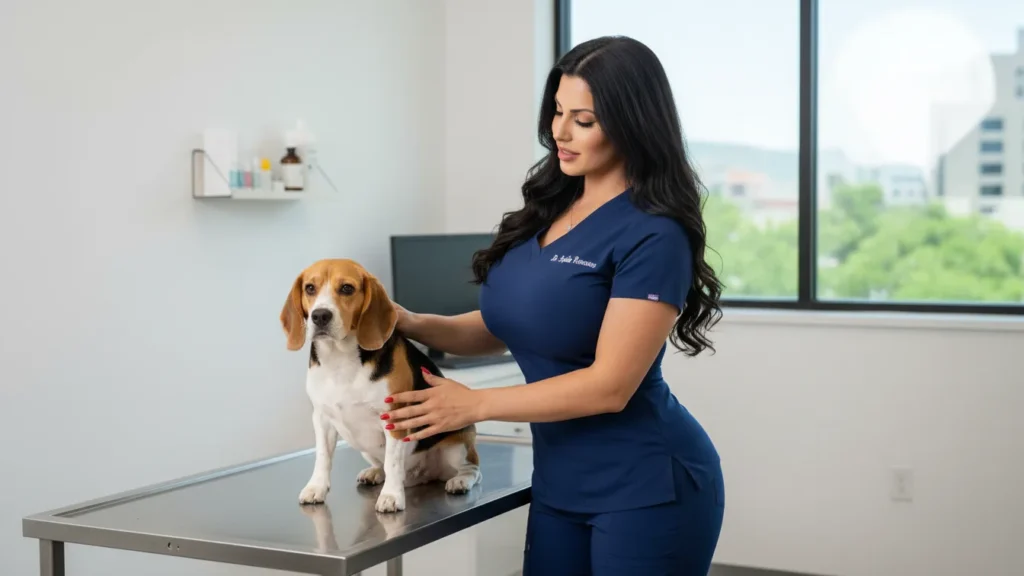
Dr. Sofia Romano, DVM, is an experienced veterinarian specializing in small-animal medicine and preventive care. She has treated thousands of cases using evidence-based diagnostics and modern clinical practices. Dr. Romano is dedicated to providing science-backed pet-health guidance that helps owners make informed decisions and improve their pets’ quality of life.