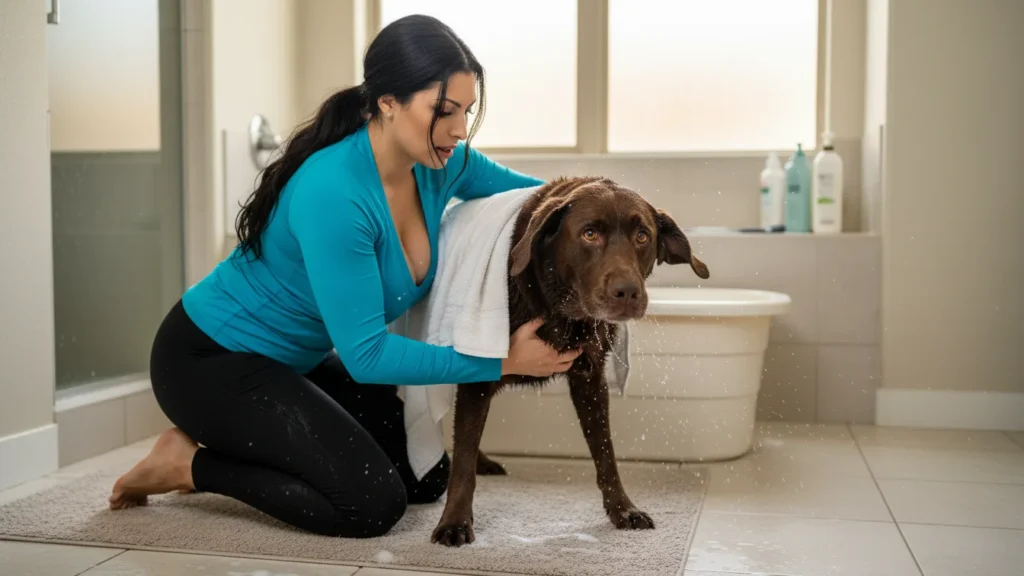
Bath time ends, the water drains, and before you can even reach for a towel, your dog erupts into a full-body shake — sometimes followed by a frantic sprint around the house, a dramatic floor roll, or all three at once. It looks chaotic, maybe even a little funny, but almost none of it is random. That shake is one of the most efficient, deeply wired behaviors in your dog’s entire physical toolkit.
Here’s what’s actually happening underneath all that soggy chaos.
It’s a Built-In Survival Mechanism
Long before dogs were curling up on couches, staying wet was a genuine liability. A soaked coat traps cold air against the skin, slows movement, and in the wild, made an animal more vulnerable to both hypothermia and predators. Shaking evolved as a fast, low-effort solution to that exact problem.
And it’s remarkably effective. Studies on wet-mammal shaking have found that a single shake can remove roughly 70% of the water trapped in a dog’s fur in just a few seconds — far faster than air-drying alone. Dogs accomplish this using their loose, flexible skin, which allows them to generate a whip-like rotational force that flings water outward through centrifugal motion. It’s essentially a built-in spin cycle, and it’s one of the most energy-efficient drying methods in the animal kingdom.
Warming Back Up, Not Just Drying Off
Shaking isn’t only about getting rid of water — it also helps regulate body temperature. Wet fur pulls heat away from the skin, and if the bathwater was cooler than your dog’s normal body temperature, that chill sets in fast. The rapid muscle movement involved in shaking generates a small burst of heat and boosts circulation, helping your dog warm back up more quickly after being submerged.
This is part of why the shake often looks more intense right after a bath than after, say, getting caught in light rain. Baths typically involve more water saturation, so there’s more temperature drop to recover from.
The Smell Factor: Why They Shake Even After a “Nice” Shampoo
To you, a freshly bathed dog smells clean. To your dog, it can smell like a stranger. A dog’s sense of smell is estimated to be tens of times more powerful than a human’s, and their natural scent plays a real role in how they identify themselves and their environment. Shampoo, even the gentlest, unscented kind, temporarily masks that scent with something foreign.
Shaking — and the floor-rolling that often follows — is partly an attempt to shed that unfamiliar smell and get back to something that feels like “them” again. This is also why many dogs immediately want to rub their face or body against a rug, couch, or grass right after a bath. It’s less about defiance and more about re-establishing a scent they actually recognize.
Stress Relief, Not Just Physical Reflex
Bath time isn’t every dog’s favorite part of the day. The combination of running water, being physically restrained, unfamiliar smells, and standing in a slippery tub can be genuinely stressful for dogs who aren’t naturally comfortable with water. For these dogs, the post-bath shake can double as a release valve — a physical way of discharging built-up tension, similar to how a dog might shake off stress after a tense encounter with another animal.
This is closely tied to the post-bath “zoomies” many owners see immediately afterward. That sudden burst of running, rolling, and general chaos is widely understood as a mix of physical relief and emotional release, not just excess energy. For a dog who found the bath stressful, tearing around the house afterward can feel like an outlet for everything that built up while they stood still and endured it.
When Shaking Might Mean Something Else
Most post-bath shaking is completely normal, but a few signs are worth paying attention to:
- Head shaking specifically, especially if repeated or paired with scratching at the ears, can mean water got trapped in the ear canal, which may cause irritation or set the stage for an ear infection if it isn’t dried properly.
- Shaking paired with whining, trembling, or reluctance to move may point to stress or discomfort rather than simple drying behavior, particularly in dogs who are anxious about baths in general.
- Shaking that continues long after your dog is fully dry, especially alongside lethargy, vomiting, or labored breathing, is not typical and warrants a veterinary check, since it can occasionally signal hypothermia or a reaction to a grooming product.
Making Bath Time (and the Aftermath) Easier
A few small adjustments can reduce excessive shaking and make the whole process less stressful for dogs who find it overwhelming:
- Use lukewarm water rather than cold, since temperature closer to their body heat reduces the post-bath chill.
- Choose a gentle, dog-specific shampoo to minimize skin irritation that can trigger extra shaking.
- Dry ears carefully and thoroughly with a soft towel to prevent trapped moisture.
- Keep the room calm and comfortably warm, and have a towel ready immediately so your dog isn’t standing around wet and cold for long.
- Let the shake happen. Trying to stop it usually just prolongs the process your dog is instinctively trying to speed up.
The Bigger Picture
That post-bath shake, as messy as it can be, is really your dog’s body doing exactly what evolution designed it to do: get dry fast, warm back up, shed an unfamiliar scent, and release a bit of tension in the process. It looks like chaos. It’s actually efficiency, instinct, and a small dose of relief, all rolled into one very wet, very dramatic three-second performance.
Sources
- American Kennel Club — Why Do Dogs Shake?
- VCA Animal Hospitals — Grooming Your Dog
- PetMD — Why Do Dogs Shake After a Bath?
- Royal Society Publishing — Wet Mammals Shake at Tuned Frequencies
- Merck Veterinary Manual — Normal Behavior in Dogs

Dr. Sofia Romano, DVM, is an experienced veterinarian specializing in small-animal medicine and preventive care. She has treated thousands of cases using evidence-based diagnostics and modern clinical practices. Dr. Romano is dedicated to providing science-backed pet-health guidance that helps owners make informed decisions and improve their pets’ quality of life.



Pingback: Why Dogs Fear Vacuum Cleaners — The Instinctive Threat Their Brain Can’t Ignore
Pingback: Why Dogs Act Strange During Weather Changes — The Hidden Signals Their Bodies Sense Before You Do