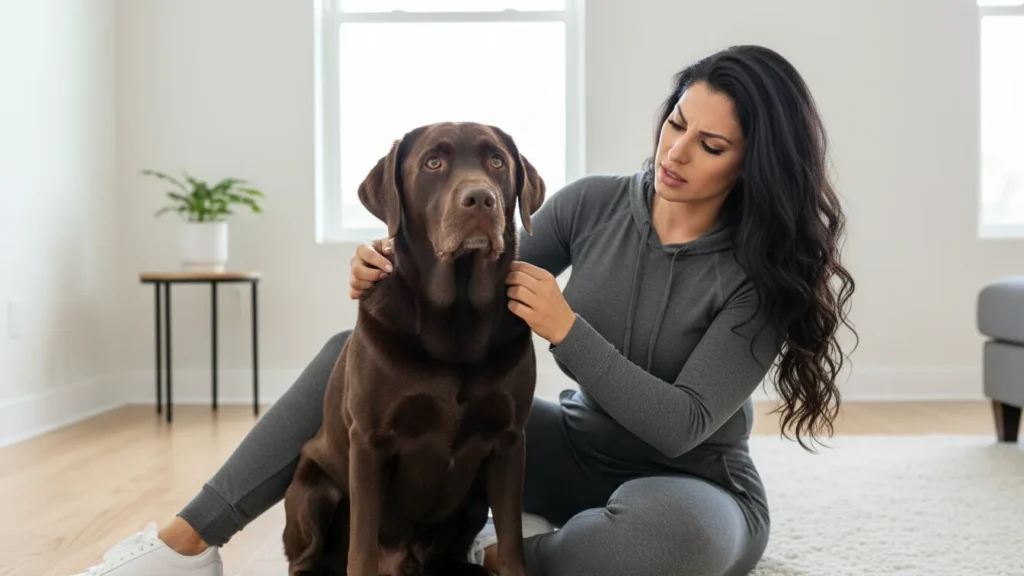
A shiny coat is one of those things owners notice by its absence. You don’t think much about it day to day — until your dog’s fur starts looking flat, feels coarse instead of soft, or seems to shed more than it used to, and suddenly you’re wondering when that started and why. The coat is often the first visible sign that something else in a dog’s body isn’t quite right, which is exactly why vets pay close attention to it during checkups even when it’s not the reason for the visit.
The Explanation Most Owners Reach For First
Diet is usually the first thing owners suspect, and often correctly. A dog’s coat is made almost entirely of protein, and the skin underneath depends on a steady supply of fatty acids, vitamins, and minerals to stay healthy. Omega-3 and omega-6 fatty acids in particular play a direct, well-supported role in coat quality — deficiencies show up as dullness, flakiness, or a dry, straw-like texture before they show up almost anywhere else in the body. This is part of why fish oil or omega-3 supplementation is one of the more consistently effective interventions vets recommend for coat issues tied to diet.
It’s worth knowing that even a reasonable-looking diet can fall short here. Heavily processed kibble produced at high temperatures can degrade heat-sensitive nutrients like omega-3s during manufacturing, meaning a food that looks complete on the label doesn’t always deliver those nutrients as reliably in practice.
The Cause Owners Rarely Think to Check
Here’s the one that surprises people most: hormonal conditions, particularly hypothyroidism, are a well-documented and common cause of a dull, dry coat — and one that gets missed constantly because the coat change is often gradual and easy to write off as “just getting older.” Hypothyroidism, caused by an underactive thyroid gland, typically comes bundled with other subtle signs — weight gain without a change in diet, lower energy, increased sensitivity to cold — that owners often notice individually without connecting them to a single underlying cause. A simple blood test can check thyroid function, and treatment is usually straightforward once diagnosed.
Cushing’s disease, a different hormonal condition involving excess steroid hormone production, can produce a similar dull-coat picture along with hair loss and skin changes. Both conditions are genuinely easy for owners to dismiss as normal aging, which is part of why vets treat coat changes as diagnostically meaningful rather than cosmetic.
Water, Not Just Food
Dehydration is an underappreciated contributor here. A dog not drinking enough water — or eating primarily dry food without much other moisture in their diet — can develop skin that struggles to produce its natural protective oils, which shows up in the coat as dryness and dullness. This is a genuinely easy one to overlook, since a dog can appear to be drinking “normally” while still not getting quite enough, especially in hot weather or with increased activity.
Your Own Grooming Habits Might Be the Cause
This is a case where the fix owners reach for can accidentally be the problem: overbathing, particularly with a harsh or poorly matched shampoo, strips a dog’s skin of the natural oils that keep the coat conditioned. A dog bathed too frequently, or with a product not formulated for their skin type, can end up with a drier, duller coat than one bathed less often with the right product. Regular brushing, on the other hand, genuinely helps — it distributes natural oils through the coat and is one of the simplest, lowest-cost interventions available.
Parasites and Allergies — Not Always the Obvious Signs
Fleas, ticks, and mites are usually associated with visible scratching or bald patches, but a milder infestation can show up first as general coat dullness rather than dramatic symptoms. Similarly, food or environmental allergies can affect coat quality before they produce the itching and redness most owners associate with an allergic reaction. Because both categories can present subtly, a coat that’s dulled without an obvious cause is a reasonable prompt to rule out parasites and allergies specifically, rather than assuming it’s purely nutritional.
The One Most Owners Never Consider: Stress
Chronic stress is a genuinely underrecognized contributor to coat condition in dogs, likely connected to elevated cortisol levels affecting skin and coat health over time, similar to patterns seen in humans. A change in environment, ongoing anxiety, or a stressful household situation can show up physically in a dog’s coat well before it’s obvious behaviorally — one more reason coat changes are worth mentioning to a vet even absent other symptoms.
When a Dull Coat Is Worth a Vet Visit
Given how many of these causes overlap in appearance, a few signs specifically suggest it’s time to move from home troubleshooting to a veterinary evaluation:
- No improvement after a reasonable period of dietary changes and consistent grooming
- Coat dullness accompanied by hair loss, redness, scabs, or a change in skin pigmentation
- Changes in energy level, weight, or digestion happening alongside the coat change
- A sudden shift in coat condition rather than a gradual one, especially in an otherwise healthy-seeming dog
A dull coat by itself rarely means something is seriously wrong. But because it sits at the intersection of nutrition, hormones, hydration, parasites, allergies, and even stress, it’s one of the more useful early signals a dog’s body gives — often well before any of those underlying issues would otherwise be obvious.
Sources & Further Reading
- Why Is My Dog’s Coat Dull? Could Diet Be the Cause? — Marleybones
- 7 Causes of Dog Dry Skin (and How to Help) — PetLab Co
- Why Do Dogs Get Dry Skin? — Broad Ripple Animal Clinic
- Common Dog Coat Changes Signaling Health Problems — Lancaster Puppies
- Coat Changes in Dogs: Why Is My Dog’s Coat Dull and Dry? — My Dog Symptoms

Dr. Sofia Romano, DVM, is an experienced veterinarian specializing in small-animal medicine and preventive care. She has treated thousands of cases using evidence-based diagnostics and modern clinical practices. Dr. Romano is dedicated to providing science-backed pet-health guidance that helps owners make informed decisions and improve their pets’ quality of life.


Pingback: Why Dogs Get Yeast Infections Repeatedly — The Hidden Triggers Most Owners Never Fix