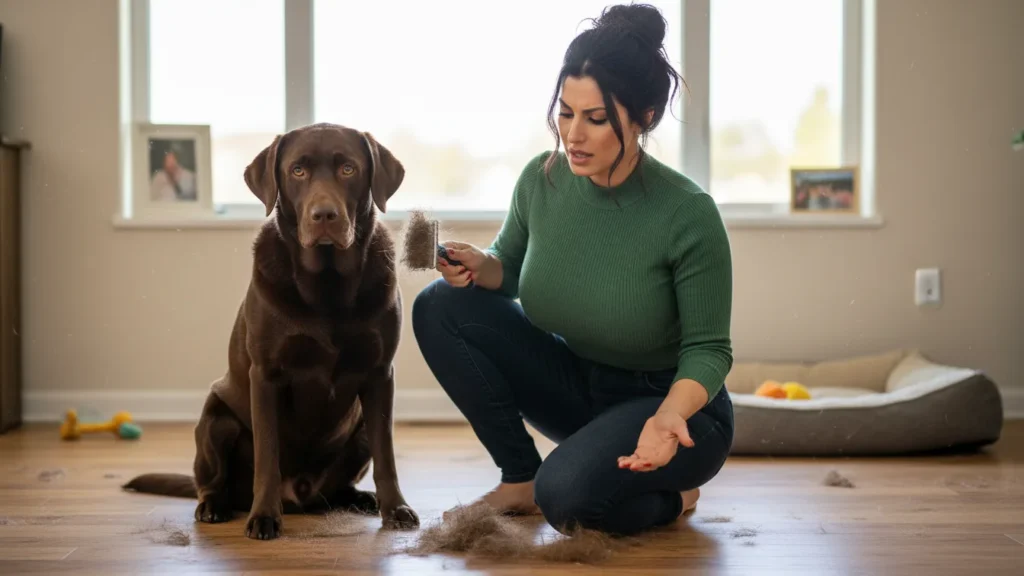
You’re sitting on the couch in your favorite black pants, and within seconds, you look like you’re wearing a fur coat. If you feel like you are constantly dodging tumbleweeds of dog hair across your hardwood floors, you aren’t alone.
While seasonal shedding (often called “blowing coat”) is entirely normal for double-coated breeds, there is a distinct line between healthy hair cycling and excessive hair loss.
When pet parents complain about extreme shedding, veterinarians don’t just look at the fur—they look at the entire body. A dog’s coat is a direct mirror of their internal health. If your vacuum is working overtime, here are 10 hidden, underlying causes of excessive shedding that most owners miss.
1. Omega Fatty Acid Deficiencies
A dull, heavy-shedding coat is often the very first sign of poor nutrition. Even if you are feeding your dog a premium kibble, they might not be absorbing enough Omega-3 and Omega-6 fatty acids. These essential fats are the building blocks of a healthy skin barrier. Without them, hair follicles weaken, dry out, and release the hair prematurely.
The Vet Fix: Adding a high-quality fish oil supplement can drastically reduce non-seasonal shedding in just 6 to 8 weeks.
2. The “Invisible” Stress Shed
Have you ever noticed your dog suddenly leaving a massive pile of fur on the examination table at the vet clinic? Stress hormones have a profound and immediate impact on a dog’s hair cycle. Chronic anxiety—whether from a recent move, separation anxiety, a new baby, or construction noise—can cause a dog to continuously drop hair.
3. Stealth Parasites (Mites and Fleas)
You might not see bugs crawling on your dog, but microscopic parasites like Demodex or Sarcoptes mites live deep in the hair follicles. Even a mild flea infestation can trigger Flea Allergy Dermatitis. The resulting inflammation and intense scratching damage the follicles, leading to massive hair loss before you ever spot a single flea.
4. Undiagnosed Environmental Allergies
Skin allergies have quietly become one of the top reasons dogs visit the vet. Dogs don’t usually get watery eyes and sneezes from pollen, dust mites, or mold; instead, their skin breaks out. This allergic reaction inflames the skin bed, causing the hair to detach and fall out, often accompanied by red, itchy paws or ears.
5. Hidden Food Intolerances
Just like environmental allergies, food sensitivities manifest in the skin. If your dog is allergic to a common ingredient—like chicken, beef, or wheat—their immune system remains in a constant state of low-grade inflammation. This chronic inflammation disrupts the natural hair growth phase, leading to year-round, excessive shedding and a brittle coat.
6. Hypothyroidism (Underactive Thyroid)
If your dog is losing hair symmetrically (the same amount on both sides of their body) and isn’t itchy, veterinarians immediately suspect an endocrine issue. Hypothyroidism slows down a dog’s entire metabolism. As the body conserves energy, it stops prioritizing hair growth. The result is a thinning coat, a “rat tail,” and sudden, unexplained weight gain.
7. Cushing’s Disease
Cushing’s disease (Hyperadrenocorticism) occurs when a dog’s body produces too much cortisol, a primary stress hormone. This constant flood of cortisol weakens the skin, making it paper-thin and prone to infections, while causing the fur to fall out in clumps. If your dog is shedding excessively while also drinking massive amounts of water and panting heavily, it’s time for a blood test.
8. Low-Grade Skin Infections
Fungal infections (like ringworm) and bacterial overgrowths (like yeast) thrive on the skin’s surface. These infections attack the keratin in the hair shafts, causing the hair to become brittle and snap off right at the skin line. Owners often mistake this for normal shedding until bald, crusty, or raised patches finally appear.
9. Pregnancy and Hormonal Shifts
If your female dog recently had a heat cycle, gave birth, or was just spayed, expect a fur explosion. Massive hormonal shifts temporarily weaken the hair follicles. This is known as “telogen effluvium.” The body sheds the coat dramatically, but it usually returns to normal once her hormones stabilize in a few months.
10. Chronic Dehydration
Skin is the largest organ in a dog’s body, and it requires massive amounts of water to maintain its elasticity and hold onto hair roots. If your dog doesn’t drink enough water—a common issue for dogs fed exclusively dry kibble diets—their skin becomes dry and flaky. Dehydrated skin simply cannot grip the hair follicles tightly, resulting in constant, low-level shedding.
Actionable Takeaway: When to Call the Vet
If you are brushing your dog daily and the shedding still seems endless, do a quick skin check. If you see redness, bald spots, scabs, or notice your dog aggressively scratching or licking their paws, bypass the grooming salon and head straight to the vet. A simple blood panel or skin scrape can identify the hidden cause, getting your dog’s coat—and your vacuum cleaner—back to normal.
High-Authority Sources & Veterinary References
To ensure your pet’s health, the information in this article is backed by established veterinary science. For further reading, consult these trusted resources:
- American Kennel Club (AKC): Veterinary insights on Understanding Dog Shedding and Coat Health.
- Merck Veterinary Manual: Clinical overview of Alopecia and Hair Loss in Dogs.
- American College of Veterinary Dermatology (ACVD): Recognizing the signs of Canine Allergies and Skin Disease.
- Cornell University College of Veterinary Medicine: Identifying endocrine disorders like Hypothyroidism in Dogs.

Dr. Sofia Romano, DVM, is an experienced veterinarian specializing in small-animal medicine and preventive care. She has treated thousands of cases using evidence-based diagnostics and modern clinical practices. Dr. Romano is dedicated to providing science-backed pet-health guidance that helps owners make informed decisions and improve their pets’ quality of life.


Pingback: The Early Signs Of Kidney Problems In Dogs — Subtle Clues Most Owners Miss
Pingback: Hidden Reasons Your Dog’s Fur Is Becoming Dry Or Dull — What Most Owners Miss