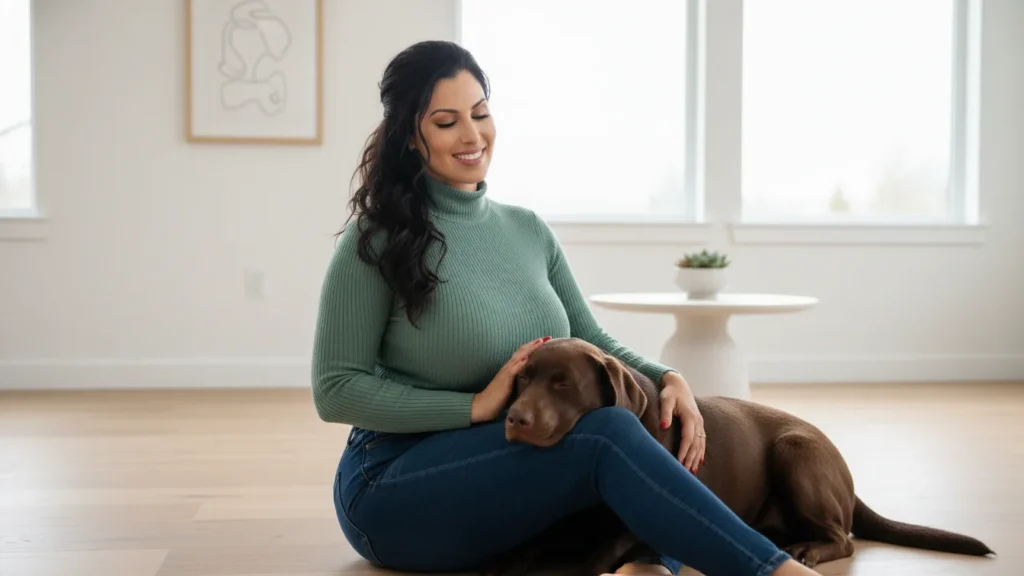
We love our dogs like family. We buy them memory-foam beds, bake them birthday cakes, and let them take up the best spot on the couch. But despite all this love, humans are primates, and dogs are canines.
Because our species evolved with entirely different ways of communicating, the very things we do to show affection—or manage our households—often get lost in translation. Without realizing it, you might be triggering your dog’s fight-or-flight response on a daily basis.
Veterinary behaviorists spend their days decoding the subtle signs of canine anxiety. From well-meaning cuddles to chaotic routines, here are ten common things you are probably doing that secretly stress your dog out, and how to fix them.
1. Giving Them Big, Bear Hugs
For humans, wrapping our arms around someone is the ultimate expression of love and safety. For a dog, it is the exact opposite.
In canine body language, placing a limb over another dog’s neck or back is a dominating, controlling maneuver. When you hug your dog, you are restricting their physical movement. While some exceptionally tolerant dogs will put up with it, if you look closely, you will often see them exhibit stress signals: licking their lips, pulling their ears back, or showing the whites of their eyes (a “whale eye”).
The Fix: Show affection on their terms. Most dogs vastly prefer a gentle chest rub, a scratch behind the ears, or simply leaning their body weight against your leg.
2. Rushing the “Sniffari” Walk
You have a busy schedule, so you put the leash on, step outside, and power-walk your dog around the block for 15 minutes, pulling them away every time they stop at a fire hydrant.
You might be getting your steps in, but you are mentally starving your dog. A dog’s brain is heavily wired for olfaction (smell). When they sniff a bush, they are reading the neighborhood news. Pulling them away from a scent is like someone shutting your laptop right as you’re in the middle of reading an important email.
The Fix: Dedicate at least one walk a day specifically for sniffing. Let them lead. Studies show that a 20-minute slow, sniffing walk lowers a dog’s pulse and tires their brain far more than a frantic one-mile run.
3. Patting Them on the Top of the Head
Imagine if every time you greeted a friend, they reached out and forcefully patted the top of your skull. You’d probably start ducking.
Many dogs tolerate being patted on the head, but very few actually enjoy it. A hand coming straight down from above their eyes feels inherently threatening and can trigger a flinch response, especially in rescue dogs or sensitive breeds.
The Fix: Approach from the side and aim for the chin, neck, or chest. It feels far less confrontational and allows them to see exactly what your hands are doing.
4. Keeping a Tight Leash
Dogs communicate incredible amounts of information through leash tension. If you constantly wrap the leash tightly around your hand, keeping the line totally taut, you are sending a physical telegraph of tension straight to your dog’s neck.
A tight leash physically restricts their natural movement and instantly signals that something in the environment is wrong, forcing them into a state of high alert. This is a massive trigger for leash reactivity and unexpected barking.
The Fix: Practice the “loose leash” smile. There should always be a soft, U-shaped dip in the leash between your hand and their collar.
5. Inconsistent Household Rules
Dogs thrive on absolute, unshakeable predictability. It makes them feel safe.
If Mom lets the dog sleep on the couch, but Dad yells at the dog for getting on the couch, the dog’s brain goes into overdrive trying to calculate the rules. If jumping up gets them a treat on Tuesday but a scolding on Wednesday, they live in a constant state of low-level anxiety because they never know which version of their humans they are going to get.
The Fix: Have a family meeting. Decide on the rules (e.g., allowed on furniture, not allowed in the kitchen) and enforce them 100% of the time, regardless of who is home.
6. Staring Intensely Into Their Eyes
We are conditioned to make strong eye contact to show sincerity. But in the animal kingdom, an unblinking, prolonged stare is a direct challenge or a threat.
If you grab your dog’s face and stare deeply into their eyes to tell them you love them, you are likely making them deeply uncomfortable. You will notice they immediately look away, blink rapidly, or turn their head to appease you and de-escalate the “tension.”
7. Waking Them Up from Deep Sleep
We all know the phrase, “Let sleeping dogs lie,” but we rarely follow it. We reach down to pet a sleeping dog as we walk by, or let toddlers crawl onto their dog beds while they are napping.
Dogs sleep differently than humans. They experience more frequent bursts of REM sleep and are biologically programmed to wake up quickly to defend themselves if touched unexpectedly. Startling a sleeping dog spikes their adrenaline and is one of the leading causes of accidental bites in the home.
8. Forcing Them to “Make Friends”
You see another dog walking down the sidewalk, so you pull your hesitant dog over and force a face-to-face greeting, assuming they want to say hello.
On-leash greetings are incredibly unnatural for dogs. When they are leashed, their “flight” option is completely removed, leaving them only with “fight” if they feel threatened. Forcing an introverted or fearful dog into the personal space of a strange dog is terrifying for them. True socialization is learning to exist calmly near other dogs, not interacting with every single one.
9. Yelling When You’re Upset (Even Not at Them)
Dogs are emotional sponges. If you are screaming at the television during a football game, aggressively venting on a phone call, or fighting with your spouse, your dog doesn’t understand the context.
They just know that the leader of their household has suddenly become unstable and aggressive. The loud noises and angry body language will send a sensitive dog cowering under the bed, fearful that they have done something wrong.
10. Using Words Instead of Body Language
We talk to our dogs constantly. We give them paragraph-long explanations: “Okay buddy, we are going to go in the car now, but first you need to drop the ball so I can get your leash.”
To your dog, this sounds like the teacher from Charlie Brown. Dogs are masters of observing physical cues, not processing English syntax. When we talk relentlessly without clear hand signals, it creates “white noise.” They get stressed because they know we want something, but they can’t filter out the command from our endless chatter.
The Fix: Use short, consistent, one-word cues paired with highly visible hand signals.
The Ultimate Takeaway
You don’t have to be perfect to be a great pet parent. The simple fact that you care enough to learn about their stressors means you are already doing an amazing job. The best thing you can do for your dog is to stop treating them like a furry human, and start respecting them as a brilliant, sensitive canine. Pay attention to their body language—when they pull away, let them go.
High-Authority Sources & Veterinary References
To ensure your relationship with your dog is healthy and scientifically sound, the insights in this article are backed by established animal behavior experts. For deeper reading, consult these trusted resources:
- American Veterinary Society of Animal Behavior (AVSAB): Clinical insights on how human interaction impacts Canine Fear and Anxiety.
- American Kennel Club (AKC): The science behind canine body language and Why You Shouldn’t Hug Your Dog.
- International Association of Animal Behavior Consultants (IAABC): Understanding the critical importance of Choice and Agency in Dog Training.
- PetMD (Veterinary Authored): Recognizing the subtle physical signs of a Stressed or Anxious Dog.

Dr. Sofia Romano, DVM, is an experienced veterinarian specializing in small-animal medicine and preventive care. She has treated thousands of cases using evidence-based diagnostics and modern clinical practices. Dr. Romano is dedicated to providing science-backed pet-health guidance that helps owners make informed decisions and improve their pets’ quality of life.





Pingback: 5 Dangerous Dog Treats You Should Never Buy Again — What Most Labels Won’t Tell You