That Moment You Pause and Wonder, “Is This Normal?”
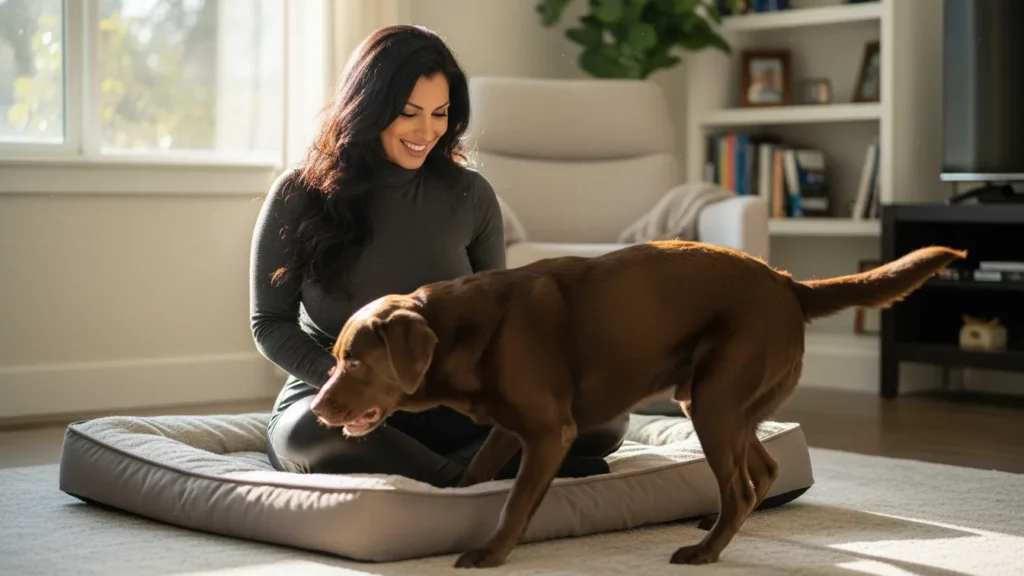
Your dog gets up.
They walk in a small loop.
Then another.
Then one more—before finally lying down.
Sometimes it looks cute.
Sometimes pointless.
Sometimes… unsettling.
And at some point, almost every dog owner asks:
“Why does my dog keep walking in circles?”
The answer is reassuring in many cases—and important in others.
Because circling can be completely normal behavior, or it can be one of the earliest signs that something isn’t right.
Knowing the difference matters.
The Instinctive Reason Dogs Have Always Walked in Circles
Long before couches and dog beds existed, dogs slept outdoors.
Circling before lying down helped them:
- Flatten grass or leaves
- Check for insects or threats
- Position themselves for warmth or safety
This behavior is deeply ingrained.
Even today, dogs circle before resting because their brains still follow ancient routines.
This is normal, healthy, and harmless.
Normal Reasons Dogs Walk in Circles
In many situations, circling is nothing to worry about.
Common normal reasons include:
- Before lying down or sleeping
- During excitement or anticipation
- While sniffing and exploring
- During play or zoomies
- Mild anxiety or restlessness
According to behavior guidance from the American Kennel Club, brief, purposeful circling—especially before rest—is considered a natural canine behavior.
Duration and context matter more than the act itself.
Why Dogs Circle More When They’re Excited or Anxious
Dogs often circle when emotions run high.
Excitement and anxiety activate similar brain pathways.
Circling helps dogs:
- Release excess energy
- Regulate emotional arousal
- Self-soothe during uncertainty
Examples include:
- Waiting for food
- Seeing a leash
- Anticipating guests
- Being in a new environment
Short bursts of circling tied to clear emotional triggers are usually behavioral, not medical.
When Circling Starts to Signal a Problem
Circling becomes concerning when it is:
This is where observation matters.
Persistent or worsening circling may indicate underlying health issues that need attention.
Medical Reasons Dogs May Walk in Circles
Some conditions affect balance, perception, or brain signaling.
Potential medical causes include:
- Inner ear infections
- Vestibular disease
- Vision loss
- Cognitive dysfunction (dog dementia)
- Brain inflammation or injury
- Certain toxins or metabolic disorders
Research summarized by the National Institutes of Health shows that neurological or sensory disruption often leads to repetitive directional behaviors, including circling.
These cases are not behavioral habits—they’re symptoms.
Comparison: Normal Circling vs Concerning Circling
| Feature | Normal Circling | Concerning Circling |
|---|---|---|
| Duration | Brief | Prolonged or repetitive |
| Direction | Random | Always same direction |
| Awareness | Alert and responsive | Confused or disoriented |
| Trigger | Sleep, excitement | None or constant |
| Progression | Stable | Worsening over time |
This table alone can help many owners decide when to seek help.
Real-Life Example: When “Cute” Turned Into a Clue
A senior dog starts circling before lying down—normal at first.
But over weeks, the circling increases.
They begin bumping into furniture.
They seem unsure where they are.
This isn’t stubbornness or aging alone.
It’s often cognitive or neurological change—and early detection makes a difference.
Why Senior Dogs Circle More Often
As dogs age, several changes can contribute to circling:
- Reduced vision
- Decreased spatial awareness
- Cognitive decline
- Joint stiffness affecting movement patterns
Circling in older dogs deserves closer observation—even if it looks mild.
Early support can slow progression and improve comfort.
Hidden Tip: Watch Direction, Not Just Frequency
One overlooked detail is directional bias.
If your dog consistently circles:
- Only left
- Only right
This can suggest imbalance or neurological asymmetry.
Random circling is less concerning than one-directional looping.
Mistakes Owners Commonly Make
Even attentive owners can misread circling.
Common mistakes include:
- ❌ Assuming all circling is “just a habit”
- ❌ Ignoring gradual increases
- ❌ Waiting for obvious pain
- ❌ Correcting or scolding the behavior
- ❌ Skipping vet visits because appetite is normal
Dogs often compensate well—until they can’t.
What You Should Do If You’re Unsure
If circling seems new, frequent, or different:
- Note when it happens
- Record duration and direction
- Watch for balance, vision, or behavior changes
- Avoid punishment or interruption
- Consult your veterinarian with details
Clear observation helps professionals assess faster and more accurately.
Why This Matters Today
Dogs live longer than ever.
That’s wonderful—but it also means subtle neurological and sensory issues are more common.
Understanding circling behavior helps:
- Catch problems earlier
- Reduce unnecessary worry
- Avoid delayed treatment
- Improve quality of life
Knowledge turns anxiety into clarity.
Key Takeaways
- Circling before rest is normal instinct
- Emotional circling is often harmless
- Persistent or one-directional circling is a red flag
- Senior dogs need closer monitoring
- Context and change matter more than frequency
Frequently Asked Questions
Why does my dog circle before lying down?
It’s an instinctive behavior passed down from wild ancestors.
Is circling a sign of anxiety?
Sometimes, especially during excitement or uncertainty.
When should I worry about circling?
If it’s constant, worsening, or paired with confusion or imbalance.
Do puppies circle too?
Yes—often during play or settling, which is usually normal.
Can circling be treated?
Treatment depends on the cause; many conditions improve with early care.
A Calm, Reassuring Conclusion
Dogs walk in circles for many reasons—most of them harmless.
But when the pattern changes, frequency increases, or awareness fades, circling becomes communication.
Your dog isn’t being strange.
They’re telling you something.
And when you know what to look for, you’re far better prepared to listen.
Disclaimer: This article is for general educational purposes and does not replace professional veterinary evaluation or personalized medical advice for your dog.

Dr. Sofia Romano, DVM, is an experienced veterinarian specializing in small-animal medicine and preventive care. She has treated thousands of cases using evidence-based diagnostics and modern clinical practices. Dr. Romano is dedicated to providing science-backed pet-health guidance that helps owners make informed decisions and improve their pets’ quality of life.