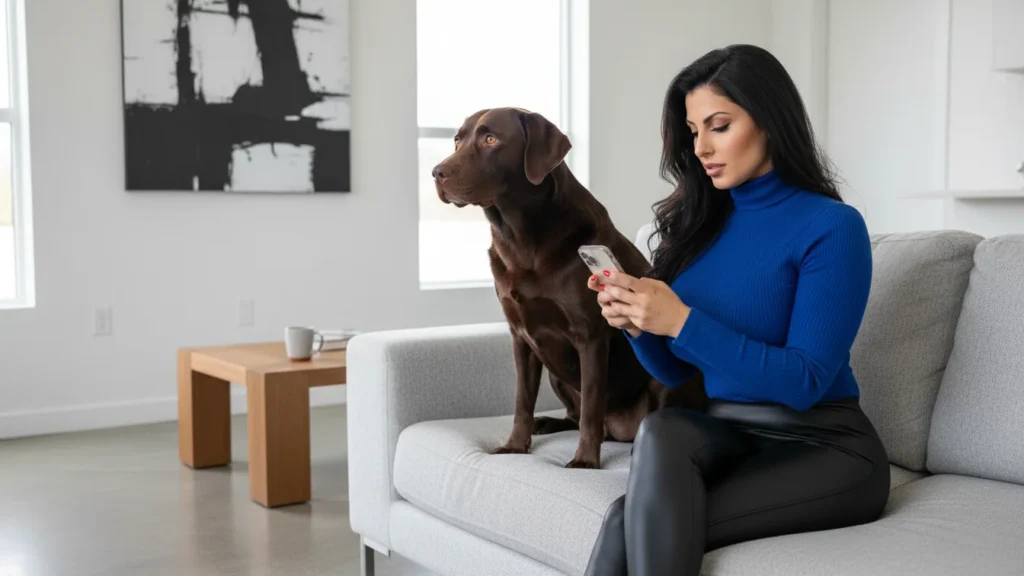
The Strange Moment Every Dog Owner Notices
The house finally goes quiet.
No TV.
No traffic.
No voices.
And suddenly, your dog is alert.
They lift their head.
Start pacing.
Follow you from room to room.
Or stare into empty space as if listening for something you can’t hear.
What’s strange is this:
The same dog might sleep through traffic noise, music, or even thunderstorms—but becomes restless when everything goes silent.
To humans, silence feels calm.
To many dogs, silence feels wrong.
Why Silence Feels Different to Dogs Than It Does to Us
Dogs didn’t evolve in quiet homes.
Their nervous systems developed in environments where:
- Silence often meant danger
- Stillness preceded ambush
- Noise signaled life and activity
In the wild, silence wasn’t peaceful—it was informational.
When sound disappeared, animals paid attention.
That survival wiring still exists in modern dogs, even if they now live on couches instead of open plains.
So when your home suddenly goes quiet, your dog’s brain doesn’t relax.
It scans.
Noise Is Predictable. Silence Is Not.
This is the key difference most owners miss.
Noise usually has:
- A source
- A pattern
- A rhythm
Silence removes those cues.
In silence, the brain asks:
“What changed?”
For dogs, unpredictability is more stressful than volume.
A steady noise becomes background information.
Silence removes reference points.
The Nervous System Explanation (In Simple Terms)
A dog’s nervous system is constantly balancing two states:
- Rest-and-relax
- Alert-and-protect
Noise—when consistent—can actually support relaxation.
Silence, however, increases:
- Sensory sensitivity
- Environmental scanning
- Micro-movements
- Startle readiness
This is why dogs often react more strongly to:
- Quiet evenings
- Late nights
- Empty houses
- Early mornings
It’s not boredom.
It’s heightened awareness.
Common Situations Where Silence Triggers Dogs
You might notice increased sensitivity when:
- Everyone goes to bed
- The TV is turned off
- Guests leave suddenly
- You stop moving around
- Power outages occur
- Snow or heavy fog dampens outside sound
Each situation removes auditory context.
Your dog isn’t afraid of silence itself—they’re responding to what silence might mean.
Silence vs Noise: How Dogs Interpret Each
| Situation | How Humans Feel | How Dogs Interpret It |
|---|---|---|
| TV on | Background comfort | Predictable environment |
| Street noise | Annoying | Normal activity |
| Music playing | Relaxing | Emotional cues |
| Sudden silence | Peaceful | Uncertainty |
| Quiet house | Calm | Heightened vigilance |
This difference explains many “mysterious” behaviors.
Why Silence Can Increase Anxiety in Some Dogs
Not all dogs react the same—but certain factors increase sensitivity:
- Dogs prone to anxiety
- Dogs with strong attachment bonds
- Working or alert breeds
- Dogs recovering from illness
- Dogs with reduced vision or hearing
- Dogs experiencing household changes
When other senses are limited or stressed, sound becomes even more important.
Remove sound—and the dog compensates by staying alert.
Real-Life Example Many Owners Recognize
A dog sleeps peacefully all evening while the family watches TV.
The TV turns off.
Within minutes:
- The dog gets up
- Paces
- Whines
- Follows the owner closely
Nothing happened.
But the environment changed.
The silence removed cues the dog relied on to feel safe.
The Evolutionary Reason Silence Feels Threatening
In nature:
- Silence often followed predator movement
- Sudden quiet preceded attack
- Environmental sound acted as an early warning system
Noise meant:
- Birds moving
- Wind shifting
- Animals active
Silence meant:
“Something is watching.”
Your dog’s brain doesn’t know it’s a modern living room.
It reacts as if awareness is required.
Why Dogs May React at Night More Than Daytime
Nighttime silence is amplified by:
- Reduced visual input
- Lower human activity
- Hormonal shifts toward alertness
- Fewer environmental sounds
This creates a perfect storm for restlessness.
It’s why many dogs:
- Patrol at night
- React to faint noises
- Wake easily
- Prefer sleeping near humans
Your presence becomes the anchor.
Mistakes Owners Make (Without Realizing It)
Trying to “fix” silence reactions can backfire.
Common mistakes include:
- Repeated reassurance (“It’s okay”)
- Punishing restlessness
- Forcing the dog to lie down
- Turning silence into tension
- Overstimulating to distract
These responses teach the dog:
“Something is wrong during silence.”
How to Help Dogs Feel Safer in Quiet Moments
1. Create Predictable Sound Cues
- Soft music
- White noise
- A fan
- Low-volume TV
Consistency matters more than volume.
2. Keep Transitions Gentle
Instead of sudden silence:
- Lower volume gradually
- Change lighting slowly
- Maintain a bedtime routine
Predictable transitions reduce vigilance.
3. Allow Natural Monitoring
Don’t force stillness.
Let your dog:
- Choose where to rest
- Change positions
- Observe quietly
Monitoring is calming for some dogs.
4. Maintain Emotional Neutrality
Avoid:
- Over-soothing
- Overreacting
- Reinforcing anxious behavior
Calm presence works better than reassurance.
5. Increase Daytime Fulfillment
Dogs who are mentally and physically satisfied during the day handle silence better at night.
Focus on:
- Sniff walks
- Problem-solving games
- Calm social interaction
Fulfillment reduces hyper-vigilance.
Hidden Tip Most Owners Miss
Silence sensitivity often increases after change:
- New home
- New routine
- Loss of a family member
- Recovery from illness
In these moments, silence highlights uncertainty.
Temporary support can prevent long-term anxiety patterns.
Why This Matters Today
Modern homes are quieter than natural environments.
Better insulation.
Soundproof windows.
Digital devices replacing ambient noise.
Dogs didn’t evolve for silence.
Understanding this helps owners:
- Interpret behavior accurately
- Avoid mislabeling anxiety
- Build safer emotional environments
Key Takeaways
- Dogs often find silence more stressful than noise
- Silence removes environmental predictability
- Noise can be comforting when consistent
- Nighttime silence increases vigilance
- Calm sound cues can help dogs relax
- Restlessness during silence is communication, not misbehavior
Frequently Asked Questions
1. Is it normal for dogs to react to silence?
Yes. Many dogs are biologically wired to stay alert in quiet environments.
2. Does this mean my dog is anxious?
Not always. Often it’s heightened awareness, not fear.
3. Should I always keep noise on?
No—but predictable, gentle sound can help sensitive dogs.
4. Can puppies react more strongly to silence?
Yes. Puppies are still learning environmental patterns.
5. When should I seek professional help?
If silence reactions escalate into panic, vocalization, or destructive behavior.
A Calm Closing Thought
To you, silence means peace.
To your dog, silence means:
“Pay attention.”
When you understand that difference, the behavior stops feeling confusing—and starts making sense.
Sometimes, a little gentle sound is all it takes to help a dog finally rest.
Disclaimer: This article is for general educational purposes and does not replace personalized veterinary or behavioral guidance.

Dr. Sofia Romano, DVM, is an experienced veterinarian specializing in small-animal medicine and preventive care. She has treated thousands of cases using evidence-based diagnostics and modern clinical practices. Dr. Romano is dedicated to providing science-backed pet-health guidance that helps owners make informed decisions and improve their pets’ quality of life.






Pingback: Why Dogs Act Differently Before Guests Arrive — The Invisible Signals They Notice First
Pingback: Why Dogs Avoid Certain Rooms — The Invisible Triggers Your Dog Feels But You Don’t