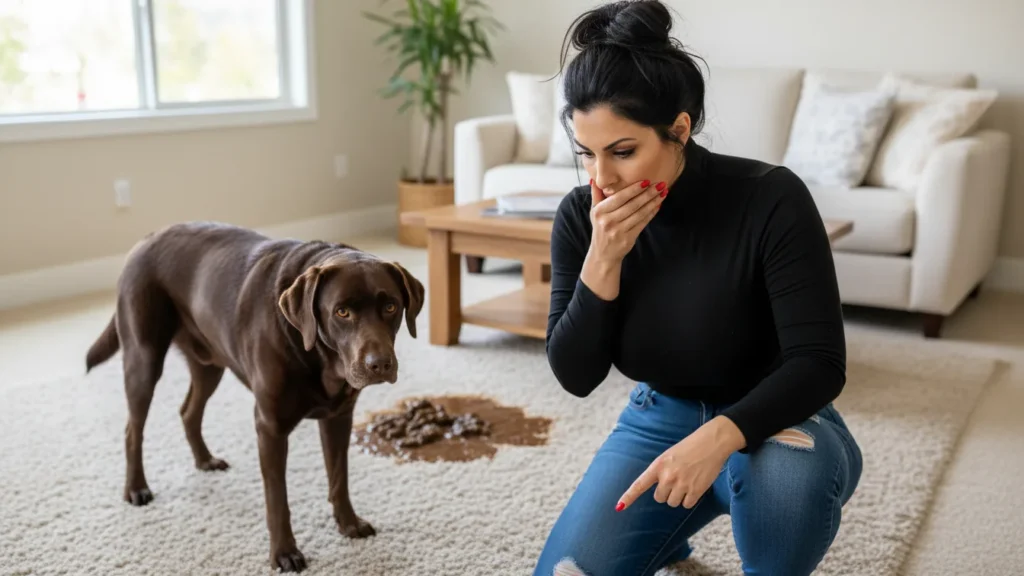
“When Everything Seems Normal — Then Suddenly Isn’t”
One day your dog is playful, eating well, and acting completely normal.
The next morning, you notice loose stools.
Maybe watery.
Maybe urgent.
Maybe happening more than once.
No diet change.
No trash raids.
No obvious cause.
That moment triggers worry — and confusion.
👉 Sudden diarrhea in dogs rarely comes “out of nowhere.”
It usually means something small shifted inside the body before symptoms showed up.
Understanding those hidden triggers helps you respond calmly — instead of panicking or ignoring a sign that matters.
Why a Dog’s Digestive System Reacts So Fast
A dog’s gut is incredibly sensitive.
It balances:
- Food digestion
- Immune response
- Stress hormones
- Billions of gut bacteria
When that balance shifts, diarrhea is often the first visible signal.
Unlike vomiting or lethargy, diarrhea can appear while your dog still seems “fine” — which is why it feels so sudden.
Think of it as an early warning light, not a failure.
The Most Common Hidden Reasons Dogs Get Sudden Diarrhea
1. Micro Diet Changes You Didn’t Notice
You may not have changed food — but something still changed.
Examples:
- Extra treats during training
- New chew, dental stick, or supplement
- Table scraps given by another family member
- Different flavor of the same brand
Even small variations can overwhelm a sensitive gut.
💡 Why this matters: Dogs don’t adapt instantly. Their digestive enzymes and gut bacteria need time to adjust.
2. Stress You Can’t See — But Their Gut Can
Dogs process stress physically.
Triggers include:
- Visitors or loud environments
- Schedule changes
- Owner travel or emotional stress
- New pets nearby
- Changes in walking routes
Stress releases hormones that speed up gut movement, leaving less time to absorb water — resulting in diarrhea.
This is especially common in:
- Puppies
- Rescue dogs
- Highly bonded dogs
3. Food Sensitivities That Build Over Time
Food intolerance doesn’t always show up immediately.
A dog can eat the same food for months — then suddenly react.
Common triggers:
- Chicken
- Dairy
- Wheat
- Soy
- Artificial additives
Symptoms may include:
- Soft stool
- Mucus in poop
- Occasional itching
- Gas or bloating
This is one reason diarrhea can seem random — the reaction threshold was simply crossed.
4. Gut Bacteria Imbalance (Dysbiosis)
Your dog’s gut hosts trillions of bacteria that help with digestion and immunity.
Disruptors include:
- Stress
- Antibiotics (even weeks earlier)
- Sudden treat overload
- Environmental exposure
When “good” bacteria drop and “bad” bacteria rise, stool quality changes fast.
Diarrhea is often the first sign — long before appetite or energy drop.
5. Mild Parasites or Environmental Exposure
Not all parasites cause dramatic illness.
Some cause:
- Soft stool
- Occasional diarrhea
- Normal appetite
- Normal energy
Dogs can pick them up from:
- Parks
- Shared water bowls
- Soil
- Other dogs
Because symptoms are subtle, owners often assume it’s “just digestion.”
When Sudden Diarrhea Is Usually Not an Emergency
In many healthy adult dogs, short-term diarrhea is mild and self-limiting.
Generally less concerning if:
- Dog is active and alert
- Appetite is mostly normal
- No blood in stool
- No vomiting
- Diarrhea lasts less than 24–48 hours
In these cases, supportive care and observation are often enough.
When You Should Pay Close Attention (Don’t Ignore These)
Seek veterinary advice if you notice:
- Blood or black stool
- Persistent diarrhea beyond 48 hours
- Vomiting along with diarrhea
- Lethargy or weakness
- Fever or dehydration
- Diarrhea in puppies or senior dogs
These signals suggest more than a minor digestive upset.
What You Can Do Immediately at Home (Safe First Steps)
Step-by-step supportive care:
- Pause treats and extras
- Offer fresh water frequently
- Switch to a bland diet (plain boiled chicken & rice if appropriate)
- Feed smaller, more frequent meals
- Monitor stool changes closely
Avoid:
- Sudden food switches
- Over-the-counter human medications
- Fasting puppies without guidance
Small, calm actions help the gut reset.
Common Mistakes Owners Make (That Prolong Diarrhea)
- Switching foods too quickly
- Adding multiple supplements at once
- Assuming “one loose stool doesn’t matter” repeatedly
- Using home remedies without understanding the cause
- Waiting too long when symptoms worsen
Diarrhea often worsens when owners overcorrect.
Comparison Table: Mild vs Concerning Diarrhea in Dogs
| Feature | Mild Digestive Upset | Concerning Diarrhea |
|---|---|---|
| Energy level | Normal | Low or weak |
| Appetite | Mostly normal | Reduced or absent |
| Stool appearance | Soft or loose | Bloody, black, watery |
| Duration | < 48 hours | > 48 hours |
| Vomiting | Absent | Present |
| Action needed | Monitor & support | Vet evaluation |
Why This Matters More Than People Think
Diarrhea isn’t just messy.
It’s one of the earliest indicators of internal imbalance — digestive, emotional, or immune-related.
Catching patterns early:
- Prevents chronic gut issues
- Reduces repeat episodes
- Improves overall resilience
Dogs don’t complain. Their stool often speaks first.
Key Takeaways
- Sudden diarrhea rarely has no reason
- Stress and subtle diet changes are common triggers
- Gut bacteria balance plays a major role
- Most cases are mild — but patterns matter
- Calm observation beats panic or neglect
Understanding the why helps you respond confidently.
Frequently Asked Questions
1. Can dogs get diarrhea from stress alone?
Yes. Stress hormones directly affect gut movement and water absorption.
2. How long should I wait before seeing a vet?
If diarrhea lasts over 48 hours or worsens, seek guidance sooner.
3. Is it okay to skip one meal?
Sometimes, but puppies and small dogs need caution. Short pauses only, with hydration.
4. Can the same food suddenly cause diarrhea?
Yes. Sensitivities can develop gradually over time.
5. Should I change dog food immediately?
No. Sudden switches often make diarrhea worse unless advised by a professional.
A Calm, Simple Conclusion
When your dog gets diarrhea “out of nowhere,” it’s rarely random.
It’s the body’s quiet way of saying something shifted — food, stress, bacteria, or balance.
Most of the time, gentle support and awareness are enough.
And when they aren’t, early attention makes all the difference.
Understanding your dog’s signals turns worry into confidence.
isclaimer: This article is for general educational purposes and does not replace personalized veterinary advice. If symptoms persist or worsen, consult a qualified professional.

Dr. Sofia Romano, DVM, is an experienced veterinarian specializing in small-animal medicine and preventive care. She has treated thousands of cases using evidence-based diagnostics and modern clinical practices. Dr. Romano is dedicated to providing science-backed pet-health guidance that helps owners make informed decisions and improve their pets’ quality of life.

Pingback: Why Dogs Get Yeast Infections Repeatedly — The Hidden Triggers Most Owners Never Fix
Pingback: Why Your Dog’s Belly Looks Bloated — What’s Normal, What’s Not, And When To Act
Pingback: Why Dogs Pass Gas More Often Than Usual — What Their Gut Is Trying To Tell You
Pingback: Why Your Dog’s Stool Smells Extremely Strong — The Hidden Gut Clues Most Owners Miss
Pingback: Why Dogs Develop Food Sensitivities Later In Life — The Quiet Immune Shift Most Owners Never Expect
Pingback: Why Dogs Vomit Yellow Foam In The Morning — The Real Reason It Happens (And When To Act)
Pingback: Why Dogs Act Different After Visiting The Vet — What Their Behavior Is Really Telling You