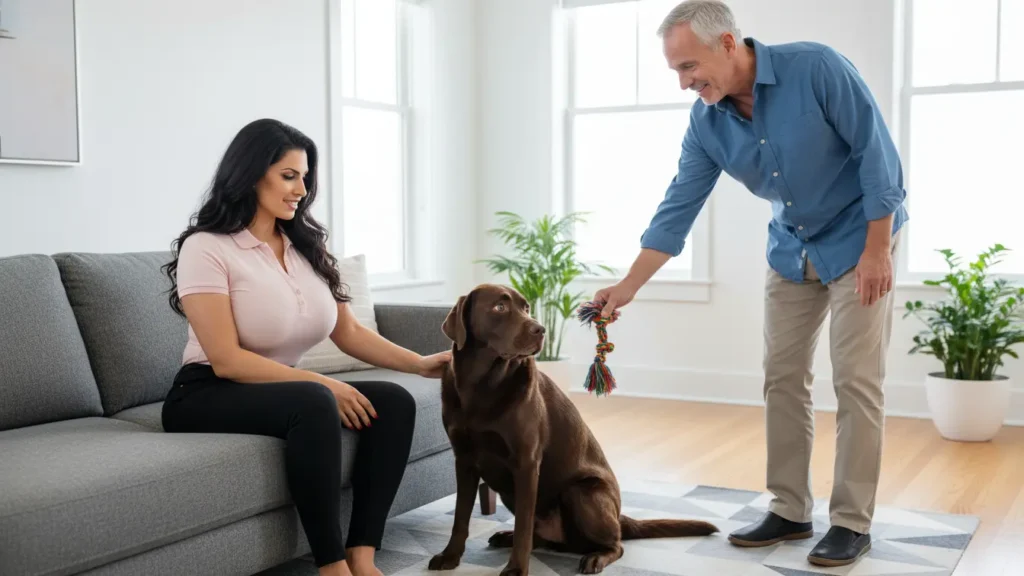
“He’s Friendly — Why Is My Dog Hiding?”
A man walks into the room.
Your dog stiffens.
Moves away.
Barks.
Or hides behind you.
Moments later, a woman enters — and your dog relaxes.
This pattern confuses and often hurts people. Many ask:
- Is my dog sexist?
- Did someone hurt them?
- Is this aggression?
Here’s the important truth behaviorists and veterinarians agree on:
👉 Dogs aren’t afraid of men because they’re men.
👉 They react to sensory, behavioral, and psychological cues they associate with threat or uncertainty.
This fear is common, explainable, and — in most cases — reversible with the right approach.
First: Is Fear of Men in Dogs Actually Common?
Yes. Extremely.
Behavioral studies and shelter observations consistently show that:
- Dogs are more likely to display fear-based behaviors toward men
- This pattern appears across breeds and ages
- It is especially common in rescue dogs and under-socialized puppies
Importantly, this fear is usually learned, not innate.
Understanding the root cause prevents mislabeling dogs as “aggressive” or “unfriendly.”
Reason #1: Size, Height, and Physical Presence
From a dog’s perspective, men often appear more intimidating.
Typical differences include:
- Taller stature
- Broader shoulders
- Larger hands
- More direct movement
Dogs interpret size quickly.
A tall figure looming overhead can activate a defensive response, especially in smaller or anxious dogs.
Real-life example
A dog may tolerate a man sitting quietly but panic when he stands or bends over them.
Reason #2: Deeper Voices Trigger Alarm Responses
Dogs are highly sensitive to sound frequency.
Male voices:
- Are deeper
- Carry more vibration
- Sound louder to dogs
For dogs with anxiety or trauma, deeper voices can resemble:
- Anger
- Commands
- Threat signals
This doesn’t require yelling — normal speech can be enough.
Hidden insight
Dogs often react more strongly to tone than words.
Reason #3: Differences in Movement and Body Language
Men and women often move differently — without realizing it.
Common male behaviors dogs may find threatening:
- Faster strides
- Larger gestures
- Direct approaches
- Leaning over dogs
- Reaching from above
Dogs prefer:
- Sideways approaches
- Slower movements
- Lower posture
What feels friendly to a human can feel intrusive to a dog.
Reason #4: Past Negative Experiences (Very Common)
Dogs form strong emotional memories.
If a dog has ever experienced:
- Rough handling
- Punishment
- Yelling
- Forced restraint
And the person involved was male, the dog may generalize that fear to other men.
This is especially common in:
- Rescue dogs
- Street dogs
- Dogs from neglect situations
⚠️ Importantly, the dog is not “remembering a man” — they’re remembering how they felt.
Reason #5: Lack of Early Socialization With Men
Puppies need exposure during critical developmental windows.
If a puppy:
- Met mostly women
- Lived in a female-dominated household
- Had limited male interaction
Men become “unfamiliar.”
Dogs are naturally cautious of unfamiliar stimuli.
Fear often comes from novelty, not trauma.
Reason #6: Clothing, Accessories, and Smells
Dogs notice details humans ignore.
Men are more likely to wear:
- Hats
- Hoodies
- Boots
- Uniforms
- Heavy cologne
These change:
- Silhouette
- Scent profile
- Movement pattern
To a dog, this can feel like a completely different creature.
Reason #7: Owner Tension and Emotional Cueing
Dogs look to their owners for safety signals.
If an owner:
- Tenses around men
- Pulls the leash
- Anticipates fear
- Speaks nervously
The dog interprets this as confirmation:
👉 “Yes, this situation is unsafe.”
Fear becomes reinforced unintentionally.
Fear vs Aggression: Understanding the Difference
| Behavior | Fear-Based | Aggression |
|---|---|---|
| Barking | Defensive | Offensive |
| Hiding | ✔ | |
| Growling | Warning | |
| Snapping | Fear escalation | |
| Relaxed posture | ✖ | ✔ |
| Seeking distance | ✔ | ✖ |
Most dogs afraid of men are not aggressive — they’re asking for space.
When This Fear Is Normal — And When It’s Not
✔ Hesitation around unfamiliar men
✔ Barking briefly then retreating
✔ Warming up slowly
⚠️ Concerning signs include:
- Persistent panic
- Lunging
- Inability to recover
- Fear escalating over time
These cases need professional guidance.
Common Mistakes Owners Make
❌ Forcing interaction
❌ Saying “He’s fine, pet him”
❌ Punishing fearful behavior
❌ Allowing men to loom or grab
❌ Flooding exposure
These approaches increase fear, not confidence.
How to Help a Dog Afraid of Men (Actionable Steps)
Step 1: Let the Dog Control Distance
- No forced approach
- Allow retreat
- Reward calm observation
Choice builds confidence.
Step 2: Coach Men on Dog-Friendly Behavior
Ask them to:
- Sit sideways
- Avoid eye contact
- Speak softly
- Let the dog initiate contact
Stillness is powerful.
Step 3: Use Positive Associations
- Toss treats from a distance
- Pair men with good experiences
- Keep sessions short
Fear fades through repetition — not pressure.
Step 4: Practice Controlled Exposure
- One calm man at a time
- Familiar environment
- Predictable routines
Gradual exposure retrains emotional responses.
Step 5: Get Professional Help When Needed
Behaviorists can:
- Identify triggers
- Build desensitization plans
- Prevent escalation
Early help creates lasting change.
Why This Matters Today
Dogs live in human-centered environments.
Avoiding half the population:
- Limits social freedom
- Increases stress
- Creates safety risks
Helping dogs feel safe around men improves:
- Quality of life
- Public interactions
- Human–dog trust
This isn’t about forcing friendliness — it’s about restoring safety.
Key Takeaways
- Dogs fear men due to sensory and psychological cues
- Size, voice, movement, and past experience matter
- Fear is communication, not aggression
- Forcing interaction worsens anxiety
- Gentle exposure builds confidence
Frequently Asked Questions
1. Is fear of men genetic?
No. It’s learned through experience and exposure.
2. Can dogs grow out of this fear?
Yes, with patient, positive exposure.
3. Should men ignore fearful dogs?
Initially, yes. Let the dog initiate contact.
4. Is this more common in rescue dogs?
Very common, especially with unknown histories.
5. When should I seek professional help?
If fear escalates, causes safety issues, or doesn’t improve.
Conclusion: Fear Isn’t Bias — It’s Survival
When a dog reacts fearfully to men, they’re not judging character.
They’re responding to:
- Size
- Sound
- Movement
- Memory
Understanding this shifts the response from frustration to empathy.
With patience, structure, and trust-building, most dogs learn that men are not a threat — just another part of the world they can feel safe in.
That transformation doesn’t come from forcing bravery.
It comes from teaching safety.
Disclaimer: This article is for educational purposes only and does not replace professional veterinary or behavioral advice. If fear-related behaviors persist or worsen, consult a qualified professional.

Dr. Sofia Romano, DVM, is an experienced veterinarian specializing in small-animal medicine and preventive care. She has treated thousands of cases using evidence-based diagnostics and modern clinical practices. Dr. Romano is dedicated to providing science-backed pet-health guidance that helps owners make informed decisions and improve their pets’ quality of life.




Pingback: Why Dogs Start Fighting With Other Pets — The Hidden Triggers Most Owners Miss
Pingback: Why Dogs Stare At You While Pooping — The Vulnerable Instinct Most Owners Misunderstand
Pingback: Why Dogs Bark At Their Own Reflection — The Confusing Instinct Most Owners Don’t Expect