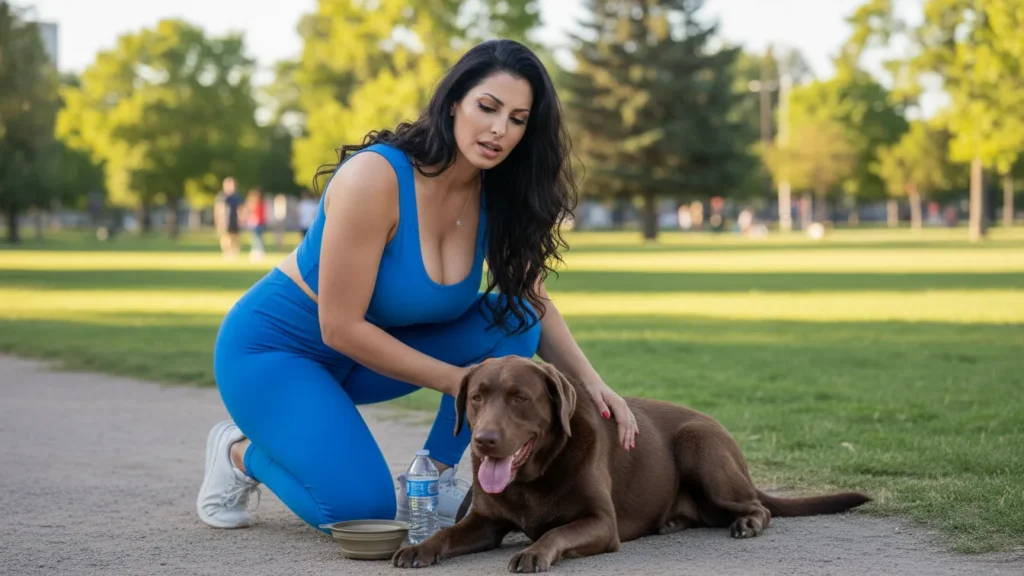
Somewhere around six or seven years old, a lot of Labradors start doing something their owners barely register as unusual. They sleep a little more. The morning zoomies get a little shorter. They still love the couch, but now they seem to need it, in a way they didn’t at three.
Most owners chalk it up to age. He’s slowing down, they think. That’s just what happens.
Except sometimes it isn’t age at all. It’s the thyroid — quietly producing less and less of the hormone that runs nearly every system in your dog’s body, months or even years before anyone connects the dots.
A Disease That Looks Exactly Like Getting Older
This is the central problem with canine hypothyroidism, and it’s not a minor one: its symptoms overlap almost perfectly with the normal signs of aging. Veterinary sources describe it plainly — owners frequently mistake the lethargy, weight gain, and reduced activity of hypothyroidism for nothing more than a dog getting older, when in fact a treatable hormonal condition is driving the change.
That overlap is exactly why the disease so often goes unnoticed for so long. Nobody rushes a seven-year-old Labrador to the vet because he’s sleeping more and gained a few pounds. That’s supposed to happen. Except when it’s the thyroid, “supposed to happen” is actually “somewhat easily fixable” — if anyone thinks to test for it.
Why Labradors Specifically Are on the List
Hypothyroidism isn’t evenly distributed across breeds, and Labrador Retrievers show up consistently among the higher-risk group, alongside Golden Retrievers, Doberman Pinschers, Irish Setters, and a handful of others. Veterinary dermatology and endocrinology sources place Labradors specifically among the breeds most commonly affected by primary hypothyroidism, the form caused by the thyroid gland itself failing to produce adequate hormone.
The timing compounds the problem. Clinical data from veterinary guidelines put the average age at diagnosis around 6.8 years old, squarely in what most owners consider a Labrador’s prime — not a puppy, not yet a true senior, just a dog owners assume is simply “settling down.” That’s precisely the age range where the disease is most likely to be developing and least likely to be suspected.
What’s Actually Happening Inside the Body
Canine hypothyroidism is fundamentally a supply problem. The thyroid gland, sitting in the neck, is responsible for producing hormones that regulate metabolic rate — essentially, how efficiently every cell in the body converts fuel into energy. When the gland fails to produce enough of that hormone, the effects ripple outward into nearly every organ system, because thyroid hormone influences so much of how the body runs.
Veterinary sources describe two primary underlying causes. The more common one is lymphocytic thyroiditis, an autoimmune condition in which the body’s own immune system gradually attacks and destroys thyroid tissue. The second is idiopathic thyroid gland atrophy, where functional thyroid tissue is slowly replaced by fat, for reasons that aren’t fully understood. Either way, the process is described consistently as slow and progressive — the thyroid doesn’t fail overnight, it fades out gradually, which is exactly why the resulting symptoms creep in rather than arrive all at once.
This slow onset matters enormously. Clinical references note that because the disease progresses gradually, signs may not become apparent until a significant portion of thyroid function has already been lost — and it’s not uncommon for owners to have been unconsciously tolerating symptoms for a long stretch of time before ever seeking a diagnosis.
The Signs Owners Miss (Because They Look Like Nothing)
If you’re picturing a dramatic symptom list, that’s part of what makes this disease so easy to overlook — the early signs are almost defiantly ordinary.
Unexplained weight gain. Veterinary sources consistently flag this as one of the most common signs, and critically, it tends to happen without any real increase in appetite or food intake. A Labrador gaining weight on the same food, the same portions, the same walks, is a pattern worth paying attention to rather than dismissing as metabolism slowing with age.
Persistent low energy. Not exhaustion, not collapse — just a dog who seems to prefer lying around to running and playing, who lags a little on walks, who’s lost some of the enthusiasm for retrieving that defined him. It’s subtle enough to look like a personality shift rather than a medical one.
Coat and skin changes. Dermatologic signs are described as the single most common category of symptom in canine hypothyroidism, including thinning or dull hair coat, hair loss (often across the trunk, flanks, or tail), dry or flaky skin, darkened skin pigmentation, and a coat that’s slow to grow back after grooming or shaving. Veterinary data indicates the vast majority of hypothyroid dogs show some kind of dermatological sign — it’s arguably the most visible clue available, if owners know to look for it.
Cold intolerance and heat-seeking behavior. Because thyroid hormone drives metabolic rate, a dog with insufficient thyroid function often runs a little cold. Veterinary sources describe this showing up as a dog who increasingly seeks out warm spots — the heating vent, the sunny patch of floor, the spot right next to the radiator — in a way he didn’t used to.
A dulling of mental sharpness. Some sources note that low thyroid hormone can make a normally alert, curious dog seem a little distracted or slower to respond — another symptom easily filed under “getting older” rather than recognized as a specific physiological cause.
Individually, any one of these looks like nothing more than a dog settling into middle age. Together, and especially if several are present at once, they form a pattern that’s genuinely worth a vet visit and a blood panel.
Why It’s Easy for the Diagnosis to Slip Through the Cracks
Even when owners do bring these signs to a vet, hypothyroidism can be a genuinely tricky diagnosis to pin down. Veterinary endocrinology literature notes that clinical signs are often subtle and highly variable between dogs, and that numerous other conditions can produce falsely low thyroid hormone readings in dogs that don’t actually have hypothyroidism — a phenomenon sometimes described as “euthyroid sick syndrome.” This means a single thyroid test isn’t always definitive, and veterinarians often need to look at hormone levels in the context of the dog’s full clinical picture, sometimes alongside additional bloodwork showing patterns like elevated cholesterol or mild anemia that frequently accompany the disease.
None of this is a reason to skip testing — it’s a reason to treat a single “normal” thyroid result with some healthy skepticism if the clinical signs are still stacking up, and to keep the conversation open with your vet rather than closing the door after one test.
Why Catching It Early Actually Matters
The encouraging part of this whole picture is that canine hypothyroidism, once correctly identified, is one of the more manageable chronic conditions in veterinary medicine — typically treated with a daily oral synthetic thyroid hormone, with dosage fine-tuned over time through follow-up blood testing.
But “manageable once caught” is doing a lot of work in that sentence. A dog living for a year or more with undiagnosed low thyroid function isn’t just tired and a little overweight — his body has been running on reduced metabolic output that whole time, potentially compounding weight-related joint stress, skin infections from a compromised coat barrier, and reduced quality of life in ways that don’t reverse instantly even after treatment begins. Veterinary sources note that while energy levels often improve fairly quickly once treatment starts, other signs like hair loss and skin pigmentation can take considerably longer to resolve — a reminder that the silent period before diagnosis has real, lingering cost.
What to Actually Do About It
Don’t automatically attribute new sluggishness or weight gain in a middle-aged Labrador to “just getting older.” At the age where hypothyroidism is most likely to develop, that explanation and the real one look identical from the outside.
Watch the coat, not just the energy level. Because dermatologic signs are the most common and often the most visible symptom category, changes in coat quality, unexplained hair thinning, or skin darkening deserve real attention, especially alongside any weight or energy shift.
Bring a specific pattern to your vet, not a vague concern. “He’s gained weight without eating more, he’s more tired than usual, and his coat looks duller” is a far more useful starting point for a vet than “he seems different lately” — and it’s exactly the combination that should prompt thyroid testing in an at-risk breed.
If one thyroid test comes back normal but the signs persist, don’t let it go. Given how easily other illnesses can produce misleadingly normal results, a persistent clinical picture is worth revisiting with your vet rather than dismissing after a single test.
Treat routine senior wellness bloodwork as your safety net. Because the disease progresses so gradually and silently, regular screening bloodwork in middle-aged and senior dogs is often what actually catches it — frequently before an owner has consciously noticed enough symptoms to ask about it themselves.
The Bigger Picture
A Labrador slowing down at six or seven years old might simply be doing what dogs do as they age. Or he might be running on a thyroid gland that’s been quietly losing function for a year or more, in a decline so gradual it never announced itself as anything more than “getting older.”
The difference matters, because one of those explanations is just time passing — and the other is something you can actually do something about, if you catch it before the silent stretch gets too long.
Sources
- American Animal Hospital Association – Canine Hypothyroidism Diagnostic Testing and Monitoring
- dvm360 – Understanding and Diagnosing Canine Hypothyroidism
- PetMD – Hypothyroidism in Dogs
- MedVet – Thyroid Disease in Dogs: Causes, Signs, and Treatments
- Vetstreet – Controlling Hypothyroidism in Dogs

Dr. Sofia Romano, DVM, is an experienced veterinarian specializing in small-animal medicine and preventive care. She has treated thousands of cases using evidence-based diagnostics and modern clinical practices. Dr. Romano is dedicated to providing science-backed pet-health guidance that helps owners make informed decisions and improve their pets’ quality of life.






Pingback: Why Labradors Lose Stamina Long Before Any Disease Is Ever Diagnosed