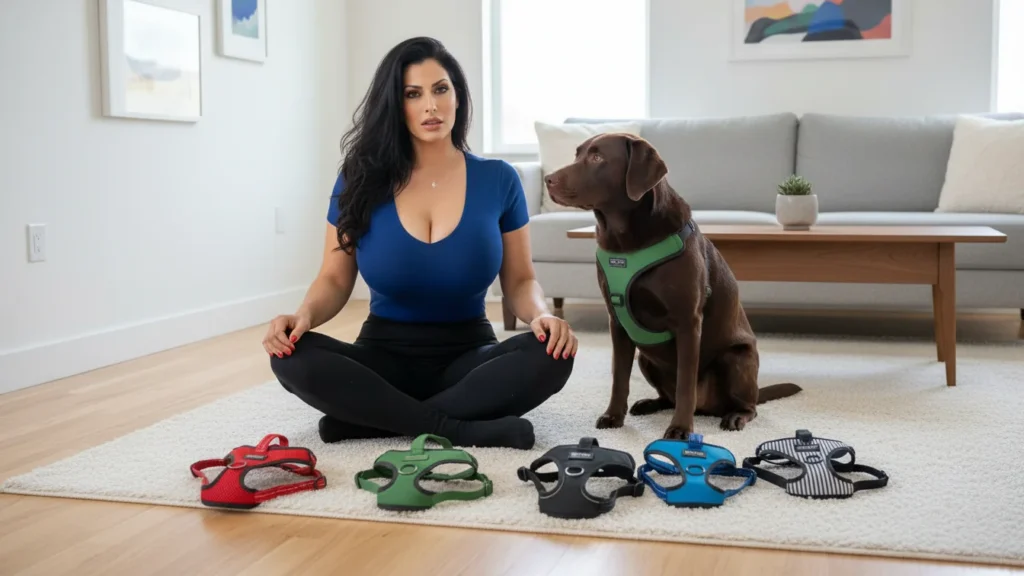
If walking your dog feels like a struggle — pulling, choking, slipping out, or constant discomfort — the problem isn’t your dog…
It’s the harness.
The right harness can transform daily walks from stressful to peaceful.
The wrong one can cause rubbing, neck strain, escape accidents, and long-term joint issues.
As a veterinarian, I’ve seen dogs with:
- Red irritated armpits
- Damaged airway from pulling on collars
- Slipped discs from poorly fitted harnesses
- Anxiety because their harness hurts
The good news?
Choosing the perfect harness is actually simple — once you understand what truly matters.
This guide breaks down everything you need to know: fit, type, materials, safety, mistakes, measurements, real examples, and exactly which harness works for your dog’s body and behavior.
Why Harness Fit Matters More Than Anything Else
Most people choose harnesses based on:
- Color
- Price
- Looks
- Brand
But what actually matters is biomechanics — how the harness sits on your dog’s body.
A good harness MUST:
- Distribute pressure across chest, not neck
- Allow full shoulder movement
- Avoid rubbing the armpits
- Stay secure without tightening
- Be escape-proof
- Not twist when the dog pulls
A poor harness leads to:
- Chafing
- Neck strain
- Shoulder restriction
- Pulling more instead of less
- Escape episodes
Your dog’s safety depends on the right design.
1. Step-In Harness — Best for Small Dogs & Calm Walkers
What It Is
A simple harness your dog steps into; the buckles close on the back.
Best For
- Small breeds (Shih Tzu, Pugs, Maltese)
- Dogs with calm walking style
- Puppies new to harnesses
Pros
- Easy to put on
- Lightweight
- Comfortable for short walks
Cons
- Not ideal for strong pullers
- Can twist sideways
2. H-Harness — Most Versatile Everyday Harness
This is the “classic harness” with an adjustable neck and chest strap.
Best For
- All breeds
- Daily walks
- Dogs with sensitive skin
Pros
- Very adjustable
- Good weight distribution
- Doesn’t choke
- Suitable for puppies & adults
Cons
- Not strong enough for extreme pullers
3. No-Pull Front-Clip Harness — Best for Pulling Dogs
If your dog drags you on walks, this is the harness you need.
How It Works
The leash clips at the chest.
When the dog pulls, they naturally turn towards you, reducing forward force.
Best For
- Huskies
- Labradors
- Indies
- Beagles
- High-energy dogs
Pros
- Reduces pulling by 40–60% instantly
- Helps with training
- Prevents choking
Cons
- Requires proper fit
- Some dogs need initial training to adapt
4. Tactical / Heavy-Duty Harness — Best for Large & Strong Dogs
Made with reinforced stitching and padded straps.
Best For
- Dobermans
- German Shepherds
- Rottweilers
- Belgian Malinois
Pros
- Extremely durable
- Escape-proof
- Great control
- Distributes pressure evenly
Cons
- Can be heavy for small dogs
5. Y-Shaped Harness — Best for Shoulder Freedom & Long Walks
Recommended by many canine physiotherapists.
Why It’s Great
- Allows natural leg movement
- Prevents rubbing
- Distributes pressure across chest
- Reduces injury risk
Best For
- Long walks
- Hiking
- Active dogs
How to Measure Your Dog for a Perfect Harness Fit
Never guess your dog’s size. Measure with a soft tape.
Measure 1: Chest Girth
Around the widest part of the ribcage.
Measure 2: Neck Girth
Where a collar naturally sits.
Measure 3: Back Length (Optional)
Needed for full-body harnesses.
Correct Fit Checklist
- You can place two fingers between the harness and skin
- Harness doesn’t rotate
- Shoulders move freely
- Straps don’t touch the armpits
- Chest strap sits above the elbow, not on it
Comparison Table: Which Harness Is Right for Your Dog?
| Harness Type | Best For | Pulling Control | Comfort Level | Escape-Proof | Ideal Breeds |
|---|---|---|---|---|---|
| Step-In | Small breeds | Low | Medium | Moderate | Pugs, Maltese |
| H-Harness | All-purpose | Medium | High | High | Labradors, Beagles |
| No-Pull Front-Clip | Pullers | Very High | High | High | Huskies, Indies |
| Tactical Harness | Strong dogs | High | High | Very High | GSD, Rottweiler |
| Y-Shape Harness | Active dogs | Medium | Very High | High | Border Collie, Retrievers |
Signs Your Dog’s Harness Is Wrong (Vet Red Flags)
If you see ANY of these, you need a new harness:
🚫 Rubbing under the armpits
🚫 Harness sliding to one side
🚫 Dog chewing the straps
🚫 Red or irritated skin
🚫 Dog refusing to walk
🚫 Dog pulls more instead of less
🚫 Harness sits too close to neck
Comfort = better behavior.
Discomfort = pulling + anxiety.
Real-Life Example
A 2-year-old Beagle was pulling nonstop.
The owner tried three harnesses but nothing worked.
The problem?
All of them sat too low on the chest and restricted shoulder motion.
Switching to a Y-shaped no-pull harness reduced pulling by 45% in one walk, and the Beagle became calmer within a week.
Correct design = life-changing.
Common Mistakes Dog Parents Make (Avoid These!)
❌ Buying the cutest harness instead of the safest
❌ Choosing a size “they’ll grow into”
❌ Using collars for dogs who pull
❌ Not adjusting straps properly
❌ Ignoring signs of chafing
❌ Buying cheap, thin harnesses that break
Hidden Tip
Always test the harness by gently pulling backward — if your dog can slide out, it’s unsafe.
Additional Features to Look For (If You Want the Best)
✔ Padded chest plate
Prevents rubbing.
✔ Breathable mesh
Great for hot climates.
✔ Double leash clip (front + back)
More control for pullers.
✔ Reflective strips
Night walk safety.
✔ Handle on top
Useful for training or helping senior dogs.
Key Takeaways
- The right harness depends on your dog’s pulling style, body shape, age, and energy level.
- Y-shaped, front-clip, and tactical harnesses offer the best biomechanical support.
- Always measure your dog before buying.
- Comfort + control should be the priorities, not color or price.
- A properly fitted harness improves behavior, reduces injury risk, and makes walks enjoyable.
FAQs
1. Should I use a harness or a collar?
Harnesses are safer for the neck and better for dogs that pull.
2. What is the safest harness style?
Y-shaped and front-clip harnesses offer the best blend of safety + control.
3. Can puppies use harnesses?
Yes, as long as they are lightweight and properly fitted.
4. Why does my dog slip out of the harness?
Incorrect size, poor design, or loose straps.
5. Can a harness stop pulling completely?
It helps a lot, but pairing with basic leash training gives the best result.
Conclusion
Choosing the right harness isn’t just a shopping decision — it’s a health, safety, and comfort decision for your dog.
A well-fitted harness reduces pulling, prevents injury, and helps your dog feel confident and secure on every walk.
With this vet-approved guide, you can now pick the perfect harness with clarity and confidence.
Dr. Sofia Romano, DVM, is an experienced veterinarian specializing in small-animal medicine and preventive care. She has treated thousands of cases using evidence-based diagnostics and modern clinical practices. Dr. Romano is dedicated to providing science-backed pet-health guidance that helps owners make informed decisions and improve their pets’ quality of life.