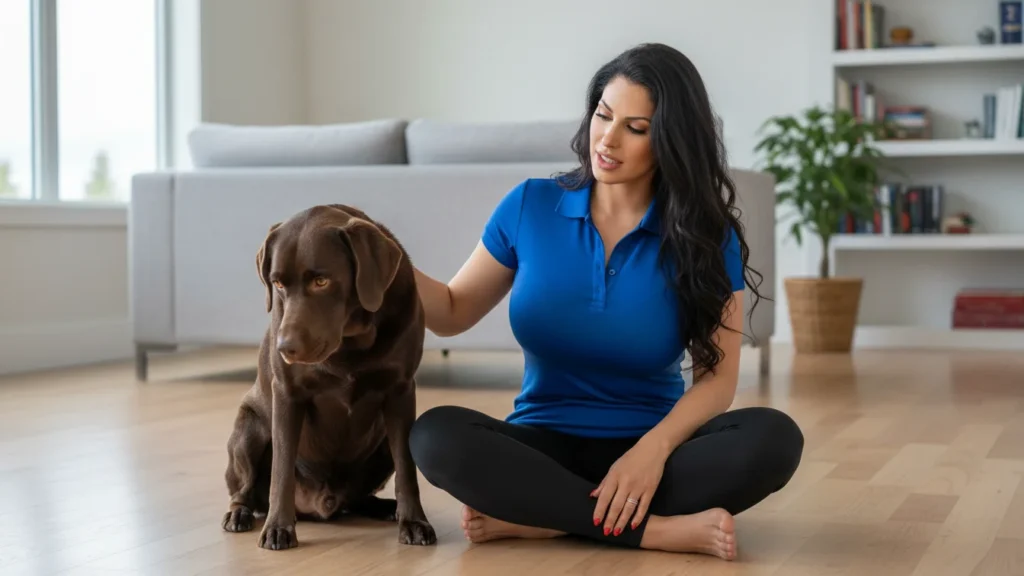
Your dog used to hold your gaze without a problem — that soft, familiar look you’d share across the room, or the moment of connection before a treat or a walk. Lately, though, something’s changed. They glance away when you look at them. They turn their head slightly, or avert their eyes entirely, in a way that feels different from their usual behavior.
It’s a subtle shift, but it’s the kind of thing that tends to worry attentive owners, and understandably so — eye contact carries real emotional weight in how we relate to dogs. Fortunately, in most cases, there’s a clear, explainable reason behind it, and it’s rarely a sign that something is fundamentally wrong with your relationship.
Eye Contact Means Something Different to Dogs Than It Does to Us
Before exploring specific causes, it helps to understand a key distinction: sustained direct eye contact is a human social norm signaling trust and engagement, but in canine communication, particularly between dogs, prolonged direct staring can carry a very different meaning — historically associated with challenge or confrontation in wolf and dog social signaling.
Domestic dogs have learned, through generations of living closely with humans, to interpret and tolerate human-style eye contact very differently than they would interpret it from another dog — research on human-dog bonding has even found that mutual gaze between dogs and their owners triggers a release of oxytocin in both species, similar to the bonding hormone response seen between human parents and children. So when a dog who normally engages in comfortable eye contact starts avoiding it, it’s a genuine behavioral shift worth understanding, not simply a return to “normal” wolf-like avoidance.
The Most Common Reasons Behind the Change
1. Stress or Anxiety
Averted gaze is a well-documented canine calming signal — a category of subtle behaviors dogs use to defuse tension or communicate discomfort, including lip licking, yawning out of context, and looking away. If your dog has started avoiding eye contact generally, or specifically in certain situations, it may reflect underlying stress or anxiety, whether tied to a specific recent event, an ongoing environmental stressor, or a broader anxiety pattern developing over time.
2. Pain or Physical Discomfort
Dogs experiencing pain sometimes show reduced engagement generally, including decreased eye contact, as part of a broader pattern of withdrawal and reduced normal interactive behavior. This is particularly worth considering if the eye contact avoidance has appeared alongside other subtle changes — reduced activity, altered appetite, or general behavioral flatness — since pain-related withdrawal can be easy to miss when it develops gradually.
3. A Specific Negative Association
If direct eye contact recently preceded an unpleasant experience — being scolded, an uncomfortable medical procedure, an unwanted interaction with another person or animal — some dogs form an associative link between that direct gaze and the negative outcome that followed, leading to a learned pattern of gaze avoidance specifically tied to that context or person going forward.
4. Fear of a Specific Person or Situation
Selective eye contact avoidance — avoiding gaze with one particular person while maintaining normal eye contact with others — often points toward a specific relational or situational cause rather than a general behavioral shift, and is worth considering in the context of any recent interactions that specific person may have had with the dog.
5. Vision Changes
Physical changes affecting a dog’s vision, including cataracts, other eye conditions, or general age-related vision decline, can sometimes result in reduced or altered eye contact simply due to changes in visual comfort, clarity, or sensitivity to light — worth ruling out, particularly in older dogs, especially if the change has been gradual rather than sudden.
6. General Aging and Cognitive Changes
In senior dogs, reduced engagement generally, including decreased eye contact, can sometimes reflect early cognitive changes affecting overall social interaction and awareness. This is generally accompanied by other subtle behavioral shifts and is worth discussing with a vet if noticed as part of a broader pattern in an aging dog.
7. Illness-Related Withdrawal
More broadly, many illnesses in dogs produce a general pattern of reduced social engagement as the body prioritizes energy toward recovery — reduced eye contact can be one small, easily overlooked piece of this broader withdrawal pattern, particularly if it appears suddenly alongside other signs of not feeling well.
How to Narrow Down the Likely Cause
A few practical observations can help clarify what’s likely going on:
- Is it universal, or specific to certain people, situations, or contexts? Selective avoidance points toward a specific associative cause; general avoidance across all contexts points more toward stress, illness, or age-related change.
- Did anything specific happen recently? A scolding, an uncomfortable event, a new person or situation, or a medical procedure can offer a clear, identifiable trigger worth considering first.
- Are there other behavioral changes alongside it? Reduced appetite, decreased activity, changes in sleep, or other new avoidance behaviors suggest a broader underlying issue rather than an isolated, context-specific response.
- Is your dog aging, or has vision seemed to change in other ways? Bumping into objects, hesitation in dim lighting, or general navigational changes alongside reduced eye contact point toward a vision-related cause worth a veterinary eye exam.
- Has this developed gradually or suddenly? Sudden changes are more likely tied to a specific event or acute issue; gradual changes are more consistent with aging, chronic pain, or a slowly developing vision change.
What Helps
- Avoid forcing eye contact. If your dog is actively avoiding gaze, particularly in a stress-related context, forcing direct eye contact can increase discomfort rather than resolve it; patience and calm, low-pressure interaction tend to work better.
- Address any identifiable recent trigger directly, working to rebuild positive association through calm, low-pressure interaction if a specific negative event seems to be the cause.
- Rule out physical causes first if the change appeared gradually or in an older dog, since pain and vision changes are both common, treatable, and easy to overlook without a proper veterinary exam.
- Rebuild trust gradually if a specific relationship seems affected, using calm, positive, low-pressure interactions (treats, gentle play, no forced handling) to help reestablish comfort over time.
- Monitor for a pattern rather than reacting to a single occurrence, since occasional gaze aversion is a normal part of typical canine communication and only becomes noteworthy as a consistent behavioral shift from your dog’s usual baseline.
The Bigger Picture
A dog who suddenly starts avoiding eye contact isn’t rejecting the bond you share — in most cases, they’re communicating something real, whether that’s mild stress, physical discomfort, a specific negative association, or a gradual change tied to aging. Reading this shift accurately, rather than assuming the worst about your relationship, is usually the more productive path forward.
With a little attention to context and, when needed, the right veterinary support, most dogs return to their normal, comfortable eye contact once the underlying cause is identified and addressed — proof that the connection was never really gone, just temporarily harder for your dog to express.
Sources
- American Kennel Club – What Your Dog’s Eye Contact Really Means
- American Veterinary Society of Animal Behavior – Position Statement on Canine Calming Signals and Body Language
- ASPCA – Understanding Canine Body Language and Stress Signals
- Cornell University College of Veterinary Medicine – Canine Vision and Behavioral Health
- Journal of Veterinary Behavior – Gaze Behavior and Human-Dog Communication

Dr. Sofia Romano, DVM, is an experienced veterinarian specializing in small-animal medicine and preventive care. She has treated thousands of cases using evidence-based diagnostics and modern clinical practices. Dr. Romano is dedicated to providing science-backed pet-health guidance that helps owners make informed decisions and improve their pets’ quality of life.
Pingback: Why Dogs Freeze Instead Of Reacting — The Silent Survival Response Most Owners Misunderstand