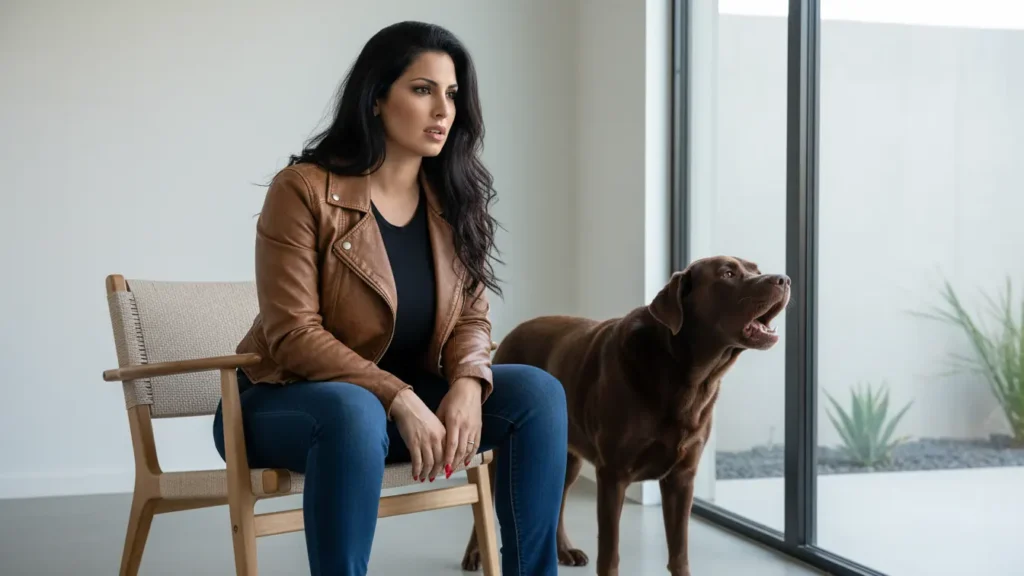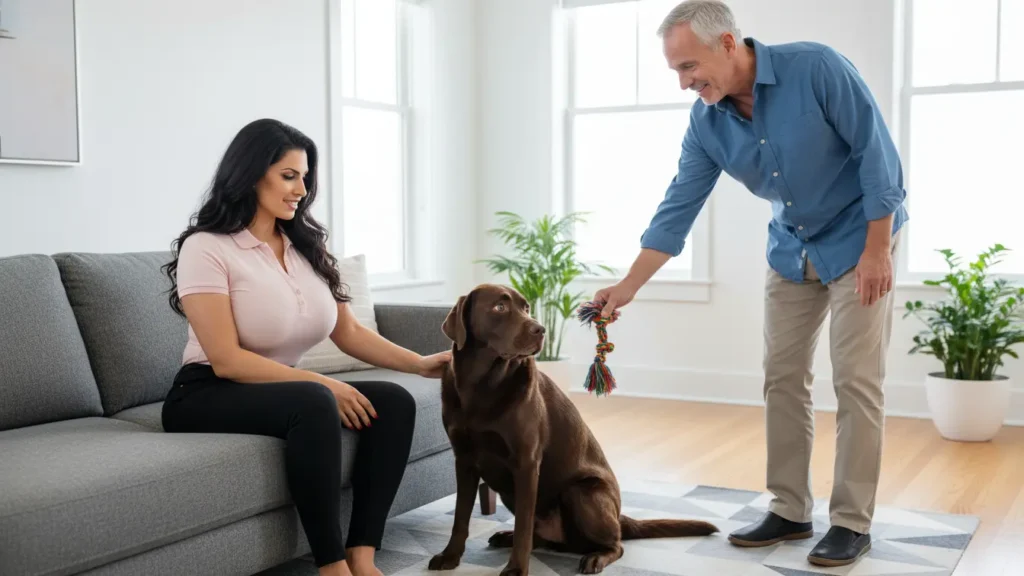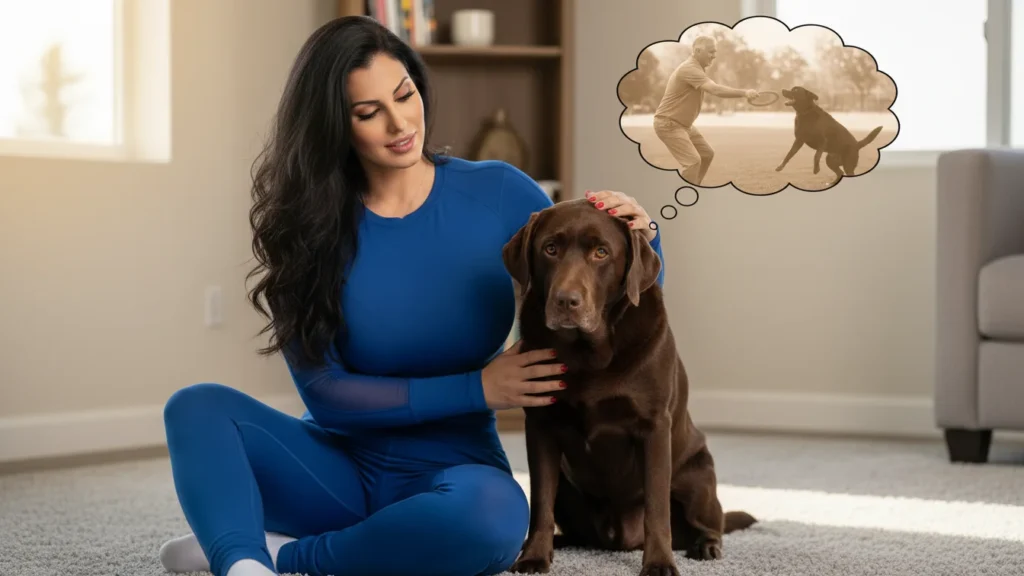
There’s a particular kind of story that circulates every few months: a dog, rehomed or lost years earlier, reacts with unmistakable recognition the moment they’re brought back to a childhood street, a old owner’s voice, or the scent of a first home. Tail wagging, whining, pulling toward a door that hasn’t changed in a decade. It looks like nostalgia. And in a very real, scientifically grounded sense, it kind of is.
Dogs don’t remember the way we do — they don’t sit around replaying memories like a highlight reel. But the imprint their first home leaves on them is real, biologically explainable, and remarkably durable. Here’s the science behind why that early environment sticks for life.
The Sensitive Period: A Narrow Window Where Everything Sticks
The foundation of this whole phenomenon is something developmental researchers call the sensitive period (sometimes called the imprinting period), which spans roughly a puppy’s 3rd to 12th week of life. During this window, a puppy’s nervous system is unusually plastic and receptive — built specifically to absorb information about what’s safe, who’s family, and what the world is supposed to look, sound, and smell like.
This isn’t a vague theory. Foundational research by Freedman and colleagues, published in Science in 1961, identified this critical socialization phase experimentally: puppies that had no human contact during this window developed permanently more fearful behavior around people, even after later, intensive socialization efforts. What gets learned — or missed — during those few weeks shapes behavior, emotional stability, and environmental comfort for the rest of the dog’s life. That’s precisely why the first home a puppy experiences during this stretch becomes such a deeply anchored reference point: it’s literally being encoded during the exact window their brain is primed to treat information as permanent.
Dogs Remember Through Association, Not Storytelling
Here’s the key difference between canine memory and ours. Humans rely heavily on episodic memory — the ability to consciously recall a specific event, like the day you moved into a new house. Dogs, by contrast, lean almost entirely on associative memory: a mental web connecting places, people, and objects to the emotions and sensations that came with them.
A dog doesn’t “remember” their first home as a story with a beginning and an end. Instead, they carry forward a dense cluster of associations — the smell of a specific carpet, the sound of a particular door, the emotional tone of the people who raised them — that light up the instant a matching cue reappears. This is why a returning scent or sound can trigger a reaction that looks exactly like a wave of memory, even though the underlying mechanism is closer to a very sophisticated pattern-match than a memory in the human sense.
Scent Is the Strongest Anchor of All
If one sense is responsible for the staying power of “first home” memories, it’s smell. A dog’s nose is estimated to be 10,000 to 100,000 times more sensitive than a human’s, and puppies begin using scent as a primary memory-building tool from their very first weeks — first to recognize their mother and littermates, then to map the entire environment around them.
Because scent memories are processed differently than visual ones and tend to be extremely durable, the specific smell-signature of a first home (the people, the flooring, the laundry detergent, even the yard) can remain recognizable to a dog for years, resurfacing instantly the moment it’s encountered again — long after specific visual details might have faded.
The Emotional Weight Behind Every Memory
Bonds formed during a puppy’s earliest weeks — especially with their mother and littermates — aren’t just behavioral training, they’re genuinely emotional attachments. Dogs that stay with their mother through the first eight weeks tend to retain recognition of her later in life, and mothers who remain with their puppies through that period show clear signs of recollection toward their offspring even into adulthood.
This emotional weighting matters because it explains why dogs remember some things forever and forget others almost immediately. A dog’s memory of a person, place, or home is shaped far more by how it made them feel — safe, anxious, joyful, threatened — than by any objective detail. A first home layered with security, feeding routines, gentle handling, and consistent caregivers becomes an emotionally “loud” memory that’s built to last, while neutral or unremarkable experiences fade quickly by comparison.
The Flip Side: Fear Imprint Periods
The same mechanism that makes positive memories so durable also makes negative ones just as sticky. Puppies go through what behaviorists call fear imprint periods — one during the earliest socialization window, and a second during adolescence (roughly 6–14 months, depending on breed size). A frightening experience during either window — a loud noise, a rough handling, a traumatic event — can create a fear association that persists for the dog’s entire life, even after years of otherwise positive experiences.
This is the other half of why “first home” memory runs so deep: whatever emotional tone dominated those early weeks, positive or negative, tends to become the baseline the dog measures everything else against.
Does This Fade with Age?
Not entirely, though cognitive aging does affect memory function over time. Research from the Dog Aging Project — one of the largest ongoing studies of canine cognition — has found that short-term spatial memory performance shows measurable age-related decline beginning in midlife, consistent across small and large breeds alike. That said, the deeply emotional, scent-anchored memories formed in a dog’s first weeks of life appear to be remarkably resistant to this general decline, which is part of why even senior dogs and dogs with cognitive impairment can still show strong recognition responses to childhood scents, people, or places well into old age.
What This Means for You as an Owner
If you’re raising a puppy, this is the practical takeaway: the environment, handling, and experiences you provide in those first 8–12 weeks aren’t just forming habits — they’re laying down a template the dog will reference, emotionally, for the rest of their life. Calm, positive, varied early experiences build a dog who treats the world as fundamentally safe. Frightening or chaotic ones can leave a lasting imprint that’s genuinely difficult to undo later.
And if you’ve ever wondered whether your rescue dog “remembers” the shelter, a foster home, or wherever they came from before you — the honest scientific answer is: probably, in their own way. Not as a story they could tell you, but as a set of scents, sounds, and emotional undertones that are quietly built into who they are.
Sources & Further Reading:
- Kinship — Do Dogs Remember People? What Science Says
- Wag! — Can Dogs Remember Things from When They Were Puppies?
- Vitomalia — Imprinting in Dogs: Sensitive Periods and Socialization
- Dog Training Careers — Critical Periods of Development in Dogs
- NCBI/PMC — Functional Assessments of Short-Term Spatial Memory in the Dog Aging Project

Dr. Sofia Romano, DVM, is an experienced veterinarian specializing in small-animal medicine and preventive care. She has treated thousands of cases using evidence-based diagnostics and modern clinical practices. Dr. Romano is dedicated to providing science-backed pet-health guidance that helps owners make informed decisions and improve their pets’ quality of life.