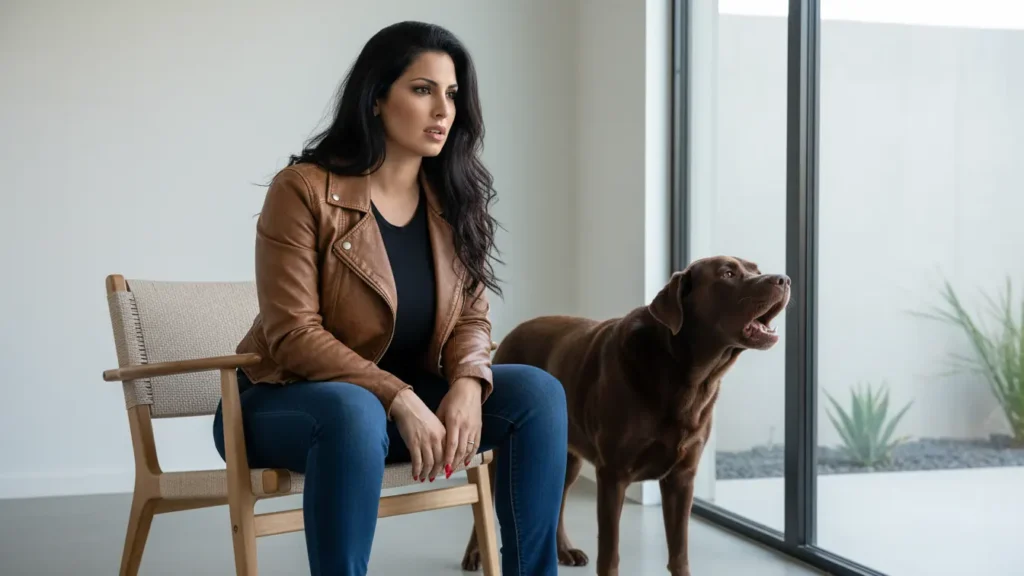
You call your dog’s name across the park. He glances up, clocks you for half a second, and goes right back to sniffing whatever’s more interesting. You call again, louder this time. Nothing. By the third call, you’re annoyed, he’s still ignoring you, and somewhere in your head the word “stubborn” shows up, fully formed, like it explains everything.
It doesn’t. And according to the people who actually study dog behavior for a living, that word might be the single biggest obstacle standing between you and a dog who listens.
Where “Stubborn” Actually Comes From
Here’s an uncomfortable truth: stubbornness is a human concept. It requires understanding an instruction, weighing it against your own preferences, and consciously choosing to defy it out of something like resentment or willfulness. That’s a fairly sophisticated cognitive and emotional process — and it’s simply not what’s happening in your dog’s head when he blows off a recall cue.
Certified professional trainers are blunt about this. As one training team puts it plainly, what looks like a dog refusing to cooperate out of spite is, in reality, usually a dog who’s struggling to understand or who needs a different approach entirely. Even the old “dominance” theory — the idea that a disobedient dog is trying to assert alpha status over you — has been thoroughly retired by modern behavior science. It traces back to outdated research from the 1930s and 40s, based on studies of unrelated captive wolves that don’t reflect how domestic dogs actually think or relate to humans.
So if it’s not defiance and it’s not a dominance power struggle, what’s actually going on?
Reason One: Ignoring You Has Simply Worked Before
This is the one most owners never see coming, because it happens by accident. Every single time your dog didn’t respond to a cue and nothing happened as a result, he learned something real: that particular word carries no consequence. One trainer with decades of experience frames it precisely — a dog doesn’t ignore an owner out of spite; ignoring has simply been reinforced, usually without the owner ever meaning to let that happen.
Think about how “come” often gets taught by accident: you call, your dog keeps running, eventually he comes back on his own when he’s ready, and life goes on. From the dog’s perspective, nothing bad happened from ignoring you, and something good (continued freedom) happened from not listening. Repeat that pattern enough times, and you’ve unintentionally trained the exact behavior you didn’t want.
Reason Two: Your Dog Hasn’t Actually Learned What You Think He Has
Dogs are notoriously bad at generalizing. A behavior trained in one context — say, “sit” in your quiet kitchen — doesn’t automatically transfer to a new environment, a new distance, or a new distraction level. One professional trainer described a client whose dog “knew” hand-touch perfectly at chest height, but had genuinely never been taught the same cue given above the dog’s head. That wasn’t stubbornness. That was an incomplete training picture, plain and simple.
This is exactly why a dog who sits beautifully at home can look at you blankly when you ask the same thing at a busy vet clinic or a dog park. He’s not refusing. He hasn’t finished learning the behavior in that specific context yet.
Reason Three: The Environment Is Simply Winning
Imagine every moment as a quiet auction happening inside your dog’s head. Your cue is one bid. Competing against it: an interesting smell, another dog, a squirrel, the general chaos of the outside world. Whichever bid is more compelling wins the auction, and your dog’s behavior follows the winner. When your reinforcement history with a cue isn’t strong enough yet, the environment simply outbids you — every time.
This is solvable, but it requires training deliberately around distraction, in small, manageable steps, rather than jumping straight from a quiet living room to a chaotic park and expecting the same result. It also means making yourself genuinely worth paying attention to — using real reinforcement, not just repeating the word louder and hoping volume closes the gap that training didn’t.
Reason Four: Something Physical or Emotional Is in the Way
Sometimes what looks like ignoring is neither a training gap nor a motivation problem — it’s discomfort. A dog asked to sit near an approaching unfamiliar dog while on a leash may refuse, not out of defiance, but because standing keeps his options open if he needs to move quickly. From his perspective, that’s the safer choice, even if it looks like disobedience from yours.
Hearing loss, pain, anxiety, or general stress can all produce the exact same surface behavior as “won’t listen” — a dog who seems to be ignoring a cue he knows perfectly well under calmer circumstances. If a previously reliable dog suddenly stops responding consistently, especially alongside any other behavior changes, that’s worth ruling out with your vet before assuming it’s purely a training issue.
What Actually Fixes It
The good news buried inside all of this: a dog not listening isn’t a mystery or a character flaw. It’s information. It tells you exactly where the gap is — whether that’s an untrained context, a weak reinforcement history, or too much competing distraction — which is far more useful than a label like “stubborn” that tells you nothing about what to do next.
A few things that genuinely move the needle:
- Build cues gradually from low to high distraction, rather than expecting park-level focus from kitchen-level training.
- Make yourself the best option in the room, using real, valued reinforcement — not just repeating a word louder.
- Practice the same cue in multiple contexts and positions so it actually generalizes, instead of only ever working in one specific spot.
- Stay calm and neutral when a cue doesn’t land. Frustration reads clearly to your dog and tends to shut down learning rather than speed it up.
- Rule out physical causes if a normally responsive dog suddenly stops listening, rather than assuming a behavior change is purely willful.
The Takeaway
Your dog isn’t holding out on you, and he’s not trying to win some invisible power struggle. He’s either not finished learning yet, distracted by something that currently matters more than you do, or responding to discomfort you haven’t spotted. None of that is stubbornness. It’s just a dog being exactly what he is — an animal who does what works, in the moment, based on everything he’s learned so far. Change what works, and you change what he does.
Sources
- American Kennel Club – Is Your Dog Stubborn? Reasons Why Dogs May Not Listen
- Pawsitive Futures – Is Your Dog Actually Stubborn? Reasons Why Your Dog “Won’t Listen”
- Lionheart K9 – Why Won’t My Dog Listen? The Real Reason Has Nothing to Do With Stubbornness
- Sits ‘n Wiggles Dog Training – The Myth of Stubborn Dogs
- Really Good Pets Dog Training – Why Your “Stubborn” Dog Doesn’t Listen to You

Dr. Sofia Romano, DVM, is an experienced veterinarian specializing in small-animal medicine and preventive care. She has treated thousands of cases using evidence-based diagnostics and modern clinical practices. Dr. Romano is dedicated to providing science-backed pet-health guidance that helps owners make informed decisions and improve their pets’ quality of life.