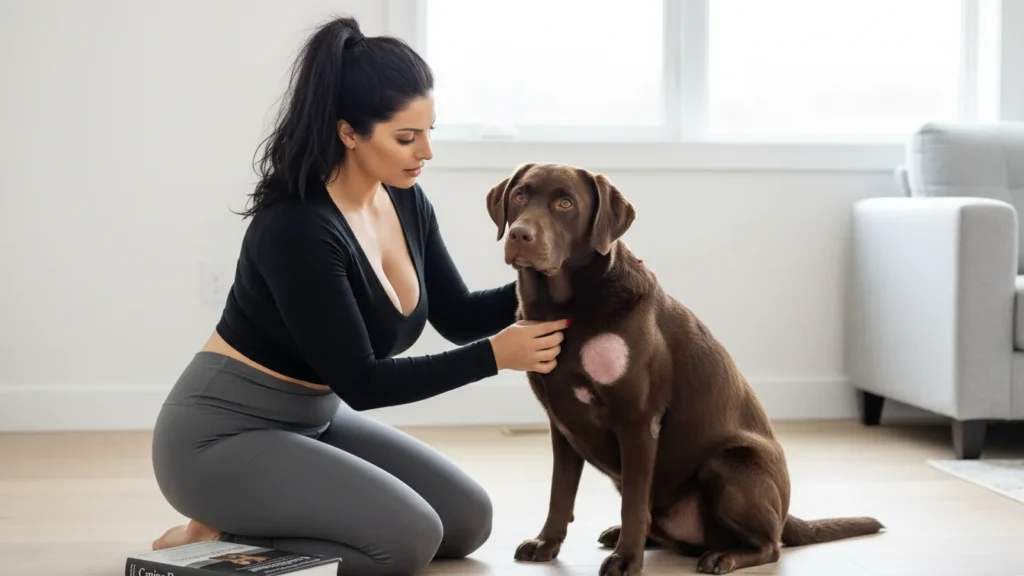
You are relaxing on the couch, mindlessly scratching your dog behind the ears, when your fingers suddenly brush against something alarming: rough, exposed skin. You part their fur and find a distinct, quarter-sized bald spot staring back at you.
Finding patchy hair loss (medically known as alopecia) on your dog is a fast track to pet parent panic. Your mind instantly races through worst-case scenarios, and the late-night Google searches only make the anxiety worse.
But before you buy expensive anti-itch shampoos or start changing their diet, take a breath. Veterinary dermatologists view patchy hair loss as a map. The location of the bald spot, the shape of the patch, and whether or not your dog is scratching it all tell a highly specific medical story.
Here is a breakdown of the real, hidden culprits behind your dog’s patchy coat, and exactly what your veterinarian will be looking for during your visit.
1. The Microscopic Invaders: Mites and Mange
When a vet sees localized bald spots—especially on a puppy’s face or front legs—their first thought is often mites. However, not all mange is created equal, and distinguishing between the two main types is crucial.
- Demodectic Mange (Demodex): These microscopic, cigar-shaped mites live in the hair follicles of almost all normal, healthy dogs. Usually, a dog’s immune system keeps them in check. But if a dog’s immune system dips (common in growing puppies or stressed adults), the mites multiply rapidly, causing the hair to fall out. The key clue: Demodex bald patches are usually not incredibly itchy.
- Sarcoptic Mange (Scabies): Unlike Demodex, Sarcoptic mites burrow deep into the skin and trigger an intense, miserable allergic reaction. If your dog is losing hair on their elbows, ear flaps, or belly and is scratching so hard they whine, Sarcoptes is a prime suspect. It is also highly contagious to other dogs—and humans.
2. The Fungal Fake-Out: Ringworm
Despite the terrifying name, ringworm is not a worm at all; it’s a fungal infection.
Ringworm thrives on keratin, the protein that makes up your dog’s hair and nails. As the fungus feeds, the hair shafts become brittle and break off at the skin level, leaving behind circular, crusty, or scaly bald patches.
A Warning for Owners: Ringworm is zoonotic, meaning it can easily spread from your dog to you, your kids, or your cat. If you notice perfectly round patches of hair loss, wash your hands thoroughly after handling your dog and schedule a vet visit for a fungal culture.
3. The Inside Job: Endocrine and Hormonal Issues
What if your dog is losing hair in patches, but their skin looks perfectly normal and they aren’t scratching at all?
When hair loss is non-itchy and symmetrical (meaning they lose hair on exactly the same spot on both sides of their ribcage or flanks), veterinarians immediately look inward at the endocrine system.
- Hypothyroidism: An underactive thyroid slows down the body’s metabolism. One of the first casualties is the hair growth cycle. Dogs with hypothyroidism often suffer from a dull, brittle coat, unexplained weight gain, and “rat tail”—where the tail loses all its fur.
- Cushing’s Disease (Hyperadrenocorticism): This occurs when the body produces too much cortisol (a stress hormone). Alongside patchy, symmetrical hair loss, dogs with Cushing’s typically drink massive amounts of water, urinate frequently, and develop a pot-bellied appearance.
4. The Skin Barrier Breakdown: Bacterial Infections
Sometimes, the hair loss isn’t the primary problem—it’s secondary to a bacterial infection deep in the skin (bacterial folliculitis).
This often starts looking like a mild case of doggy acne or red, raised bumps. As the bacterial infection inflames the hair follicle, the hair simply falls out. By the time you notice the bald patch, you might see circular crusts, flaky skin, or hyperpigmentation (darkening of the skin) in the center of the bald spot. These infections rarely happen on their own; they usually pop up because underlying allergies have compromised the dog’s skin barrier.
Actionable Steps: What to Do Before the Vet Visit
If you find a bald patch, resist the urge to play pharmacist. Applying human anti-itch creams (like hydrocortisone or Neosporin) can actually make the problem worse, and if your dog licks it off, it can cause stomach upset. Furthermore, thick creams alter the skin’s surface, making it incredibly difficult for your vet to scrape the skin and accurately look for mites or bacteria under a microscope.
Instead, gather the information your vet actually needs:
- Take a clear, well-lit photo of the patch immediately to track if it is spreading.
- Monitor the itch factor. Scale it from 1 (not scratching) to 10 (keeping you awake at night).
- Check their whole body. Look closely at their paws, the inside of their ears, and their armpits, as these hidden areas offer major clues to allergic reactions.
Patchy hair loss rarely resolves on its own, but with a simple skin scrape, blood test, or fungal culture, your vet can pinpoint the exact cause and get your dog’s beautiful coat growing back in no time.
High-Authority Sources & Veterinary References
To ensure the safety and health of your pet, the information in this article is grounded in established veterinary science. For further reading, consult these trusted resources:
- Merck Veterinary Manual: Comprehensive clinical guide to Alopecia (Hair Loss) in Dogs.
- American Kennel Club (AKC): Diagnostic overview of Mange in Dogs: Demodectic vs. Sarcoptic.
- Cornell University College of Veterinary Medicine: Understanding the systemic causes of hair loss, including Canine Hypothyroidism.
- American Veterinary Medical Association (AVMA): Guidelines on zoonotic diseases and managing Ringworm in Pets.

Dr. Sofia Romano, DVM, is an experienced veterinarian specializing in small-animal medicine and preventive care. She has treated thousands of cases using evidence-based diagnostics and modern clinical practices. Dr. Romano is dedicated to providing science-backed pet-health guidance that helps owners make informed decisions and improve their pets’ quality of life.