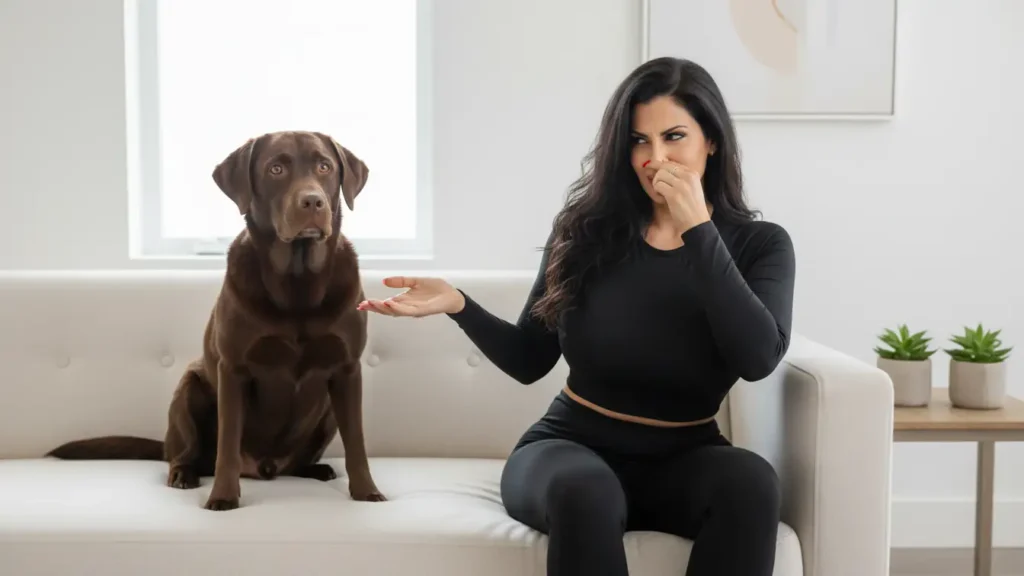
You just spent twenty minutes, half a bottle of shampoo, and a soaked bathroom floor giving your dog a proper bath. An hour later, that same unmistakable smell is back — maybe even stronger than before. It’s genuinely confusing, because a bath is supposed to be the fix, not a step you’re apparently doing wrong.
Here’s the part most owners don’t know: normal “wet dog” smell should fade within one to three hours as the coat fully dries. If the odor lingers well past that, or comes roaring back within a day or two, shampoo isn’t the problem anymore. Something underneath the coat is.
Your Dog’s Smell Is Actually Telling You What’s Wrong
This is the genuinely useful part, and it’s something most owners never think to use: the specific character of the odor is a real diagnostic clue, not just an unpleasant detail. A sweet smell can suggest diabetes. A fishy odor points toward the anal glands. A rotten smell often means dental disease or a skin infection. Learning to identify which category your dog’s smell falls into is often the fastest way to know what you’re actually dealing with, before you ever set foot in a vet’s office.
The Fishy Smell: Anal Glands
This is one of the most common culprits, and one of the most distinctive. Dogs have two small scent sacs on either side of the anus that produce a strong, fishy-smelling fluid, normally released naturally during bowel movements. When that fluid doesn’t fully empty, the glands become impacted, and the smell lingers no matter how thoroughly you bathe. Watch for scooting, dragging the rear along the floor, or excessive licking near the tail. If the area looks swollen, red, or painful, that can indicate the impaction has progressed to an infected abscess — a genuinely painful condition that needs prompt veterinary treatment, not home remedies.
The Musty, Yeasty Smell: “Frito Feet” and Skin Overgrowth
A distinctive sweet, musty odor — often nicknamed “Frito feet” for its resemblance to corn chips — usually signals yeast overgrowth on the skin, most commonly caused by a fungus called Malassezia. Look for redness, itching, or a brownish discoloration on the skin, nails, or between the toes. This is a legitimately vet-treatable condition, not just a hygiene gap no amount of scrubbing will close on its own.
The Rotten or Foul Smell: Dental Disease or Deeper Skin Infection
Persistent bad breath gets mistaken for body odor more often than owners realize. Dental disease affects an estimated 80% of dogs over the age of three, and periodontal disease specifically is the most common form — meaning that “dog smell” you’re chasing might actually be coming from your dog’s mouth, not their coat at all. Separately, bacterial skin infections can produce a similarly foul, lingering odor, often alongside greasy or flaky fur that doesn’t improve with washing.
The Sweet Smell: Worth a Vet Conversation
A distinctly sweet smell, particularly on the breath, is less common but genuinely worth mentioning to your vet, since it can be associated with diabetes in some cases. It’s not a smell most owners think to flag, which is exactly why it’s easy to miss.
The Ears Hold More Odor Than You’d Expect
Ears are a frequently overlooked source of lingering post-bath smell, especially in floppy-eared breeds or dogs who swim often. If water gets trapped in the ear canal during a bath, bacteria and yeast can multiply quickly in that warm, damp environment, producing a sour or yeasty smell that seems to follow your dog around the house. A foul odor specifically from the head area, paired with redness, discharge, or head shaking, points toward an active ear infection that bathing will never resolve, no matter how carefully you clean the outside.
When Your Own Bathing Routine Is Working Against You
This is the twist that surprises a lot of owners: sometimes the bath itself is quietly making things worse.
Overbathing. Washing too frequently strips away the natural oils that protect a dog’s skin barrier. In response, the skin often overproduces oil to compensate, leading to a greasier coat that attracts dirt and harbors more bacteria than before. Most healthy dogs only need a bath every four to six weeks.
Human shampoo. Dog skin sits at a more neutral pH than human skin, and using human shampoo can disrupt that natural balance, trigger extra oil production, and genuinely worsen the smell it was meant to fix.
Inadequate rinsing. Leftover shampoo residue irritates and dries the skin, leading to flaking, itching, and — again — more oil production as the skin tries to protect itself.
When It’s Time to See a Vet
A persistent odor that survives a proper bath and drying period is almost always a sign of infection or inflammation that needs actual treatment, not another round of shampoo. See your vet if the smell is paired with any of the following:
- Scooting, licking, or visible swelling near the tail
- Redness, discharge, or head shaking involving the ears
- Flaky, greasy, or discolored skin that doesn’t improve with washing
- Bad breath alongside visible tartar, red gums, or reluctance to chew
- Any unusual sweetness to the smell, especially combined with increased thirst or urination
What Actually Helps
- Identify the type of smell first. Fishy, yeasty, rotten, or sweet odors point toward genuinely different problems, and naming it correctly saves time at the vet.
- Use a pH-balanced dog shampoo, never human shampoo, and rinse thoroughly to avoid leaving irritating residue behind.
- Dry ears gently after every bath, particularly for floppy-eared breeds, and use a vet-approved ear cleaner regularly if your dog swims often.
- Stick to a reasonable bathing schedule — roughly every four to six weeks for most healthy dogs — rather than washing more frequently in an attempt to control odor.
- Keep up with dental care, including regular brushing and professional cleanings, since a smelly mouth is frequently mistaken for a smelly dog.
- See your vet for anything that persists, rather than trying new shampoos indefinitely in search of a fix that isn’t actually about the coat.
The Bottom Line
A dog who still smells bad after a proper bath isn’t a hygiene failure on your part — it’s information. The specific smell is doing a lot of the diagnostic work for you, if you know how to read it: fishy points to the glands, yeasty-musty points to the skin, rotten points to the mouth, sweet is worth a phone call. Chase the actual source instead of the smell itself, and the bath will finally start working the way it’s supposed to.
Sources
- Dogster – Why Does My Dog Smell So Bad Even After a Bath? (Vet Answer)
- PetPlace – Dog Smells Bad Even After a Bath: Common Causes & Treatment Guide
- Kinship – Why Your Dog Might Still Stink Even After a Bath
- Stuck Soap – Why Does My Dog Smell Bad After a Bath? Real Causes and Fixes
- Doggo Nest – Why Does My Dog Smell Bad After a Bath?

Dr. Sofia Romano, DVM, is an experienced veterinarian specializing in small-animal medicine and preventive care. She has treated thousands of cases using evidence-based diagnostics and modern clinical practices. Dr. Romano is dedicated to providing science-backed pet-health guidance that helps owners make informed decisions and improve their pets’ quality of life.


Pingback: Why Dogs Hate Bath Time — Vet Psychology Explains What’s Really Going On
Pingback: Why Dogs Keep Getting Ear Infections — The Root Causes Most Treatments Miss