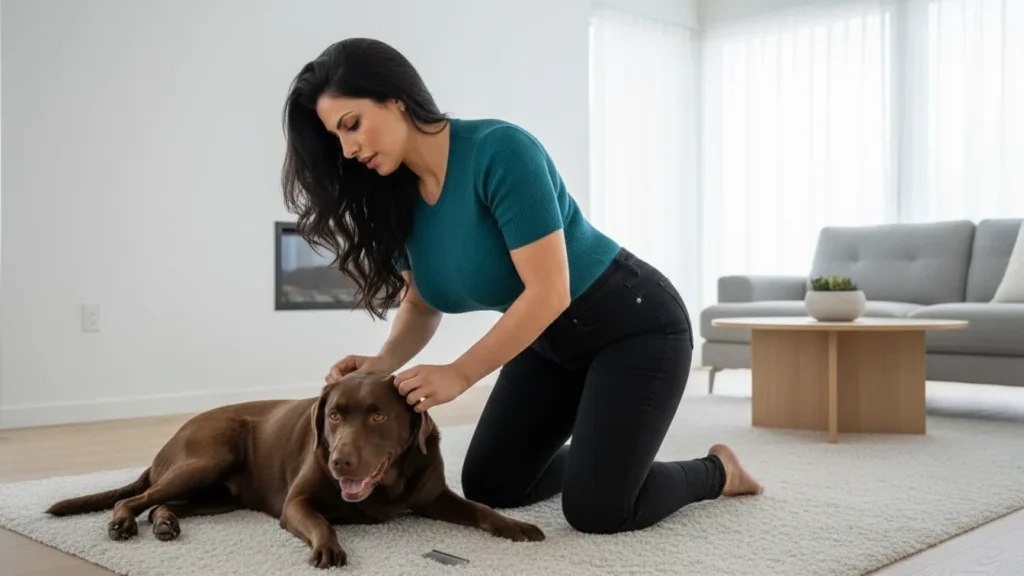
Scroll through any pet store or social feed lately and you’ll see them everywhere: donut-shaped, high-walled, impossibly plush “calming beds” promising to melt away your dog’s anxiety. They’re one of the fastest-growing categories in pet products, and the reviews are full of owners swearing their once-restless dog finally settles down and sleeps through a thunderstorm.
But is there real science behind the plush walls, or is this just a comforting story pet owners want to believe? The honest answer is more interesting than a simple yes or no — and it matters, because anxiety in dogs is a genuinely widespread and serious welfare issue, not a minor quirk.
Just How Common Is Canine Anxiety?
This isn’t a fringe problem affecting a handful of high-strung dogs. A large 2020 study out of the University of Helsinki, surveying owners of 13,700 Finnish pet dogs, found that noise sensitivity was the single most common anxiety-related trait, showing up in roughly a third of dogs, with general fearfulness and other anxiety traits appearing at similarly high rates across the population. Later surveys using different methodologies have found fear-related behaviors in anywhere from a quarter to the vast majority of dogs studied, depending on how the question is asked and which behaviors count. However you slice the numbers, the takeaway is consistent: a meaningful share of the dogs in your neighborhood are dealing with some form of anxiety, whether it’s fireworks, separation from their owner, or general nervousness in new situations.
That’s the backdrop that made calming beds such an appealing product in the first place — there’s a real, widespread problem to solve.
The Theory Behind the Design
Calming beds aren’t just softer versions of a regular dog bed. Most share two specific design features that are meant to work on a dog’s nervous system, not just their comfort:
- Raised, bolstered edges that create a den-like enclosure. The idea is that dogs are hardwired to seek out small, enclosed spaces when they feel vulnerable — a holdover from wild canine ancestors who denned for safety while sleeping or raising pups.
- Deep, snug contact against the body, similar in concept to a weighted blanket or a compression wrap for humans and dogs alike. This kind of steady pressure is thought to help activate the parasympathetic nervous system — the “rest and digest” side of the nervous system that counteracts the fight-or-flight stress response.
Veterinarians who work with anxious dogs generally describe the concept as biologically plausible rather than proven. The mechanism makes sense based on what’s known about canine behavior and stress physiology, even though the beds themselves haven’t been put through rigorous clinical trials the way a medication would be.
What the Evidence Actually Shows
Here’s the important nuance most product pages leave out: there is currently no large-scale, peer-reviewed clinical trial testing calming beds specifically. What exists instead is a mix of anecdotal owner reports, veterinary opinion grounded in related research, and broader behavioral science on enclosed spaces and deep pressure that lends the concept credibility without fully confirming it.
Veterinarians who discuss the trend, including those writing for veterinary-reviewed pet health outlets, tend to land in a similar place: calming beds can genuinely help dogs with mild to moderate anxiety, especially when a dog already tends to seek out corners, burrow under blankets, or pace before settling. For dogs with severe anxiety — the kind that leads to self-injury, destructive behavior, or a complete inability to settle — a bed alone is rarely enough, and veterinary behaviorist involvement becomes the more appropriate first step.
It’s also worth remembering that anxiety-like behavior in dogs isn’t always purely behavioral. A dog that seems unable to settle, paces at night, or reacts strongly to being touched could be dealing with an underlying medical issue like arthritis or pain, which a comfortable bed might mask rather than solve. Ruling that out with a vet visit is a reasonable first step before assuming the issue is purely emotional.
A Realistic Way to Think About It
Picture a dog that gets visibly panicked during thunderstorms — pacing, panting, trying to squeeze under furniture. A calming bed placed in a quiet corner, introduced calmly and positively over time, gives that dog a “safe base” it already associates with comfort before the storm even starts. For a dog with genuinely mild-to-moderate noise sensitivity, that combination of den-like enclosure and physical comfort can measurably reduce pacing and help the dog settle faster, according to the veterinarians and behaviorists who work with these cases regularly.
That same bed, however, is unlikely to be enough on its own for a dog with severe separation anxiety that destroys door frames or injures itself trying to escape a crate. That’s a different level of problem, and it deserves a different level of intervention.
How to Actually Use One Well
If you’re considering a calming bed for your dog, a few practical points make a real difference:
- Match the bed to the dog’s actual behavior. If your dog already seeks out small, enclosed spots to feel safe, a den-style bed is a natural fit. If your dog prefers open sightlines and wide stretching room, forcing an enclosed bed on them may add stress rather than relieve it.
- Introduce it gradually and positively, the same way you’d introduce a crate — treats, calm praise, and no forced confinement.
- Pair it with other tools rather than expecting it to work alone. Veterinarians commonly recommend combining a calming bed with training, consistent exercise, and — for moderate to severe cases — tools like pheromone diffusers or a vet-prescribed treatment plan.
- Rule out pain first. If your dog seems restless or anxious out of nowhere, a vet visit to check for an underlying medical cause is worth doing before assuming it’s purely behavioral.
- Keep expectations realistic. A calming bed is a supportive tool, not a guaranteed fix, and definitely not a substitute for veterinary care in serious cases.
The Bottom Line
The calming bed trend isn’t pure marketing fluff, but it isn’t a scientifically proven cure either — it sits in that honest middle ground of “plausible, vet-endorsed, and helpful for many dogs, but not clinically validated in a rigorous trial.” For a dog with mild to moderate anxiety, especially noise sensitivity or general nervousness, a well-chosen calming bed used alongside training and comfort routines can be a genuinely useful piece of the puzzle. For anything more severe, it’s a nice addition to real treatment, not a replacement for it.
This article is for general educational purposes and isn’t a substitute for individualized veterinary or behavioral guidance. If your dog’s anxiety is severe, worsening, or affecting their safety, talk to your veterinarian or a certified veterinary behaviorist.
Sources
- Scientific Reports (Nature): Prevalence, comorbidity, and breed differences in canine anxiety in 13,700 Finnish pet dogs
- PMC/NIH: Owner-reported prevalence and severity of fear and anxiety in dogs
- Dogster (vet-reviewed): Do Calming Dog Beds Really Work? Vet-Verified Facts to Know
- Rover: Do Calming Beds for Dogs Work? What the Science Says

Dr. Sofia Romano, DVM, is an experienced veterinarian specializing in small-animal medicine and preventive care. She has treated thousands of cases using evidence-based diagnostics and modern clinical practices. Dr. Romano is dedicated to providing science-backed pet-health guidance that helps owners make informed decisions and improve their pets’ quality of life.