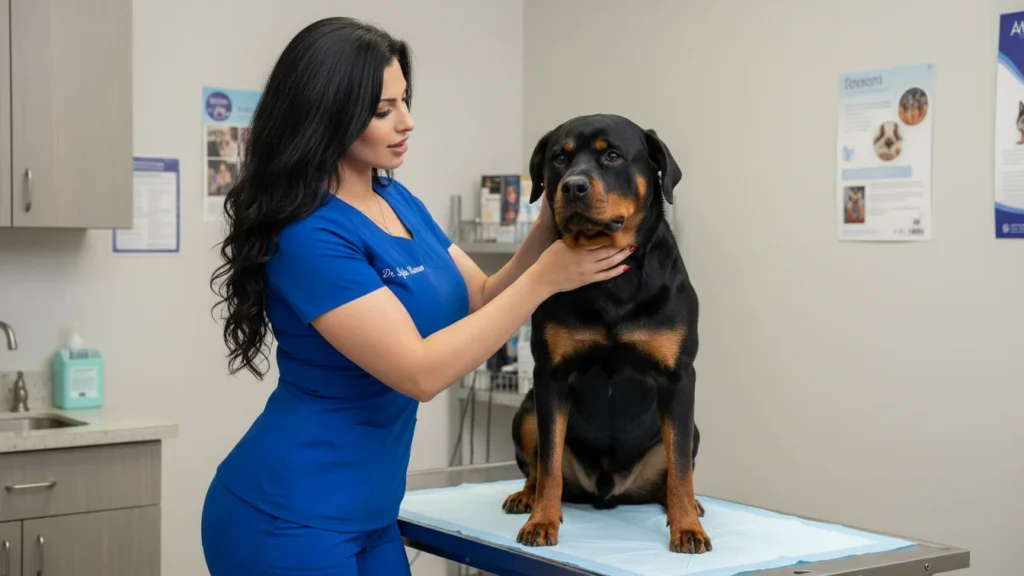
When Strength Hides What the Heart Is Doing
Rottweilers look powerful, grounded, and unshakeable.
They move with confidence.
They don’t tire easily.
They rarely show weakness until it truly matters.
That’s why heart disease in Rottweilers is often discovered late—not because it arrives suddenly, but because it develops silently.
Long before coughing, collapse, or exercise intolerance appears, the heart may already be changing its structure, rhythm, or efficiency. Owners don’t miss these signs because they’re inattentive. They miss them because the dog looks strong.
Why the Heart Changes First—and Quietly
The heart is a master of compensation.
When its workload increases or efficiency drops, it adapts by:
- Thickening muscle walls
- Enlarging chambers
- Altering electrical conduction
- Increasing resting effort
These adaptations keep blood moving without obvious symptoms.
In Rottweilers—large, athletic dogs with powerful circulation—this compensation can last months or years. During that time, outward health can appear completely normal.
Breed Predisposition: A Known Pattern, Not Bad Luck
Rottweilers have a well-documented predisposition to certain cardiac conditions, especially dilated cardiomyopathy (DCM) and rhythm disturbances.
Breed health data acknowledged by organizations such as the American Kennel Club highlights cardiac disease as an important health consideration for the breed.
This doesn’t mean every Rottweiler will develop heart disease.
It means early detection matters more in this breed than in many others.
What “Silent Heart Changes” Actually Mean
Silent heart changes are measurable alterations that occur before clinical signs.
These may include:
- Mild enlargement of heart chambers
- Subtle weakening of contraction strength
- Early valve inefficiency
- Electrical rhythm irregularities
None of these necessarily cause immediate illness—but all increase risk over time.
Dilated Cardiomyopathy: The Classic Silent Progression
DCM is one of the most important heart diseases affecting Rottweilers.
It develops gradually as:
- The heart muscle stretches
- Pumping efficiency decreases
- Electrical stability becomes fragile
Early-stage DCM often causes no visible symptoms. Dogs may remain active, playful, and strong—while the heart works harder to maintain normal output.
By the time symptoms appear, structural change is often advanced.
Rhythm Changes Owners Can’t Feel
Some of the most dangerous heart changes are electrical, not structural.
Rottweilers are prone to:
- Ventricular arrhythmias
- Irregular heartbeat patterns
- Exercise-induced rhythm instability
These may not affect daily behavior—but can increase the risk of fainting or sudden collapse under stress.
Because owners can’t feel these changes, they often go undetected without screening.
Why Big, Athletic Dogs Hide Cardiac Disease Better
Large, muscular breeds like Rottweilers have:
- Strong peripheral circulation
- High cardiac reserve
- Efficient oxygen utilization
This allows them to mask early cardiac decline.
Smaller or less athletic dogs may show fatigue earlier. Rottweilers often don’t—until compensation fails.
Strength becomes camouflage.
Early Heart Changes vs Advanced Heart Disease
| Feature | Early Silent Changes | Advanced Heart Disease |
|---|---|---|
| Energy level | Appears normal | Reduced |
| Exercise tolerance | Mostly unchanged | Limited |
| Coughing | Absent | Common |
| Fainting | Rare | Possible |
| Detection | Screening tests | Clinical signs |
The goal is to catch disease in the left column, not the right.
Real-Life Example: When the Heart Whispered First
A 6-year-old Rottweiler presented for routine screening.
No symptoms.
Excellent body condition.
Normal activity.
A cardiac evaluation revealed:
- Mild ventricular enlargement
- Early rhythm irregularity
Management began early—before symptoms—and significantly reduced future risk.
Without screening, discovery would likely have come years later.
Common Early Clues Owners Sometimes Overlook
While many changes are invisible, a few subtle hints may appear:
- Slightly longer recovery after intense exercise
- Reluctance to sustain high activity (not refusal)
- Occasional unexplained restlessness
- Very subtle breathing pattern changes at rest
These signs are easy to dismiss—but worth noting.
Mistakes That Delay Early Detection
Even attentive owners can unintentionally miss early heart disease.
Common mistakes include:
- Waiting for coughing or collapse
- Assuming “big dogs slow down earlier”
- Skipping heart checks when the dog seems fit
- Relying only on weight and appetite as health markers
- Ignoring mild, inconsistent changes
Heart disease rarely announces itself clearly at first.
How Vets Detect Silent Heart Changes
Veterinarians rely on objective tools, not guesswork.
These may include:
- Auscultation (listening for murmurs or rhythm changes)
- Electrocardiograms (ECG)
- Echocardiography (ultrasound of the heart)
- Holter monitoring in selected cases
Guidelines promoted by bodies such as the World Small Animal Veterinary Association emphasize early screening for breeds with known cardiac risk.
Why This Matters Today
Heart disease affects more than longevity.
It impacts:
- Exercise safety
- Anesthesia risk
- Stress tolerance
- Quality of life
- Emergency outcomes
Catching silent heart changes early allows:
- Gentler interventions
- Better monitoring
- Lower long-term risk
- Fewer sudden crises
Time is the most valuable treatment the heart can receive.
Actionable Steps for Rottweiler Owners
- Consider baseline cardiac screening in adulthood
- Track subtle changes in stamina or recovery
- Ask about heart checks during routine exams
- Avoid assuming strength equals health
- Recheck periodically—even when results are normal
Early attention reduces urgency later.
Key Takeaways
- Rottweilers often develop heart changes silently
- Structural and rhythm changes can precede symptoms by years
- Strength and fitness can mask early disease
- Screening detects problems before crises occur
- Early detection protects both quality and length of life
Frequently Asked Questions (FAQs)
1. Can heart disease exist without any symptoms?
Yes. Many Rottweilers show no signs until disease is advanced.
2. Is coughing always the first sign of heart disease?
No. Coughing often appears later in the disease process.
3. Should young Rottweilers be screened?
Baseline screening in adulthood is often beneficial, especially with family history.
4. Can exercise cause heart problems to worsen?
Appropriate activity is healthy—but undiagnosed heart disease can increase risk during intense exertion.
5. Are silent heart changes treatable?
Early-stage changes are often manageable with monitoring and timely care.
Listening Before the Heart Has to Shout
Rottweilers are built to protect, endure, and stay strong.
They don’t complain early.
They don’t slow down easily.
They don’t signal weakness loudly.
But the heart speaks quietly—long before it struggles.
Owners who listen early don’t just prevent disease.
They preserve strength, confidence, and the powerful presence this breed is known for.
Disclaimer: This article is for general educational purposes only and does not replace individualized veterinary evaluation or care. Always consult your veterinarian about heart health concerns.

Dr. Sofia Romano, DVM, is an experienced veterinarian specializing in small-animal medicine and preventive care. She has treated thousands of cases using evidence-based diagnostics and modern clinical practices. Dr. Romano is dedicated to providing science-backed pet-health guidance that helps owners make informed decisions and improve their pets’ quality of life.