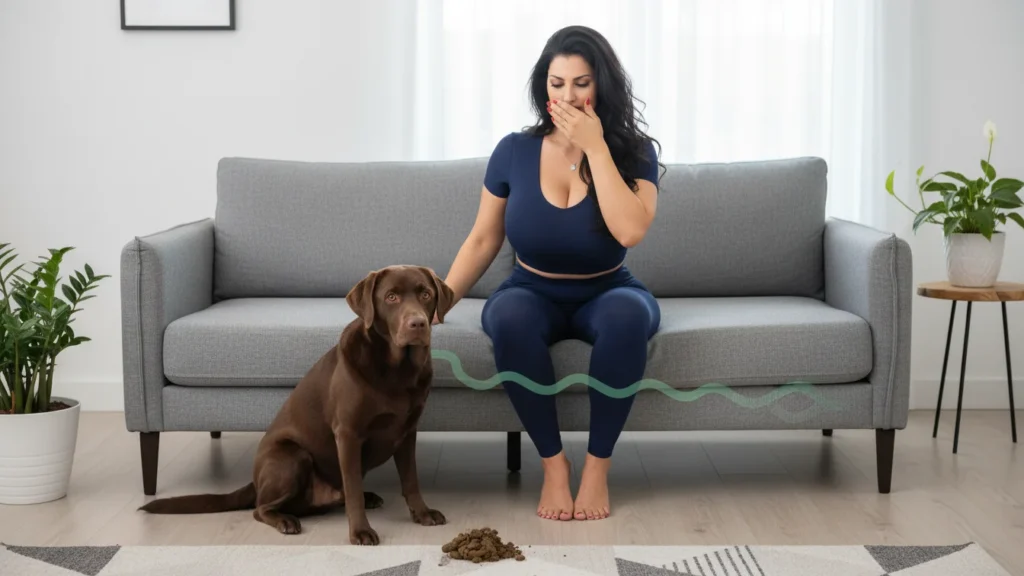
Dog stool has never exactly been pleasant, but there’s a difference between the normal, expected smell and something noticeably worse — a sudden, distinctly stronger, more foul odor that makes you stop mid-cleanup and wonder if something’s actually wrong.
That instinct to notice is worth trusting. Stool odor, while nobody’s favorite topic, is a genuinely useful and often overlooked window into a dog’s digestive health, and a clear change is rarely random. Here’s what’s usually behind it.
Why Stool Odor Is a Meaningful Signal in the First Place
Stool odor is largely produced by the byproducts of bacterial fermentation occurring in the large intestine as undigested material and gut bacteria interact during the final stages of digestion. Changes in diet, digestion efficiency, gut bacteria balance, or underlying health issues can all directly affect this fermentation process — which is exactly why a shift in smell often reflects a genuine shift in what’s happening internally, rather than being a meaningless variation.
Common, Less Concerning Causes
1. A Recent Diet Change
Switching foods — even to a higher-quality option — can temporarily produce stronger-smelling stool as the gut microbiome adjusts to a new set of ingredients and nutrient ratios. This is one of the most common, generally short-lived causes, typically resolving within one to two weeks as digestion stabilizes around the new diet.
2. Higher Protein or Fat Content
Diets higher in protein or fat can produce more pronounced stool odor, since these macronutrients, when not fully absorbed, contribute more strongly to bacterial fermentation byproducts than more easily digested components. This is often simply a normal characteristic of a particular food’s formulation rather than a sign of a problem.
3. Table Scraps or Dietary Indiscretion
Even a small amount of unusual food — table scraps, a dropped snack outside, something scavenged on a walk — can noticeably affect stool odor and consistency for a day or two, generally resolving on its own once digestion of the unusual item is complete.
4. New Treats or Supplements
A newly introduced treat, chew, or supplement can sometimes affect stool smell, particularly if it includes ingredients your dog’s system isn’t accustomed to processing regularly.
Causes Worth Paying Closer Attention To
5. Gastrointestinal Infection
Bacterial, viral, or parasitic infections can significantly alter stool odor, often alongside other symptoms like changes in consistency, frequency, color, or the presence of blood or mucus. A notably foul, unusual odor paired with any of these additional changes is a reasonable prompt for veterinary evaluation, particularly if it persists beyond a day or two.
6. Intestinal Parasites
Parasites such as giardia, hookworms, or other intestinal parasites commonly cause noticeably stronger, more unpleasant stool odor, frequently alongside soft stool, increased frequency, or visible changes in stool appearance. A fecal exam through your veterinarian is the standard, reliable way to identify or rule out parasitic causes.
7. Malabsorption or Digestive Enzyme Issues
Conditions affecting a dog’s ability to properly digest and absorb nutrients — including exocrine pancreatic insufficiency (a condition where the pancreas doesn’t produce adequate digestive enzymes) — can result in undigested material passing through to the large intestine, producing notably stronger fermentation odor along with often larger stool volume and, in some cases, visible fat content in the stool.
8. Food Sensitivities or Intolerances
An underlying food sensitivity or intolerance can affect digestion efficiency and gut bacterial balance, often producing both stronger odor and other digestive symptoms like soft stool or increased gas. This is worth considering, particularly if the odor change is a persistent pattern rather than an isolated occurrence, and especially if it developed alongside other signs discussed in the broader context of late-onset food sensitivities.
9. Underlying Gut Bacteria Imbalance
Disruption to the normal balance of gut bacteria — sometimes following antibiotic use, a bout of illness, or significant dietary change — can alter the fermentation process in ways that produce noticeably different stool odor until the microbiome rebalances, a process that can take anywhere from days to several weeks depending on the underlying cause and severity.
10. More Significant Underlying Conditions
In some cases, persistent, significantly abnormal stool odor can be associated with more significant underlying conditions, including inflammatory bowel disease or other chronic gastrointestinal disorders. These cases typically involve additional persistent symptoms beyond odor alone and generally require veterinary diagnostic workup to identify accurately.
How to Evaluate What You’re Seeing
A few practical questions can help clarify the likely significance of a stool odor change:
- Is this a new pattern, or a one-off occurrence? A single instance of stronger odor, especially following a known dietary indiscretion, is generally far less concerning than a persistent, ongoing pattern.
- Has anything changed recently? New food, new treats, recent scavenging, or a new supplement can offer a clear, likely explanation worth considering first.
- Are there other changes alongside it? Altered stool consistency, color, frequency, presence of blood or mucus, weight changes, or altered appetite and energy all add meaningful context and generally warrant veterinary attention if present alongside odor changes.
- How long has it persisted? A change lasting more than a few days to a week, without an obvious dietary explanation, is generally worth a veterinary conversation rather than continued monitoring alone.
When to See a Vet
Veterinary evaluation is generally recommended if:
- Unusually strong odor persists beyond a week without an obvious dietary cause
- It’s accompanied by changes in stool consistency, color, frequency, or the presence of blood or mucus
- Your dog shows other symptoms — weight loss, appetite changes, lethargy, vomiting, or excessive gas
- The pattern is recurring rather than an isolated incident
A fecal exam, and in some cases additional bloodwork or diagnostic testing, can help identify the underlying cause accurately rather than relying on guesswork.
What Helps
- Introduce new foods gradually, transitioning over 7 to 10 days rather than switching abruptly, to minimize digestive disruption and associated odor changes during the adjustment period.
- Limit table scraps and unsupervised scavenging where possible, since dietary indiscretion is one of the most common and most preventable causes of temporary odor changes.
- Maintain a consistent, high-quality diet appropriate to your dog’s individual needs, since digestive consistency generally correlates with more consistent, predictable stool characteristics overall.
- Keep up with regular parasite prevention and fecal screening, since many parasitic causes are both preventable and easily identified through routine veterinary care.
- Track patterns over time rather than reacting to a single occurrence, since context and duration are generally more informative than any single data point.
The Bigger Picture
An unusually strong stool odor isn’t something to dismiss, but it also isn’t automatically cause for alarm. In most cases, it reflects something identifiable and often manageable — a diet change, a dietary indiscretion, or a temporary digestive adjustment. When the pattern persists or comes with other symptoms, though, it’s a genuinely useful early signal worth taking to your vet, offering a window into digestive health that’s easy to overlook but well worth paying attention to.
Sources
- American Kennel Club – What Your Dog’s Poop Can Tell You About Their Health
- American Veterinary Society of Animal Behavior – Position Statement on Recognizing Illness-Related Behavior Change
- ASPCA – Digestive Health and When to See a Veterinarian
- Cornell University College of Veterinary Medicine – Canine Gastrointestinal Health and Diagnostics
- Journal of Veterinary Internal Medicine – Gastrointestinal Disorders and Malabsorption in Dogs

Dr. Sofia Romano, DVM, is an experienced veterinarian specializing in small-animal medicine and preventive care. She has treated thousands of cases using evidence-based diagnostics and modern clinical practices. Dr. Romano is dedicated to providing science-backed pet-health guidance that helps owners make informed decisions and improve their pets’ quality of life.