
A rounder belly on your dog can mean almost anything — a big dinner, a lazy Sunday of overeating, a totally normal “food baby.” Or, in rarer but far more serious cases, it can be the first visible sign of a genuine emergency. The challenge for owners is that both can look surprisingly similar at first glance, which is exactly why it’s worth knowing what separates “keep an eye on it” from “get to a vet right now.”
This isn’t a topic to guess your way through. Here’s what a swollen belly actually tells you, broken down by how urgent it really is.
First, the One You Need to Know: Bloat and GDV
The most important cause to understand is also the most dangerous: Gastric Dilatation-Volvulus, or GDV, commonly known as bloat. This happens when a dog’s stomach fills rapidly with gas, fluid, or food and distends — and in severe cases, twists on its own axis. That twisting cuts off blood flow to the stomach and surrounding organs, causes tissue death, and can trigger shock, arrhythmias, and death within hours if untreated.
What it looks like: a visibly swollen, tight abdomen (often more prominent just behind the ribs on the left side), unproductive retching or attempts to vomit that bring nothing up, restlessness or pacing, drooling, pain when the belly is touched, rapid or shallow breathing, weakness, pale gums, and eventual collapse in advanced cases.
Why it’s so dangerous: GDV can happen without warning, progress within a matter of hours, and there is no way to safely monitor it at home — the stomach can flip from simple bloat into a full twist at any point without any outward change your dog can show you. This is why every veterinary source is unanimous on the response: if you see these signs, don’t wait, don’t try home remedies, and don’t attempt to treat it yourself. Call an emergency vet on your way there.
Who’s at higher risk: large, deep-chested breeds — Great Danes, German Shepherds, Standard Poodles, Weimaraners, Dobermans, Irish and Gordon Setters, Boxers, Akitas, and Bloodhounds are frequently cited — though it can occur in smaller breeds too, including Beagles. Many high-risk breeds can also undergo a preventive surgery called a gastropexy, which tacks the stomach in place to prevent it from twisting; this is sometimes done at the same time as a spay or neuter.
The Simple, Low-Concern Cause: Overeating or Gas
Not every round belly is an emergency. A belly that’s swollen but still soft, with a dog who’s otherwise acting completely normal — eating, playing, breathing easily — is far more likely to be simple overeating, a bit of trapped gas, or mild indigestion. This kind of swelling typically settles down within a few hours and doesn’t come with pain, retching, or distress.
The single most useful thing you can check: press gently on the belly. A soft, giving abdomen paired with normal behavior is reassuring. A hard, tight, drum-like abdomen — especially with signs of pain or distress — should be treated as a red flag, not something to wait out.
Puppies: Usually Worms, Not an Emergency
If you’re seeing a round, pot-bellied look in a young puppy, the most common explanation by far is intestinal parasites, particularly roundworms. A heavy worm burden causes gas, intestinal distension, and inflammation, giving puppies that classic “wormy belly” look — often paired with a dull coat, poor growth, or a thin body despite eating well. This is easily confirmed with a fecal test and resolved with the appropriate dewormer. It’s common enough that it shouldn’t cause panic, but it does need to be diagnosed and treated rather than assumed and ignored, since a heavy parasite load can genuinely affect a puppy’s nutrition and growth.
Pregnancy: Expected, If Recent Breeding Occurred
In an unspayed female who’s been around an intact male, gradual abdominal enlargement starting around 4–5 weeks after breeding is expected and normal. A vet can confirm pregnancy through gentle palpation about a month after breeding, or via ultrasound as early as 25 days. This kind of swelling develops gradually and is often accompanied by other signs, like enlarged mammary glands — a helpful way to distinguish it from other, less benign causes of abdominal growth.
Cushing’s Disease: A Gradual, Hormonal Cause
Cushing’s disease (hyperadrenocorticism) occurs when the adrenal glands produce too much cortisol, causing a characteristic pot-bellied look from fat redistribution, muscle wasting, and an enlarged liver. Unlike bloat, this develops slowly, over weeks or months, and typically comes with other telltale signs: increased thirst and urination, hair loss, thinning skin, and sometimes excessive panting. It’s not an emergency in the way GDV is, but it does need veterinary diagnosis and long-term management once identified.
Fluid Buildup (Ascites): A Sign of an Underlying Organ Problem
Sometimes a swollen belly isn’t gas or growth at all, but fluid accumulating inside the abdominal cavity — a condition called ascites. It often produces a distinctive “sloshing” feel when the dog moves, and it’s typically a downstream sign of a more serious problem elsewhere: congestive heart failure, liver disease, low blood protein, or cancer. Dogs with ascites may also show reduced appetite, exercise intolerance, or breathing difficulty as the fluid limits normal diaphragm movement. This calls for a prompt vet visit — not necessarily a middle-of-the-night emergency room dash unless breathing is affected, but not something to watch and wait on either.
Organ Enlargement or Masses: Usually a Gradual Change
An enlarged liver, spleen, or kidneys — from infection, inflammation, or a tumor — can also cause the abdomen to expand as the organ takes up more space than it should. This tends to develop gradually and is often accompanied by weakness, appetite loss, or sensitivity when the belly is touched. It’s more common in older dogs, and diagnosing it usually requires imaging (ultrasound or X-ray) rather than a physical exam alone.
Quick Reference: How Urgent Is It?
| What You’re Seeing | Likely Cause | Urgency |
|---|---|---|
| Soft belly, dog acts completely normal | Overeating, mild gas | Monitor; usually resolves on its own |
| Round pot-belly in a young puppy | Intestinal parasites | Vet visit for testing/deworming |
| Gradual swelling over weeks in an intact female | Pregnancy | Confirm with vet; expected |
| Slow pot-belly + increased thirst/urination, hair loss | Cushing’s disease | Vet visit, non-emergency |
| Sloshing feel, breathing trouble, lethargy | Ascites (fluid buildup) | Prompt vet visit |
| Gradual firm swelling in an older dog | Organ enlargement/mass | Vet visit for imaging |
| Sudden, hard, tight belly + retching, restlessness, pain | Bloat / GDV | Emergency — go now |
The Bottom Line
Most round bellies are nothing dramatic — a big meal, a young dog with worms, or a hormonal condition that develops slowly and responds well to treatment. But because one cause on this list (GDV) can kill a dog within hours and gives very little warning, the safest approach is simple: if a swollen belly is sudden, hard, or paired with retching, restlessness, pain, or breathing trouble, treat it as an emergency and go straight to a vet — don’t wait to see if it resolves. For anything slower, gradual, or paired with a dog who’s otherwise acting completely normal, a routine vet visit is the right call to get an accurate diagnosis rather than guessing at home.
Sources & Further Reading:
- American Animal Hospital Association (AAHA) — Understanding Canine Bloat (GDV): A Medical Emergency
- PetMD — Gastric Dilatation-Volvulus (GDV) in Dogs
- VCA Animal Hospitals — Bloat: Gastric Dilatation and Volvulus in Dogs
- Great Pet Care — Dog Swollen Belly: 9 Causes
- PetHelpful — 15 Potential Causes of Abdominal Enlargement in Dogs

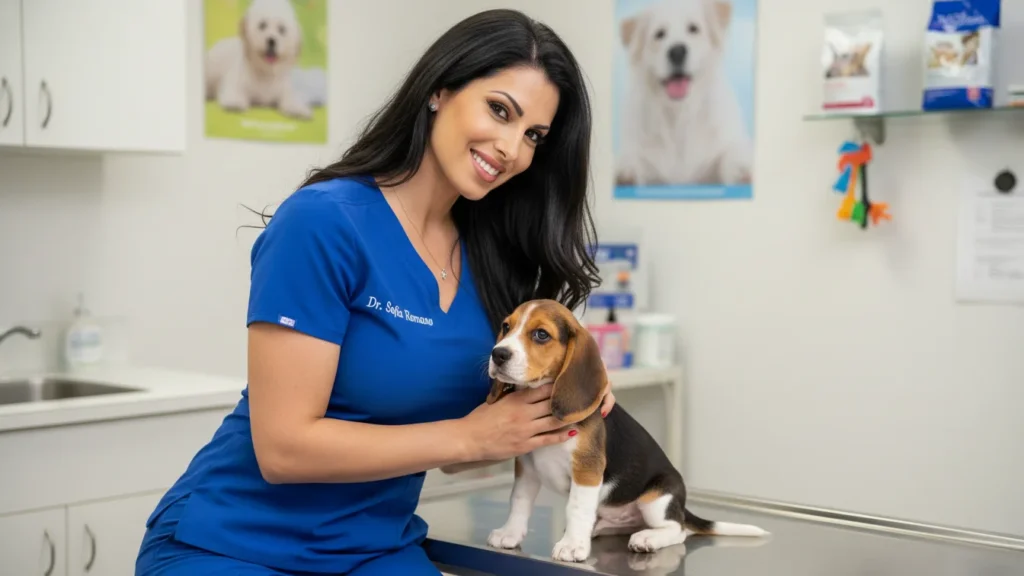
Dr. Sofia Romano, DVM, is an experienced veterinarian specializing in small-animal medicine and preventive care. She has treated thousands of cases using evidence-based diagnostics and modern clinical practices. Dr. Romano is dedicated to providing science-backed pet-health guidance that helps owners make informed decisions and improve their pets’ quality of life.



Pingback: Why Dogs Stretch Repeatedly — What Their Body Language Is Really Telling You