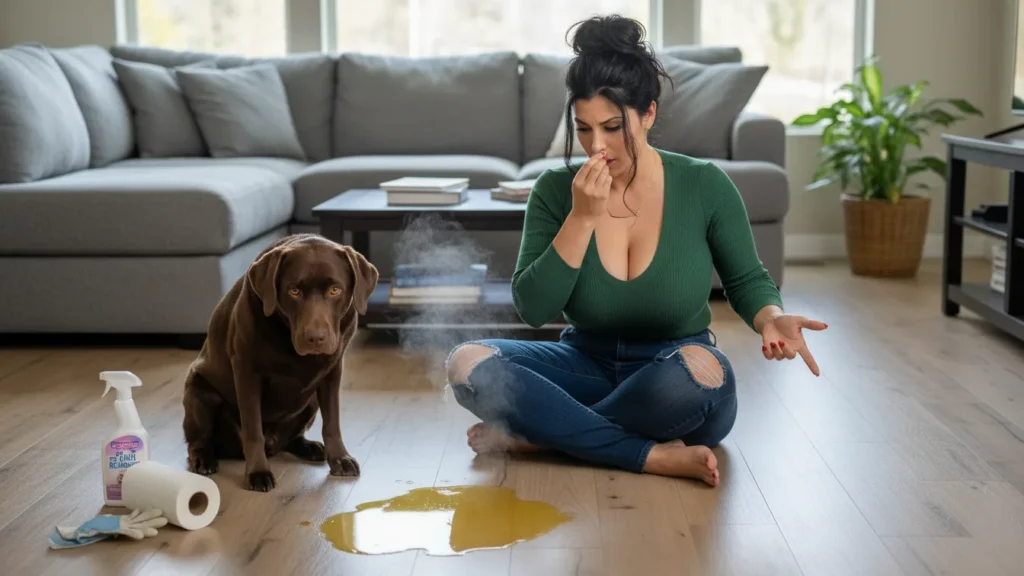
It’s not exactly a pleasant discovery — you’re out on a walk or cleaning up an accident, and your dog’s urine hits you with a smell that’s noticeably sharper, more chemical, or more overpowering than usual. It’s easy to dismiss, but urine odor is actually one of the more useful, low-effort health signals your dog gives you. A sudden or persistent change is worth paying attention to, even if it doesn’t turn out to be serious.
Here’s what’s actually behind that stronger smell, ranging from the completely harmless to the genuinely urgent.
The Most Common Cause: Dehydration
By far the most frequent explanation for stronger-smelling urine is simple dehydration. When a dog isn’t drinking enough water — whether from hot weather, reduced water intake, or increased fluid loss from vomiting or diarrhea — the kidneys conserve water by producing less urine that’s far more concentrated. That concentrated urine contains a higher ratio of urea, and as urea breaks down, it produces the sharp, ammonia-like smell many owners notice.
What to look for alongside it: darker yellow urine, dry or tacky gums, reduced skin elasticity (gently pinch the skin at the scruff — it should snap back quickly), and lethargy. If dehydration is the cause, simply encouraging more water intake — fresh bowls in multiple spots, adding water to food, or offering a pet fountain if your dog prefers moving water — should resolve the smell within a day or so. If it doesn’t, that’s your cue to dig further.
Diet Changes: A Surprisingly Common, Harmless Cause
What goes into your dog also comes back out with a scent. Diets higher in protein tend to produce more pronounced-smelling urine, since protein metabolism increases urea production. A recent switch to a new food, a treat with a strong ingredient profile, or certain supplements can all shift urine odor temporarily without indicating any health problem at all. If the smell started right around a diet change and your dog otherwise seems completely normal, this is usually the explanation — and it typically settles down within a week or two as their system adjusts.
Urinary Tract Infection (UTI): The Next Most Likely Culprit
If increased water intake doesn’t resolve the smell, a urinary tract infection is one of the most common next explanations. Bacteria in the urinary tract don’t just cause inflammation — they actively break down urea faster and can produce their own additional odor compounds, creating urine that’s both strong-smelling and often cloudy or discolored.
What to look for alongside it: frequent urination or attempts to urinate, straining or whining while peeing, accidents in the house from a normally house-trained dog, excessive licking of the genital area, and in some cases, visible blood in the urine. UTIs are common, very treatable with a course of antibiotics, and generally not an emergency — but they do need a vet visit and a urinalysis to confirm and treat properly, since an untreated infection can spread toward the kidneys.
Kidney Disease: When the Smell Won’t Go Away
The kidneys are responsible for filtering waste, including urea, out of the bloodstream. When kidney function starts to decline — from age, chronic disease, or another underlying condition — the kidneys become less able to concentrate and process urine properly, which can result in a persistent, hard-to-shake ammonia smell that doesn’t resolve with better hydration.
What to look for alongside it: increased thirst and urination (somewhat counterintuitively — failing kidneys often can’t concentrate urine, so dogs drink and urinate more, not less), weight loss, poor appetite, vomiting, and lethargy. This is especially worth watching for in senior dogs, since kidney tissue naturally wears down with age. A persistent odor change that doesn’t improve with hydration and diet adjustments is one of the clearer signals to request bloodwork and a urinalysis at your next vet visit rather than waiting it out.
Diabetes and Diabetic Ketoacidosis: The Sweet-Smelling Red Flag
Uncontrolled diabetes changes urine odor in a very different, distinctive way. Rather than a sharp ammonia smell, it tends to produce a sweet or fruity odor, caused by excess glucose spilling into the urine. If diabetes progresses untreated, it can advance to diabetic ketoacidosis (DKA) — a genuine medical emergency where the body, unable to use glucose for energy, starts breaking down fat and producing ketones that make the blood dangerously acidic.
DKA warning signs to treat urgently: a sweet or acetone-like (nail-polish-remover) smell to the breath, persistent vomiting, lethargy or extreme weakness, rapid or labored breathing, loss of appetite, and in advanced cases, confusion or collapse. If your dog has a known diabetes diagnosis and shows any of these signs — or if you notice a sweet-smelling odor alongside increased thirst, urination, and unexplained weight loss even without a prior diagnosis — this warrants an emergency vet call, not a wait-and-see approach. DKA can progress quickly and can be fatal without prompt treatment.
Quick Reference: What the Smell and Symptoms Suggest
| Smell + Symptoms | Likely Cause | Urgency |
|---|---|---|
| Strong smell + dark urine, recently hot/active | Dehydration | Increase water; monitor 24–48 hrs |
| Strong smell right after a food/treat change | Diet-related | Usually resolves on its own |
| Strong smell + straining, frequent urination, accidents | UTI | Vet visit for urinalysis/antibiotics |
| Persistent ammonia smell + increased thirst, weight loss (esp. senior dogs) | Possible kidney disease | Vet visit for bloodwork |
| Sweet/fruity smell + increased thirst and urination | Possible diabetes | Vet visit for blood/urine glucose testing |
| Sweet/acetone smell + vomiting, weakness, rapid breathing | Diabetic ketoacidosis | Emergency — same-day/immediate care |
When to Actually Call the Vet
A single instance of stronger-smelling urine, especially after a hot day, isn’t cause for alarm. The signals worth acting on are: a smell that persists for more than a couple of days despite good hydration, any accompanying symptoms like straining, frequent accidents, or excessive thirst, a sudden sweet or fruity odor, or any combination of symptoms alongside vomiting, weakness, or lethargy. In those cases, a urinalysis is quick, inexpensive relative to what it can catch early, and is genuinely one of the most useful diagnostic tools your vet has for figuring out exactly what’s going on — no guessing required.
Sources & Further Reading:
- The Dog Clinic — Dog’s Urine Smells Like Ammonia? Here’s Why
- PetMD — Diabetic Ketoacidosis in Dogs
- Vetster — Diabetic Ketoacidosis in Dogs and Cats: What You Need to Know
- Canadian Insulin — Diabetic Ketoacidosis in Dogs: Symptoms and Risks
- DoggySaurus — Why Does My Dog Smell Like Ammonia?

Dr. Sofia Romano, DVM, is an experienced veterinarian specializing in small-animal medicine and preventive care. She has treated thousands of cases using evidence-based diagnostics and modern clinical practices. Dr. Romano is dedicated to providing science-backed pet-health guidance that helps owners make informed decisions and improve their pets’ quality of life.