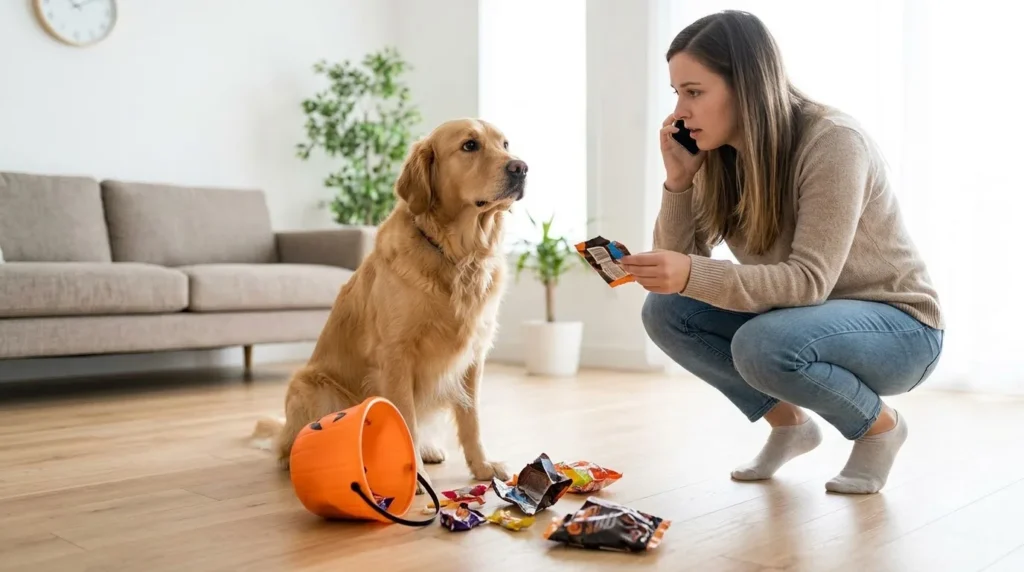
You notice a sock missing from the laundry basket. Your dog is licking its lips, looking perfectly pleased with itself, and the sock is nowhere to be found.
It is tempting to wait and see whether it appears in the dog’s stool a day or two later. After all, some swallowed objects pass through the digestive tract without causing trouble.
But a sock is not food, and a dog that has swallowed one can develop a gastrointestinal obstruction—a blockage that prevents food and intestinal contents from moving normally. These obstructions can become life-threatening, sometimes requiring emergency surgery.
If you know or strongly suspect your dog swallowed a sock, call your veterinarian or an emergency veterinary clinic immediately, even if your dog seems completely normal. Early assessment may give the veterinary team more options for removing the sock before it causes serious damage. Cornell University College of Veterinary Medicine specifically identifies socks and clothing among common causes of gastrointestinal foreign-body obstruction in dogs. (Cornell University)
What happens next depends on where the sock is, how long ago it was swallowed, its size relative to your dog, and whether an obstruction has developed. Understanding those factors can help you respond quickly without attempting something at home that makes the situation worse.
What to Do Immediately If Your Dog Swallowed a Sock
The first few decisions matter more than trying to work out whether the sock will pass naturally.
1. Call your veterinarian now
Tell the clinic that your dog may have swallowed a sock and explain approximately when it happened. If you witnessed the incident, describe exactly what you saw. If you found a missing sock and suspect ingestion, make that distinction clear.
Have the following information ready:
- Your dog’s approximate weight, age, and breed.
- The time the sock was swallowed, or when you first noticed it was missing.
- The sock’s size, material, and whether it was swallowed whole or chewed into pieces.
- Any symptoms, including vomiting, retching, abdominal discomfort, or changes in appetite.
- Whether your dog has swallowed foreign objects before or has existing health problems.
Do not delay the call while searching the house for every missing item.
Your veterinarian may recommend immediate examination, particularly if the sock was swallowed recently. Early intervention can matter because a veterinarian may have options for removing an object before it travels farther into the digestive tract. (American College of Veterinary Surgeons)
2. Do not try to make your dog vomit
Do not give hydrogen peroxide, salt, oil, laxatives, or other home remedies in an attempt to bring the sock back up or push it through the digestive tract.
Inducing vomiting is not appropriate for every foreign-object ingestion. The sock may become lodged during regurgitation, cause injury, or create additional problems depending on its location and the dog’s condition.
A veterinarian can decide whether inducing vomiting is appropriate in a particular case or whether another removal method is safer. Do not attempt it yourself unless a veterinary professional has specifically instructed you to do so for this situation. The Merck Veterinary Manual describes why foreign-body removal depends on the object’s characteristics, location, and the patient’s condition.
Before feeding your dog or trying any home treatment, ask the clinic what to do while you arrange care.
3. Do not pull on fabric that is sticking out
If you can see fabric or string protruding from your dog’s mouth or anus, do not tug on it. The material may be trapped farther along the digestive tract, and pulling can cause injury.
Call a veterinarian for immediate advice. If the material is attached to an obstruction or has caught within the digestive tract, removal may require a controlled veterinary procedure.
Keep your dog calm and prevent further chewing or swallowing of fabric while you arrange care.
4. Go straight to an emergency veterinarian if warning signs appear
Do not wait for a routine appointment if your dog has difficulty breathing, repeated vomiting or retching, severe abdominal pain, a swollen abdomen, collapse, or rapidly worsening weakness.
Other concerning signs include loss of appetite, unusual lethargy, diarrhea, dehydration, and straining to pass stool. These can occur when a foreign object interferes with normal gastrointestinal function. (VCA Animal Hospitals)
A dog can initially look well and become ill later. The absence of symptoms is not a reliable reason to postpone veterinary advice after a known sock ingestion.
Why a Sock Can Be Dangerous
A sock is soft and flexible, but that does not mean the digestive tract can safely process it.
Unlike food, fabric does not break down readily in the stomach. Depending on its size, shape, and how it moves through the digestive tract, the sock may pass, remain in the stomach, or become lodged in the small intestine.
The sock may block the passage of food
A gastrointestinal obstruction can be partial or complete.
In a partial obstruction, some fluid or intestinal contents may still pass through. This can make the problem less obvious at first. With a complete obstruction, normal passage is blocked, and the dog may become increasingly ill.
As the obstruction persists, fluid can accumulate in the digestive tract, dehydration can develop, and the affected intestinal tissue may lose its blood supply or become damaged.
In severe cases, the intestine can perforate, allowing bacteria and intestinal contents to enter the abdominal cavity and cause life-threatening inflammation and infection. (Merck Veterinary Manual)
The risk depends on the dog and the sock
A small sock swallowed by a large dog presents a different situation from a thick adult sock swallowed by a small dog. But size alone cannot determine whether an object will pass safely.
The sock’s material, whether it was swallowed whole, its location, and the dog’s gastrointestinal anatomy all influence the risk. A chewed-up sock is not necessarily harmless, and a dog that has swallowed clothing before is not protected from another obstruction.
For this reason, there is no reliable universal waiting period during which owners can safely assume a swallowed sock will pass.
Signs Your Dog May Have a Sock Obstruction
The symptoms of an obstruction vary according to where the object is located, how severely it blocks the digestive tract, and how long it has been present.
Vomiting or repeated retching
Vomiting is a common sign of gastrointestinal obstruction. Repeated episodes, especially when accompanied by abdominal discomfort or inability to keep food down, require urgent veterinary attention.
Refusing food or showing less interest in treats
A dog that suddenly stops eating or seems interested in food but cannot keep it down may be experiencing gastrointestinal distress.
Abdominal pain or unusual posture
Your dog may seem restless, hunch its body, resist being picked up, or react when its abdomen is touched. Do not press its belly to test for pain.
Lethargy, altered stool, or straining
Reduced energy, diarrhea, difficulty passing stool, or producing only small amounts of feces may accompany an obstruction. Passing some stool does not reliably rule one out.
These signs are not specific to swallowed socks; other illnesses can produce similar symptoms. But when there is a history of foreign-object ingestion, they raise concern and help the veterinarian decide how urgently to investigate. (Cornell University College of Veterinary Medicine)
What Vets Actually Do When a Dog Swallows a Sock
There is no single treatment for every case. The veterinarian’s first task is to determine where the sock is, whether it is causing an obstruction, and which removal or monitoring option is safest.
Step 1: Examination and diagnostic imaging
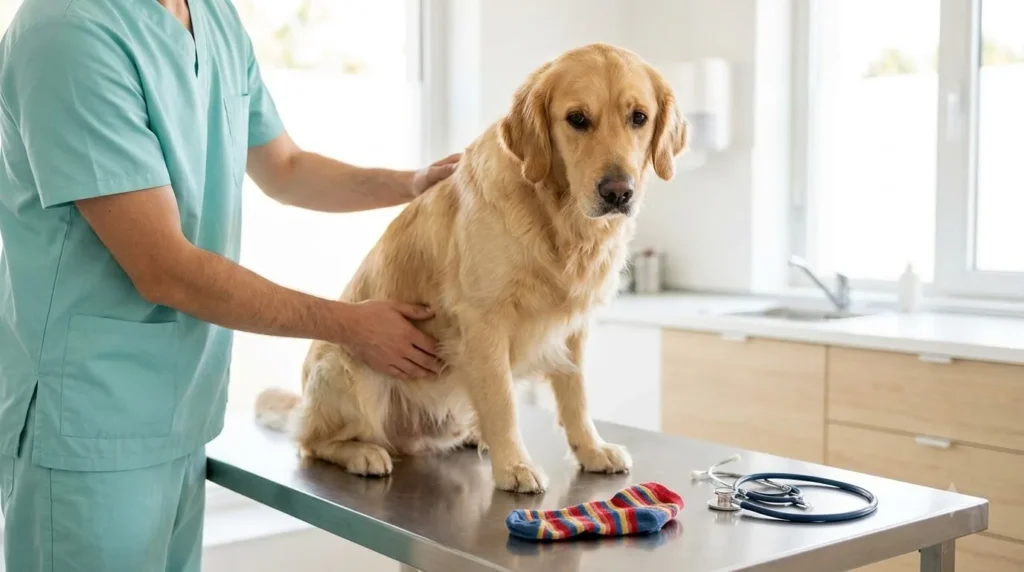
The veterinarian will ask about the ingestion, review the dog’s symptoms, and perform a physical examination. Depending on the findings, recommended tests may include abdominal X-rays, ultrasound, and blood tests.
X-rays can show signs of an obstruction, such as abnormal patterns of gas or fluid in the intestines. However, fabric does not always show up clearly on plain X-rays. Ultrasound or additional imaging may help clarify what is happening.
A normal or inconclusive initial image does not necessarily exclude an obstruction when the history and symptoms remain concerning. The veterinarian may recommend further investigation if suspicion remains high. (Merck Veterinary Manual)
Step 2: Removal through the mouth, when appropriate
If the sock is still in the stomach and accessible, the veterinarian may consider endoscopy.
This procedure uses a flexible instrument with a camera and retrieval equipment, passed through the mouth while the dog is under anesthesia. It allows the veterinarian to inspect the relevant area and potentially remove the sock without opening the abdomen.
Endoscopy is not suitable for every object or every location. The decision depends on where the sock is, its size, and whether safe retrieval is possible. (American College of Veterinary Surgeons)
Step 3: Monitoring in carefully selected cases
Some foreign objects pass through the digestive tract without causing an obstruction. If examination and diagnostic findings suggest that conservative management is reasonable, the veterinarian may recommend close observation, possibly with hospitalization and repeat imaging.
Monitoring is not the same as simply waiting at home and hoping for the best. The veterinary team needs a way to assess whether the object is progressing and whether the dog’s condition remains stable.
If the sock is not moving, obstruction develops, or the dog’s clinical condition deteriorates, removal may become necessary. (Cornell University College of Veterinary Medicine)
Step 4: Surgery if the sock is obstructing the digestive tract
If the sock is lodged in the intestine or cannot be removed safely through other means, surgery may be required.
Depending on its location, the surgeon may need to open the stomach or intestine to remove it. If the trapped object has caused severe tissue damage, a section of damaged intestine may need to be removed and the healthy ends reconnected.
Surgery can sound frightening, but prompt treatment before significant complications develop generally gives dogs a better chance of recovery than allowing an obstruction to progress. The exact outlook depends on the location and duration of the obstruction, the dog’s health, and the extent of intestinal damage. (American College of Veterinary Surgeons)
Will Every Dog That Swallows a Sock Need Surgery?
No. Some swallowed objects pass, and some objects still in the stomach can be retrieved by endoscopy. In selected cases, a veterinarian may recommend monitored conservative management.
But a sock should not be treated as harmless simply because it is soft or because a dog has swallowed one before without complications.
The decision depends on the individual dog’s examination, imaging findings, symptoms, and the object’s location and characteristics. If there is a confirmed obstruction, prompt removal is often essential.
This is why calling early matters: it gives the veterinarian the opportunity to assess the situation while the available options may be broader.
How to Prevent Another Sock-Swallowing Incident
If your dog repeatedly steals socks, prevention should focus on keeping laundry inaccessible and giving the dog safer outlets for chewing and play.
Store dirty laundry in a hamper with a secure lid, keep clean socks in closed drawers, and remove loose clothing from floors, beds, and accessible baskets.
Offer appropriate chew toys and supervise your dog around objects it tends to steal. Training cues such as “leave it” and “drop it” may help, but they should not replace secure storage when your dog is prone to swallowing objects.
If your dog repeatedly eats clothing or other non-food items, discuss this with your veterinarian. Recurrent ingestion may require a broader plan to address the behaviour and reduce the risk of another obstruction.
The Bottom Line: Don’t Wait for the Sock to Come Out
A swallowed sock does not automatically mean your dog will need surgery, but it does create a risk that cannot be assessed reliably from appearance alone.
Call your veterinarian promptly, do not induce vomiting or try home remedies without direction, and seek emergency care if your dog has severe or worsening symptoms. Let the veterinary team determine whether retrieval, imaging, monitoring, or surgery is appropriate.
The most important decision is not predicting whether the sock will pass. It is getting your dog assessed before a potentially manageable foreign-body ingestion becomes a dangerous obstruction.
Sources
1. Cornell University College of Veterinary Medicine — “Gastrointestinal Foreign Body Obstruction in Dogs.” Updated December 2024. Covers common swallowed objects including socks, symptoms, diagnostic imaging, treatment options, surgical removal, and prevention. https://www.vet.cornell.edu/departments-centers-and-institutes/riney-canine-health-center/canine-health-topics/gastrointestinal-foreign-body-obstruction-dogs
2. American College of Veterinary Surgeons (ACVS) — “Gastrointestinal Foreign Bodies.” Specialist surgical guidance on non-digestible objects, complications, endoscopic retrieval, surgery, aftercare, and prognosis. https://www.acvs.org/small-animal/gastrointestinal-foreign-bodies/
3. Merck Veterinary Manual — “Gastrointestinal Obstruction in Small Animals.” Reviewed by Kevin P. Winkler, DVM, DACVS, and peer-reviewed by Joyce Carnevale, DVM, DABVP. Last updated August 2025. Discusses obstruction mechanisms, diagnosis, imaging, conservative monitoring, and indications for surgery. https://www.merckvetmanual.com/digestive-system/surgical-problems-of-the-gastrointestinal-tract-in-small-animals/gastrointestinal-obstruction-in-small-animals
4. VCA Animal Hospitals — “Ingestion of Foreign Bodies in Dogs.” Describes common foreign-body ingestions, clinical signs, diagnostic approaches, monitoring, and surgical treatment. https://vcahospitals.com/cascade/know-your-pet/ingestion-of-foreign-bodies-in-dogs
5. Cornell University College of Veterinary Medicine — “When to Go to the ER.” Emergency-care guidance that includes ingestion of objects capable of causing a blockage, such as a sock. https://riney.vet.cornell.edu/member-benefits-health-tips/when-to-go-to-the-er-june-2025

Dr. Sofia Romano, DVM, is an experienced veterinarian specializing in small-animal medicine and preventive care. She has treated thousands of cases using evidence-based diagnostics and modern clinical practices. Dr. Romano is dedicated to providing science-backed pet-health guidance that helps owners make informed decisions and improve their pets’ quality of life.